Coverage for veterinary practices
Start by listing every piece of equipment you own, along with the brand, model, purchase date, and what you paid for it. Take photos or video of each item. Keep receipts, invoices, and warranty documents in a digital folder. This inventory serves two purposes: it helps your agent calculate the right coverage limits, and it becomes your proof of ownership if you ever file a claim. Pet Professional Insurance Agency uses intake forms designed specifically for pet businesses, which means you won't waste time explaining what a forced-air dryer is or why a single pair of shears costs $500. Update this inventory at least once a year, or whenever you make a significant purchase.
A boarding facility owner in Texas lost a negligence lawsuit last year after a dog suffered heatstroke during an understaffed afternoon shift. The kennel had one attendant monitoring 40 dogs across three play areas, and when temperatures spiked, no one noticed the distressed animal until it was too late. The resulting judgment exceeded $85,000, and the owner's insurance carrier fought the claim, arguing the facility had operated below its own stated staffing policies.
This scenario plays out more often than most pet-care business owners realize. The relationship between staffing ratios and liability exposure is direct and measurable: fewer hands on deck means more incidents, slower response times, and a much harder position to defend in court. Whether you run a doggy daycare, a grooming salon, or a veterinary clinic, the number of staff you have relative to the animals in your care is one of the single biggest factors determining your legal and financial risk.
The problem is that most pet-care operators set staffing levels based on budget constraints rather than risk analysis. That approach works until something goes wrong, and then it becomes the centerpiece of every attorney's argument against you. Understanding where the lines are drawn, both legally and practically, can save your business from a catastrophic claim.
The Connection Between Staffing Levels and Risk
Every animal in your care represents a potential incident. Dogs fight. Cats scratch. Animals with unknown medical histories can deteriorate quickly. The math is straightforward: the more animals each staff member is responsible for, the higher the probability that something gets missed.
Pet-care facilities operate in a space where duty of care is legally established the moment an animal is dropped off. You've accepted responsibility for that animal's safety, and courts evaluate whether you met that duty based partly on whether you had enough trained people on site to provide adequate supervision. A 2026 analysis of malpractice and negligence claims showed that staffing shortfalls were a recurring factor in liability judgments across care-based industries.
Defining Safe Staffing Ratios
There's no single federal standard for pet-care staffing ratios the way there is for, say, childcare centers. That doesn't mean you're operating in a vacuum. State and local licensing requirements often specify minimums, and industry organizations have published guidelines that courts reference when evaluating negligence claims.
General benchmarks for the pet-care industry look something like this:
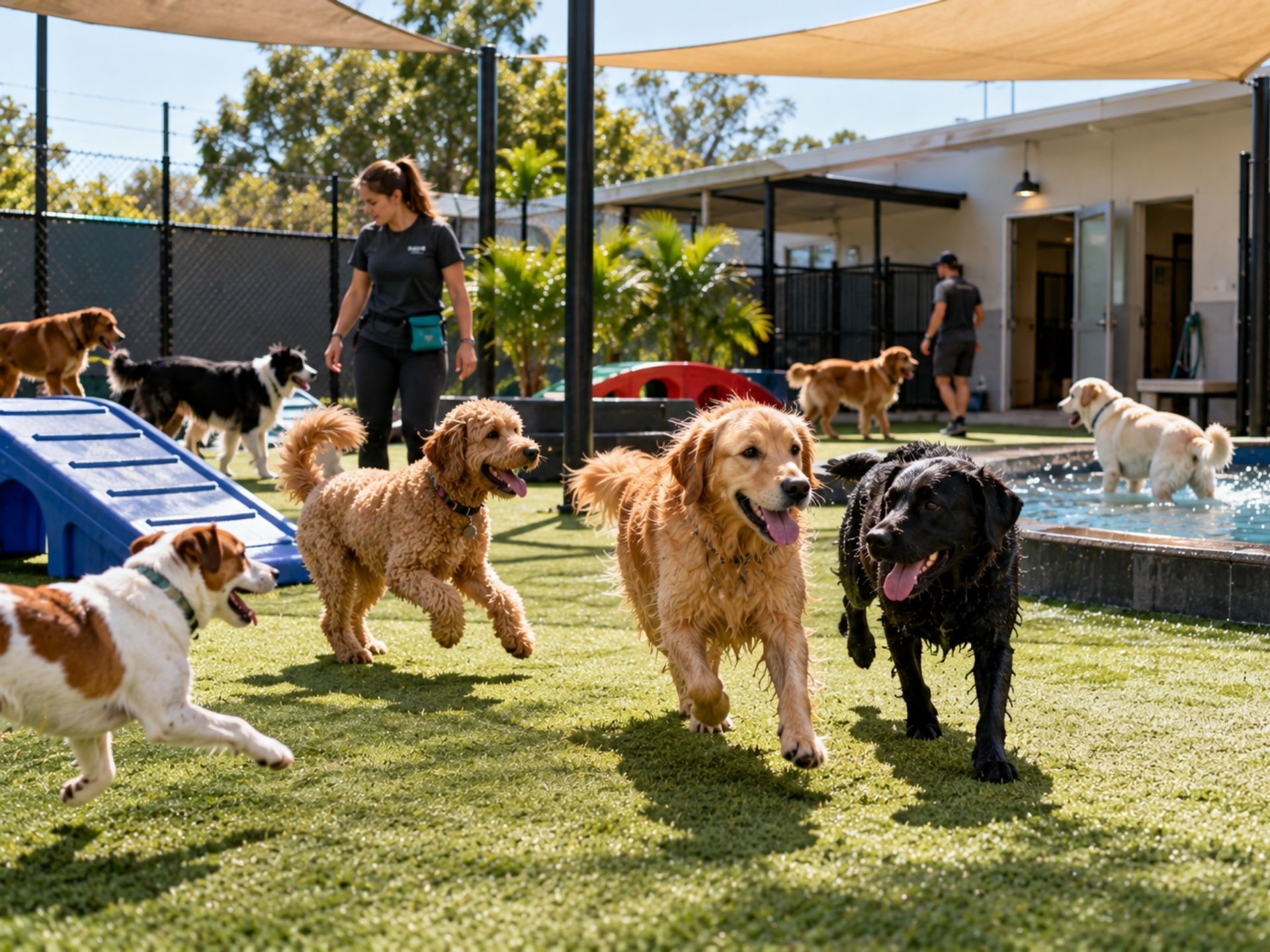
- Doggy daycare: 1 staff member per 10-15 dogs in group play
- Boarding facilities: 1 staff member per 15-20 dogs during active supervision hours
- Grooming salons: 1 groomer per animal being actively groomed, with no unsupervised animals on tables or in tubs
- Veterinary clinics: ratios vary by procedure type, but 1 technician per 2-3 patients under sedation is a common expectation
These numbers shift based on the size of animals, breed mix, temperament assessments, and facility layout. A room full of small, well-socialized dogs is a different risk profile than a mixed group with reactive breeds. Your staffing should reflect the actual risk in the room, not just a headcount.
How Understaffing Leads to Negligence Claims
Negligence claims hinge on four elements: duty, breach, causation, and damages. Understaffing attacks the second element, breach, by making it easy for a plaintiff's attorney to argue you failed to meet the standard of care.
When a dog bite occurs in a daycare with one attendant watching 25 dogs, the plaintiff doesn't need an expert witness to explain why that's a problem. The jury can figure it out. Similarly, when a cat escapes from an understaffed boarding facility and is hit by a car, the question becomes: would adequate staffing have prevented this? If the answer is probably yes, you're writing a check.
Legal Consequences of Inadequate Staffing
Beyond individual lawsuits, understaffing can trigger regulatory action, license revocation, and even criminal charges in extreme cases. The legal exposure compounds quickly.
Regulatory Violations and Fines
Many municipalities require pet-care facilities to maintain specific staffing levels as a condition of their operating license. Falling below those levels, even temporarily, can result in fines, mandatory corrective action plans, or suspension of your license. Regulatory trends across care industries have been moving toward stricter staffing mandates, and the pet-care sector is following that trajectory in several states.
A fine of $500 per violation might seem manageable until you realize that each day of noncompliance can constitute a separate violation. A two-week period of understaffing could generate $7,000 in penalties before you even factor in legal costs.
Vicarious Liability and Corporate Negligence
If an employee causes harm while working understaffed, the business owner bears liability through the doctrine of vicarious liability. But there's a second layer: if a court determines that the understaffing itself was a management decision, the owner can face direct negligence claims for creating unsafe conditions.
This distinction matters because direct negligence claims against the business entity can sometimes pierce insurance coverage limits or trigger policy exclusions. Decisions about staffing levels are management decisions, and courts treat them accordingly.
Comparing Industry Standards vs. Legal Requirements
The gap between what's legally required and what's considered an industry standard creates a gray zone that trips up a lot of pet-care operators.
| Factor | Legal Requirement | Industry Standard |
|---|---|---|
| Daycare supervision ratio | Varies by jurisdiction; some have none | 1:10 to 1:15 dogs |
| Overnight boarding staff | Many jurisdictions require on-site presence | 24-hour staffing with regular check intervals |
| Grooming supervision | Rarely specified by law | No animal left unattended on equipment |
| Emergency response training | Often required for licensing | Pet first aid/CPR certification for all staff |
| Documentation of ratios | Rarely mandated | Daily staffing logs recommended |
The catch is that even if your jurisdiction has no specific staffing law, courts will look at what a "reasonable" operator would do. Industry standards become the de facto legal standard in negligence cases. Operating below them, even legally, puts you at serious risk.
Real-World Staffing Failures and What They Cost
A grooming salon in Florida faced a $62,000 judgment in 2025 after a dog fell from a grooming table while the single groomer on duty was bathing another animal in a separate room. The owner had sent a second groomer home early to save on labor costs. The plaintiff's attorney used payroll records to demonstrate a pattern of single-staffing during busy hours.
In another case, a boarding facility settled a wrongful death claim for over $120,000 after a dog died from bloat overnight. The facility had no overnight staff, relying instead on camera monitoring. The owner checked cameras every few hours from home but missed the early signs of distress. An expert witness testified that an on-site attendant would have recognized the symptoms in time for veterinary intervention.
These aren't hypothetical scenarios. They represent the real financial consequences of staffing decisions. Momentum toward safer staffing standards continues to build across all care-based industries, and the pet sector is not immune to this pressure.
Insurance Implications for Understaffed Facilities
Your staffing practices don't just affect your legal exposure: they directly impact your insurance costs and coverage reliability.
Impact on Professional Liability Premiums
Insurance carriers evaluate risk based partly on your operational practices, and staffing is near the top of that list. When you apply for or renew professional liability coverage, underwriters ask about your staff-to-animal ratios, training protocols, and supervision policies. At Pet Professional Insurance Agency, our intake forms are tailored to each pet-business type specifically because these operational details determine your risk profile and the coverage options available to you.
Facilities with documented staffing policies and consistent compliance typically see lower premiums than those with vague or inconsistent practices. A 15-20% premium difference between well-staffed and poorly-staffed facilities of the same size is not unusual.
When Insurance Carriers Might Deny a Claim
Here's where staffing ratios can truly devastate a business. If you suffer a covered loss but the carrier determines you were operating outside the conditions described in your application, they may deny the claim or reserve the right to rescind coverage entirely.
If you told your carrier you maintain a 1:12 dog-to-staff ratio and a claim investigation reveals you were running at 1:25, that discrepancy gives the carrier grounds to dispute coverage. This is exactly the kind of situation where working with an agent who understands pet-industry risks, someone who can help you set realistic operational parameters in your application, makes a meaningful difference.
Common Questions About Staffing and Liability
What staffing ratio should my doggy daycare maintain? Most industry guidelines recommend 1 staff member per 10-15 dogs, adjusted for size, temperament, and play group composition. Check your local licensing requirements, as some jurisdictions set specific minimums.
Can I be sued if I meet legal staffing requirements but something still happens? Yes. Meeting minimum legal requirements doesn't guarantee immunity from negligence claims. Courts often evaluate whether you met the broader standard of care, which may exceed legal minimums.
Does my insurance cover incidents that happen during understaffed shifts? It depends on your policy terms and what you represented to the carrier. If you're consistently operating below the staffing levels described in your application, the carrier may dispute coverage.
Should I document my staffing levels daily? Absolutely. Daily staffing logs that record staff-to-animal ratios create a paper trail showing you maintained appropriate supervision. This documentation is your strongest defense in a negligence claim.
Are there national staffing standards for pet-care businesses? No federal standard exists specifically for pet-care. National performance goals around staffing are being established in healthcare settings, and similar frameworks may eventually extend to animal care.
How to Calculate Your Facility's Ideal Ratio
Start with your facility's physical layout. Count the number of distinct supervision zones: play areas, grooming stations, boarding wings, outdoor spaces. Each zone needs at least one dedicated staff member during active hours.
Then factor in animal volume by time of day. Most daycares peak between 9 AM and 3 PM. Your staffing should match that curve, not stay flat throughout the day. Build a simple spreadsheet tracking hourly animal counts against staff on duty for two weeks. The data will show you exactly where your gaps are.
Creating a Staffing Policy That Protects You
A written staffing policy does two things: it sets internal expectations, and it creates a defensible record if you're ever sued. Your policy should specify minimum ratios by area, procedures for when staff call out sick, and escalation protocols when animal counts exceed capacity.
Include a hard cap: the maximum number of animals you'll accept on any given day based on available staff. Turning away revenue feels painful, but it's far less painful than a six-figure negligence judgment. Review and update your policy annually, and make sure every employee signs an acknowledgment.
Training as a Force Multiplier
Two well-trained staff members provide better coverage than four untrained ones. Invest in pet first aid certification, behavior recognition training, and emergency response drills. Staff who can identify early signs of distress, aggression, or medical emergencies effectively extend your supervision capacity.
Training records also serve as evidence of your commitment to safety. In negligence litigation, showing that your team completed regular training programs demonstrates that you took your duty of care seriously.
When to Reassess Your Current Ratios
Reassess your staffing ratios any time you change your facility layout, add new services, increase capacity, or experience a near-miss incident. Seasonal fluctuations matter too: holiday boarding rushes often push facilities past safe ratios, and that's exactly when incidents spike.
If you've had a claim or a close call, that's a signal to review everything. Talk to your insurance agent about whether your current staffing practices align with your policy terms. At Pet Professional Insurance Agency, our agents specialize in pet-care risk and can typically provide feedback within 24-48 hours on whether your operational practices match your coverage.
The Bottom Line: Protecting Your Business
Staffing decisions are risk decisions. Every time you reduce staff to save money, you're increasing the probability of an incident and weakening your legal defense if one occurs. The financial math almost always favors adequate staffing: the cost of one additional employee per shift is a fraction of what a single negligence judgment or denied insurance claim will cost you.
Document your ratios, train your team, set hard capacity limits, and make sure your insurance application accurately reflects how you actually operate. Laws vary significantly by state and municipality, so consult a qualified attorney familiar with animal care regulations in your jurisdiction for guidance specific to your situation.
About the author
Barnaby Joyce
Founder, Pet Professional Insurance Agency · Licensed Insurance Producer
I started Pet Professional Insurance Agency because I watched pet businesses get handed generic policies that never fit. After years of placing coverage for veterinary practices, grooming salons, doggy daycares, and kennels through a generalist agency, I saw the same gaps over and over — and the same blank stares when an owner tried to explain care, custody, and control to an agent who had never insured an animal in their life.
So I built an agency that does one thing. I work directly with specialty carriers who actually want pet-industry risk, and I sit down with every client personally. You will not get a call center or a chatbot. You will get someone who already speaks your language and shops the market on your behalf. That is the whole idea.
Recent Posts