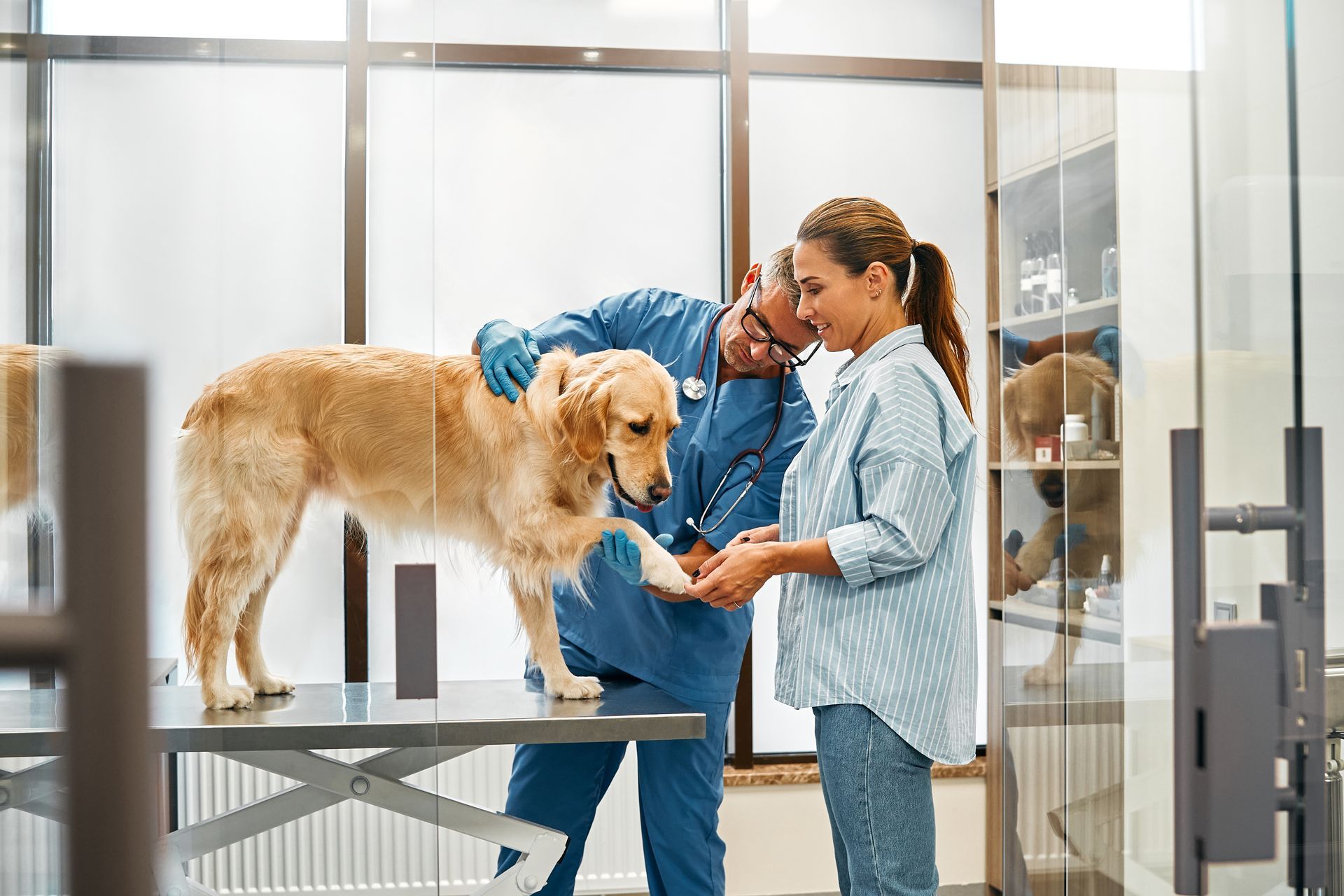
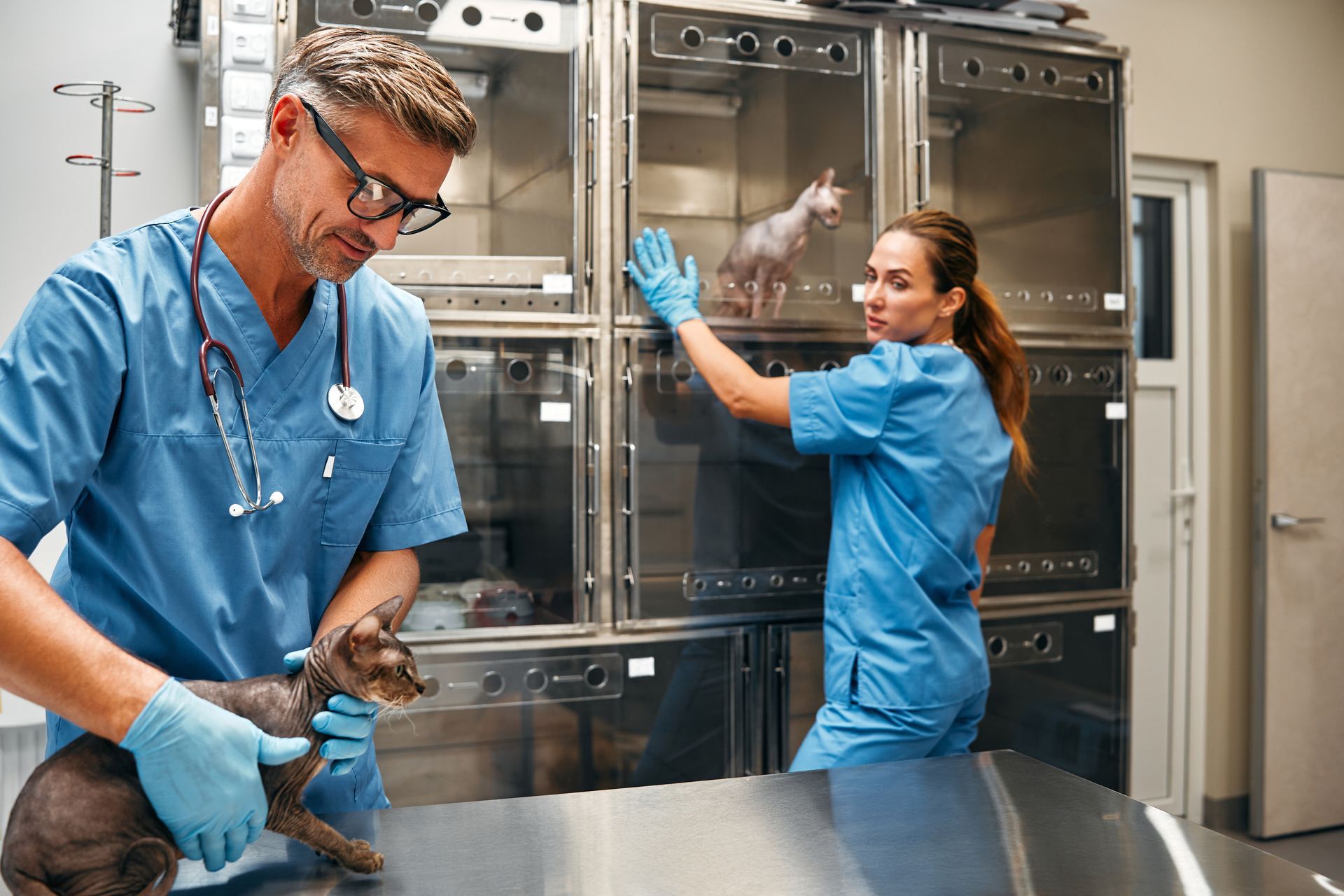
Coverage for veterinary practices
Toms River, NJ Dog Trainer Insurance
Because we are independent, we compare general liability programs across specialty carriers that want pet-industry risk — which often reveals real premium differences for identical coverage.
FAQ: Does my insurance cover vet bills if a dog gets sick?
This scenario falls under your general liability policy, which covers third-party bodily injury claims and associated legal defense costs. If your employee was walking a boarded dog and it bit someone on a Rochester sidewalk, your GL policy would respond to the claim.
Running a dog training business in Toms River means working with unpredictable animals, anxious owners, and environments you can't always control. A reactive German Shepherd at Island Beach State Park, a puppy that nips a child during an in-home session in Holiday City, a client who claims your training advice made their dog's aggression worse: these aren't hypotheticals. They're the kinds of incidents that Toms River trainers deal with regularly, and any one of them can turn into a costly claim. Dog trainer insurance in Toms River, NJ, isn't just a box to check. It's the difference between absorbing a $30,000 liability claim and losing your business overnight. Whether you run group classes at a rented facility on Route 37, offer private sessions across Ocean County, or operate a board-and-train program from your property, your coverage needs are specific to what you do and where you do it. Here's what Toms River trainers actually need to know about local coverage requirements, NJ regulations, and realistic costs in 2026.
Why Toms River Dog Trainers Need Specialized Insurance
General business insurance policies often miss the mark for animal-related businesses. A standard commercial general liability policy might cover a client who slips on your wet floor, but it won't necessarily cover a dog bite that happens during a training session. The care, custody, and control exclusion in many standard policies specifically removes coverage for animals in your care, which is literally the core of your business.
Toms River's geography and demographics create specific risk profiles. You're working near beaches, parks, and densely populated residential neighborhoods. Seasonal tourism swells the population, and summer months bring more outdoor training sessions with more variables: other dogs, cyclists, children, and wildlife. A trainer running beach socialization classes faces different exposures than someone working exclusively in a climate-controlled facility.
Unique Risks in Ocean County Dog Training
Ocean County has a high concentration of active-adult communities and retirement developments. Many clients in these communities own smaller dogs and have mobility concerns themselves. A dog pulling on a leash during a training walk can easily knock down an older client, resulting in a serious injury claim against you.
Flood zones are another consideration unique to this area. If you operate from a facility near Toms River proper or closer to Barnegat Bay, standard property insurance won't cover flood damage to your equipment, training supplies, or facility. You'd need a separate flood policy, which is something many trainers overlook until it's too late. Hurricane season alone should be enough motivation to review your property coverage annually.
Protecting Your Business from Liability Claims
The most common claims against dog trainers fall into three categories: dog bites or animal-related injuries, slip-and-fall incidents at training locations, and professional liability claims where a client alleges your methods caused harm. A single dog bite claim in New Jersey averages around $60,000 in 2026, according to insurance industry data.
Professional liability is the one that catches trainers off guard. If a client follows your training protocol and their dog later injures someone, they may argue your professional advice was negligent. Without professional liability coverage (sometimes called errors and omissions), you'd be defending that claim out of pocket. Pet Professional Insurance Agency sees these claims more often than most trainers expect, and they're among the most expensive to defend even when the trainer did nothing wrong.
New Jersey Insurance Requirements for Pet Professionals
New Jersey doesn't require dog trainers to carry general liability insurance by state law, but that doesn't mean you can skip it. Many municipalities in Ocean County, including Toms River, require proof of insurance before issuing business permits or allowing use of public facilities. If you rent space at a community center or use township parks for training, you'll almost certainly need a certificate of insurance naming the municipality as an additional insured.
Landlords and property managers also typically require tenants to carry commercial general liability with minimum limits of $1,000,000 per occurrence. If you lease space for indoor training classes, this is non-negotiable.
Mandatory Workers' Compensation in NJ
New Jersey requires workers' compensation insurance for virtually all employers, with very few exceptions. If you have even one employee, whether full-time, part-time, or seasonal, you need workers' comp. This includes assistant trainers, kennel helpers, and front-desk staff. Independent contractors are a gray area that NJ regulators scrutinize closely, and misclassifying an employee as a contractor can result in significant fines.
The penalties for operating without workers' comp in New Jersey are severe: it's a criminal offense that can result in fines up to $10,000 per day and even jail time. Don't gamble on this one.
Commercial Auto Insurance for Mobile Trainers
Many Toms River trainers operate mobile businesses, driving to clients' homes across Ocean County. Your personal auto policy almost certainly excludes business use. If you're transporting training equipment, driving to client sessions, or especially if you're transporting dogs in your vehicle, you need a commercial auto policy or at minimum a business use endorsement on your personal policy.
This is a coverage gap that comes up constantly. A trainer rear-ends someone while driving to a session in Lacey Township, and their personal insurer denies the claim because the vehicle was being used for business purposes. The trainer is suddenly personally liable for the other driver's medical bills and vehicle damage. Commercial auto coverage solves this problem cleanly.
Comparing General Liability and Professional Liability
These two policies protect you from different types of claims, and most dog trainers need both. General liability covers bodily injury and property damage: a dog bites a bystander, a client trips over equipment, or your dog damages a client's home during an in-home session. Professional liability covers claims arising from your professional services: your advice, methods, or training protocols.
Think of it this way: general liability covers what happens physically, while professional liability covers what happens because of your expertise (or alleged lack thereof). A client who says your recommended training technique caused their dog to become aggressive is making a professional liability claim, not a general liability one.
Comparison Table: Liability Coverage Differences
| Coverage Feature | General Liability | Professional Liability |
|---|---|---|
| Dog bites during sessions | Covered | Not covered |
| Client slips and falls | Covered | Not covered |
| Damage to client property | Covered | Not covered |
| Negligent training advice | Not covered | Covered |
| Failure to disclose risks | Not covered | Covered |
| Incorrect behavior assessment | Not covered | Covered |
| Typical limits | $1M/$2M | $1M/$2M |
| Average annual cost (solo trainer) | $350-$750 | $250-$500 |
Most specialty insurance markets that cover pet professionals can bundle these coverages together, which simplifies your policy management and often reduces your total premium compared to buying them separately.
Average Costs for Dog Trainer Insurance in Toms River
Toms River falls within a moderate cost zone for commercial insurance in New Jersey. You're not paying Manhattan prices, but NJ premiums tend to run higher than national averages due to the state's litigation environment and regulatory requirements. A solo dog trainer operating without employees can generally expect to pay between $600 and $1,400 annually for a solid coverage package that includes both general and professional liability.
That range widens significantly based on your specific operation. Board-and-train programs cost more to insure than trainers who only do private lessons. Group classes carry higher premiums than one-on-one sessions. And if you're working with aggressive dogs or offering protection training, expect your premiums to reflect that added risk.
Factors That Influence Your Annual Premium
Your premium isn't pulled from thin air. Insurers evaluate specific risk factors:
- Annual revenue and number of clients served
- Whether you employ staff or work solo
- Types of training offered (basic obedience vs. behavior modification vs. protection work)
- Whether you transport or board dogs
- Your training location (home-based, mobile, rented facility, owned facility)
- Claims history over the past three to five years
- Coverage limits and deductible selections
A trainer with $80,000 in annual revenue, two part-time assistants, and a small indoor facility will pay meaningfully more than a solo trainer doing weekend puppy classes at a local park. That's not a flaw in the system: it reflects the actual risk difference between those two operations.
Typical Price Ranges for Local Small Businesses
Here's what Toms River-area dog trainers are typically paying in 2026, based on common business profiles:
- Solo trainer, mobile/in-home only, no employees: $600-$900/year
- Solo trainer with rented facility space: $800-$1,200/year
- Small operation with 1-2 employees: $1,200-$2,500/year (including workers' comp)
- Board-and-train operation: $1,800-$3,500/year depending on capacity
- Behavior modification/aggression specialist: add 15-30% to base premiums
These figures include general liability and professional liability but not commercial auto or property coverage, which would be additional. Pet Professional Insurance Agency works with multiple specialty markets to find coverage tailored to each trainer's specific setup, and most trainers hear back with options within 24 to 48 hours of submitting their information.
Common Questions About Dog Training Insurance
FAQs for Ocean County Pet Professionals
Do I need insurance if I only train dogs part-time? Yes. Liability doesn't care whether training is your full-time job or a weekend side gig. A single claim can exceed $50,000 regardless of how many hours you work.
Does my homeowner's insurance cover my home-based training business? Almost never. Most homeowner's policies exclude business activities, and many will cancel your policy entirely if they discover you're running an uninsured business from your home.
Can I get coverage if I work with aggressive dogs? You can, but not every insurer will write that coverage. Specialty markets that focus on pet professionals are more likely to offer policies for behavior modification and aggression work, though premiums will be higher.
Do I need a separate policy for each training location? Not usually. Most general liability policies cover you at any location where you provide services. That said, verify your policy language, because some policies restrict coverage to named locations only.
What's the difference between care, custody, and control coverage and general liability? General liability covers third-party injuries and property damage. Care, custody, and control coverage specifically protects you if a dog in your care is injured, becomes ill, or escapes. Many standard GL policies exclude this, so you need it added explicitly.
How quickly can I get proof of insurance for a facility lease? Through agencies that specialize in pet businesses, certificates of insurance can often be issued the same day your policy binds. If a landlord or municipality needs to be listed as additional insured, that typically adds a day or two.
Making the Right Choice for Your Training Business
Choosing the right insurance isn't about finding the lowest premium. It's about making sure the policy actually covers the risks your specific business faces. A trainer running puppy socialization classes has fundamentally different exposures than someone doing in-home behavior consultations for reactive dogs, and their coverage should reflect that.
Start by honestly assessing your risk profile. What types of dogs do you work with? Where do you train? Do you transport animals? Do you have employees or plan to hire? These answers determine what coverage you actually need versus what you can skip.
Working with an agency that understands pet businesses makes a real difference here. Pet Professional Insurance Agency uses intake forms designed specifically for different types of pet businesses, which means your coverage is built around your actual operation rather than forced into a generic template. You talk directly with an agent who understands bite liability, care and custody exposures, and the specific regulatory environment in New Jersey.
Get your coverage reviewed annually, especially if your business changes. Adding group classes, hiring an assistant, or expanding into board-and-train services all change your risk profile. A policy that was perfect last year might leave gaps today. The right time to find out is before a claim, not after one.
Index
Pet Professional Insurance Agency is fully licensed and permitted to provide commercial insurance solutions for pet businesses across 12 states.
We proudly serve pet professionals throughout the Northeast, Mid-Atlantic, and Southeast. Powered by Joyce Insurance Agency, our team works with leading specialty carriers — including The Hartford, USLI, Nautilus, and Northland — to make sure veterinarians, groomers, boarding facilities, and pet-care businesses receive coverage that fits their real risks in Connecticut, Delaware, Georgia, Kentucky, Massachusetts, New Jersey, New York, North Carolina, Pennsylvania, South Carolina, Tennessee, and Virginia.
About the author
Barnaby Joyce
Founder, Pet Professional Insurance Agency · Licensed Insurance Producer
I started Pet Professional Insurance Agency because I watched pet businesses get handed generic policies that never fit. After years of placing coverage for veterinary practices, grooming salons, doggy daycares, and kennels through a generalist agency, I saw the same gaps over and over — and the same blank stares when an owner tried to explain care, custody, and control to an agent who had never insured an animal in their life.
So I built an agency that does one thing. I work directly with specialty carriers who actually want pet-industry risk, and I sit down with every client personally. You will not get a call center or a chatbot. You will get someone who already speaks your language and shops the market on your behalf. That is the whole idea.
Recommended coverages
Coverages that pair with general liability.
Most pet businesses build on general liability with the lines below. Explore each — every page cross-links to the
industries we serve.

Services & advice
Professional Liability / E&O
Covers claims tied to your professional services and advice — clinical care, training guidance, and the judgment calls you make daily.
The pet-industry gap
Care, Custody & Control
Covers the animals in your charge against injury, illness, or loss — the critical exposure standard liability policies leave out.
Bundled & cost-effective
Business Owners Policy (BOP)
Bundles property and general liability into one package built for small to mid-sized pet businesses — often the simplest base.
Your building & contents
Commercial Property
Protects your building, build-out, equipment, and inventory against fire, theft, and covered losses — front desk to back room.
For your team
Workers’ Compensation
Covers medical costs and lost wages when a team member is hurt on the job — required in most states once you have employees.
Extra protection
Commercial Umbrella
Adds liability limits above your primary policies for catastrophic claims that exceed standard coverage.
Coverage availability and terms vary by carrier and state. We recommend the right mix for your operation once we talk.
Industries we serve
Built for the businesses that care for animals.
General liability is the baseline for every segment we specialize in. Find the page built for your business.
Clinical · high exposure
Veterinarians & Animal Hospitals
Professional and general liability, property, and workers’ comp for clinical operators with high exposure.
Hands-on · small business
Pet Groomers
Practical protection for animal handling, equipment, and the day-to-day of the grooming table, shop or mobile.

Safety-forward · overnight
Doggy Daycare & Boarding
Coverage matched to facilities responsible for animals overnight and all day long.
Our reviews
Trusted by pet professionals.
See what owners say about working with a specialist who already understands their business.
Frequently asked
Questions pet pros ask us.
What kinds of pet businesses do you insure?
We insure businesses across the animal-care industry — veterinarians and animal hospitals, groomers, doggy daycares and boarding facilities, kennels and trainers, pet sitters and dog walkers, and pet stores. We also cover breeders, equine operations, pet transporters, shelters and rescues, pet photographers, and aquariums or wildlife facilities.
If your work involves caring for, handling, or selling animals, there is a strong chance we cover it. Tell us what you do and we will confirm.
What is care, custody, and control coverage, and why does it matter?
Care, custody, and control coverage protects you when an animal in your charge is injured, becomes ill, or is lost while in your care. Standard general liability policies often exclude this exact exposure, which leaves a serious gap for pet businesses.
For groomers, boarders, sitters, and clinics, this is one of the most important coverages you can carry. We make sure it is in place and sized to your operation.
How is an independent agency different from buying direct from a carrier?
A direct carrier sells you its own single policy. As an independent agency, we shop multiple specialty insurers and compare programs to find the coverage that fits your business and budget.
That means you get options instead of one quote, and an advocate who works for you, not the carrier. We also handle the renewals and claims support over the life of your policy.
How fast can I get a quote?
Most clients get quoted within one business day. Our industry-specific intake forms collect the right details up front, so we can take your information straight to the carriers without a long back-and-forth.
Need it sooner? Call a specialist directly at (346) 738-7297 and we will move quickly.
Which states do you serve?
We are licensed and actively writing coverage in 12 states: Connecticut, Delaware, Georgia, Kentucky, Massachusetts, New Jersey, New York, North Carolina, Pennsylvania, South Carolina, Tennessee, and Virginia.
We continue to add states as we grow. If you operate outside this list, reach out and we will let you know our latest footprint.
From the blog
Coverage notes for pet professionals.
Plain-language risk tips and coverage explainers, written for owners — not insurance pros.
Speak with a specialist
Let's find the right coverage for your business.
No quote bots, no funnel. Talk to a real pet-insurance specialist who already understands your operation — and shops multiple markets on your behalf.
Call us
(346) 738-7297
Toll-free 845-250-5366
Email
service@petindustryins.com
Visit Us
2 Joyce Plaza
Stony Point, NY 10980