Running an aquarium operation in Tennessee means managing a unique set of risks that most insurance agents have never even thought about. A single life support failure can kill hundreds of thousands of dollars worth of marine life overnight. A visitor slip near a touch tank can turn into a six-figure liability claim. And if you're housing exotic species, Tennessee's wildlife regulations add another layer of complexity that your policy needs to address. Understanding insurance coverage requirements, costs, and compliance for TN aquarium operations isn't just about checking a box: it's about protecting a business where the stakes are genuinely unusual. Whether you run a public-facing attraction, a private breeding facility, or a retail aquarium shop, the right insurance structure can mean the difference between recovering from a disaster and closing your doors.
Essential Insurance Coverage for Tennessee Aquarium Operators
Aquarium businesses face a risk profile that doesn't fit neatly into standard commercial insurance packages. You're dealing with live animals, specialized equipment, water systems that can fail catastrophically, and often a public audience that includes children. A generic business owner's policy won't cut it here.
The foundation of any aquarium insurance program starts with understanding your specific exposures. Are you open to the public? Do you transport marine life? Are your animals owned or held in custody? Each of these questions changes what coverage you need and how much of it. Working with an agency that understands pet and animal industry risks, like Pet Professional Insurance Agency, makes a real difference because they know which questions to ask and which specialty markets can actually write these policies.
General Liability and Public Safety
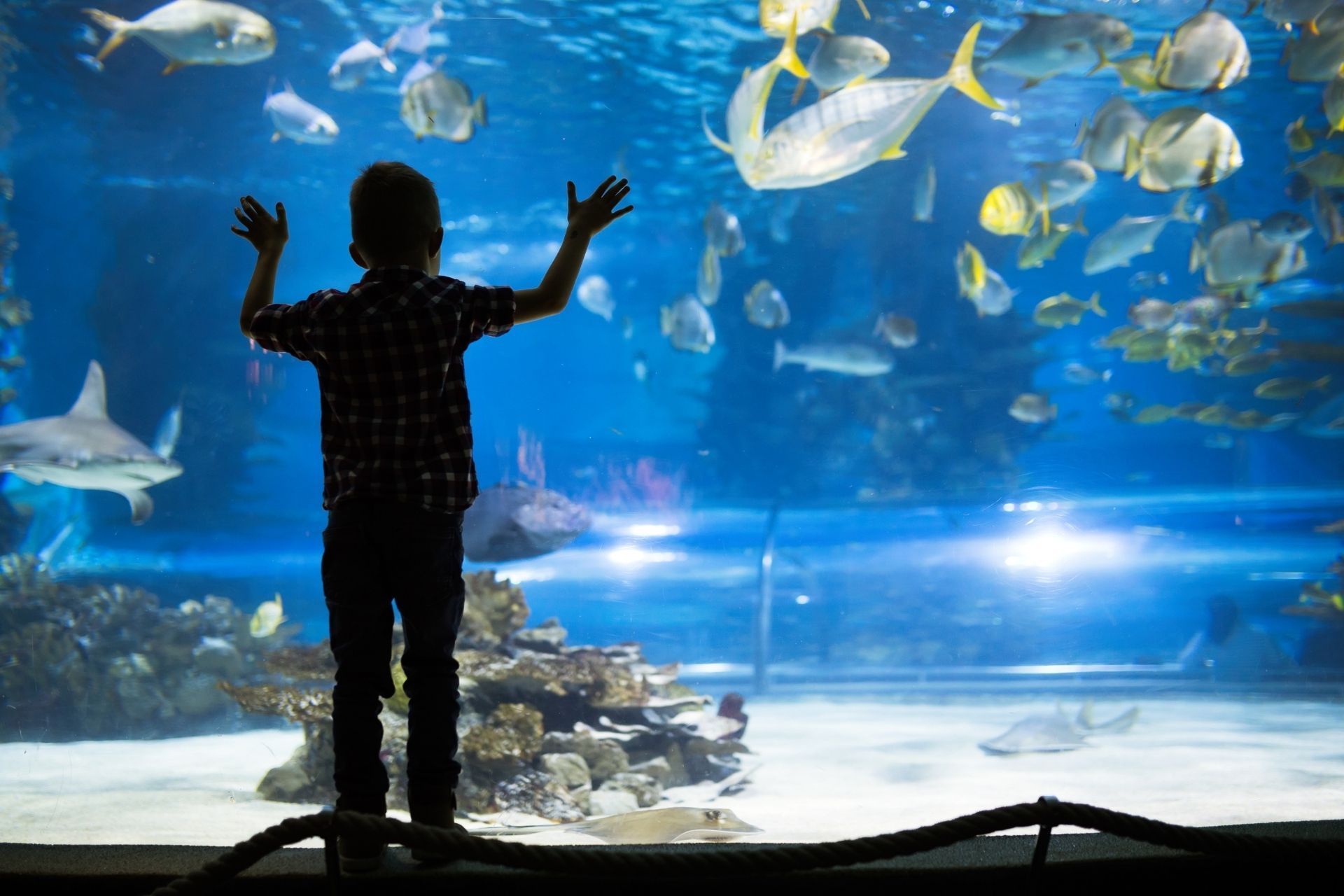
General liability is your first line of defense against third-party claims. If a visitor slips on a wet floor near an exhibit, gets scratched by a sea urchin in a touch tank, or trips over equipment in a walkway, your GL policy responds. For public-facing aquariums, this is non-negotiable.
Most aquarium operations should carry at least $1 million per occurrence and $2 million aggregate in general liability coverage. Larger facilities with high visitor counts often need $5 million or more, sometimes achieved through an umbrella policy layered on top of the primary GL. Pay attention to your policy's definition of "premises": if you do off-site educational programs or transport animals to events, you need coverage that follows you beyond your facility walls.
One common gap: many standard GL policies exclude animal-related injuries. You need a policy that explicitly covers animal interactions, especially if you operate touch tanks or host behind-the-scenes tours.
Animal Mortality and Life Support Systems
This is where aquarium insurance gets specialized. Animal mortality coverage protects you financially if fish, coral, marine mammals, or other aquatic species die due to covered perils like equipment failure, disease, or transit accidents. Policies typically cover the replacement value of the animals, though rare or endangered species may require individual appraisals.
Life support system breakdown coverage is closely related. Your filtration, heating, cooling, and oxygenation systems are the literal lifeline for your collection. A power outage or pump failure at 2 AM can wipe out an entire exhibit. Equipment breakdown coverage pays for both the repair of the system and the resulting animal losses.
The catch is that not every carrier writes animal mortality for aquatic species. This is a niche product, and you'll likely need access to specialty insurance markets that understand the aquarium world. Standard property policies almost never cover live animal losses.
Property and Water Damage Protection
Water is both your primary asset and your biggest property risk. A cracked tank, a burst pipe, or a sump pump failure can cause tens of thousands of dollars in damage to flooring, walls, electrical systems, and neighboring tenant spaces if you're in a shared building.
Your property policy should cover the building (if you own it), your contents, and your specialized equipment: tanks, pumps, chillers, UV sterilizers, and monitoring systems. Make sure the policy addresses water damage from internal sources, not just external flooding. Many property policies treat these differently, and a standard flood exclusion could leave you exposed even when the water came from your own tanks.
If you lease your space, your landlord's policy won't cover your equipment or inventory. You need your own inland marine or business personal property coverage for everything you've installed.
Tennessee State Requirements and Compliance Standards
Tennessee has specific regulatory requirements that affect how you insure and operate an aquarium business. Ignoring these can result in fines, permit revocations, or worse.
Workers' Compensation Laws in TN
Tennessee requires workers' compensation insurance for any business with five or more employees. If you have fewer than five, you're not legally required to carry it, but going without is a significant gamble. Aquarium work involves electrical equipment near water, heavy lifting, chemical handling for water treatment, and potential animal bites or stings.
The Tennessee Aquarium itself demonstrated how proactive safety programs pay off: the facility reduced its workers' compensation experience modification factor by 22 points over a three-year period by systematically addressing workplace hazards. A lower experience modification factor directly reduces your premium costs, so investing in safety training isn't just ethical: it's financially smart.
Workers' comp in Tennessee operates under a statutory framework, so your policy must meet state-mandated benefit levels. Independent contractors aren't covered under your policy, but misclassifying employees as contractors is a common mistake that can trigger audits and penalties.
TWRA Regulations and Permit Insurance
The Tennessee Wildlife Resources Agency (TWRA) regulates the possession, breeding, and exhibition of many aquatic species. If you're housing native Tennessee species or certain exotic animals, you'll need appropriate permits from TWRA before you can legally operate.
Tennessee law specifically governs the possession and exhibition of Class I and Class II wildlife, which can include certain aquatic species depending on classification. Permit holders are typically required to demonstrate proof of liability insurance, and the coverage minimums vary based on the species you house and whether the public has access to them.
Keep your permits and insurance documentation together. TWRA inspections can happen, and having lapsed coverage could jeopardize your permits. This is an area where working with an agent who understands animal-related businesses pays dividends: Pet Professional Insurance Agency, for instance, uses intake forms tailored to specific animal business types, which helps ensure nothing gets missed.
Comparing Policy Tiers and Protection Levels
Not every aquarium operation needs the same level of coverage. A small retail fish store has very different needs than a 100,000-gallon public exhibit. Understanding the tiers helps you avoid both overpaying and being dangerously underinsured.
Comparison Chart: Standard vs. Comprehensive Coverage
| Coverage Feature | Standard Policy | Comprehensive Policy |
|---|---|---|
| General Liability | $1M per occurrence | $2M+ per occurrence with umbrella |
| Animal Mortality | Limited or excluded | Full replacement value, including rare species |
| Equipment Breakdown | Basic mechanical only | Life support systems, backup generators, monitoring |
| Property Coverage | Building and contents | Building, contents, tenant improvements, signage |
| Water Damage (Internal) | Often excluded | Included with tank failure coverage |
| Business Interruption | 30-day waiting period typical | Shorter waiting period, extended coverage period |
| Workers' Comp | Statutory minimum | Statutory plus voluntary coverage for owners |
| Transit/Transport | Not included | Covers animal transport and temporary exhibits |
Most small retail aquarium shops can operate safely with a standard policy. Public-facing facilities, breeding operations with high-value species, and any operation housing marine mammals should lean toward comprehensive coverage. The premium difference is often 30-50% more, but the coverage gaps in a standard policy can be devastating if you actually need to file a claim.
Factors Influencing Aquarium Insurance Costs in TN
Premiums for aquarium insurance in Tennessee vary widely. A small freshwater fish retailer might pay $2,000-$4,000 annually for a basic package, while a major public aquarium could spend six figures. Several factors drive these numbers.
Facility Size and Annual Visitor Volume
Larger facilities with more square footage mean more potential slip-and-fall incidents, more equipment to insure, and higher replacement costs if something goes wrong. Insurance carriers look closely at your annual visitor count because it directly correlates with liability exposure.
A facility seeing 500,000 visitors per year faces dramatically different risk than a private breeding operation with no public access. Your per-visitor liability exposure might seem small, but multiply any incident rate across hundreds of thousands of guests and the math changes fast. Carriers also consider your facility's age, construction type, and proximity to flood zones when calculating property premiums.
Species Rarity and Tank Infrastructure
Housing a $50,000 arowana is a very different risk than stocking $200 worth of freshwater cichlids. Rare, endangered, or high-value species require higher animal mortality limits and often need individual scheduling on the policy, similar to how you'd schedule expensive jewelry on a homeowner's policy.
Tank infrastructure matters too. Acrylic tunnel exhibits, open-top predator tanks, and pressurized saltwater systems all carry higher risk profiles than standard glass aquariums. The age and maintenance history of your life support systems factor into underwriting as well. Carriers want to see documented maintenance logs and backup power systems before they'll offer favorable terms.
Common Questions About TN Aquarium Insurance
Do I need insurance for a home-based fish breeding operation? If you're selling animals or having anyone visit your property, yes. A homeowner's policy won't cover commercial activity, and a single liability claim could wipe out your personal assets.
Does my general liability policy cover animal bites or stings? Not always. Many standard GL policies exclude animal-related injuries. You need a policy with explicit animal interaction coverage, especially for touch tanks or hands-on exhibits.
How quickly can I get coverage for a new aquarium business in Tennessee? Through agencies specializing in animal businesses, turnaround is typically 24-48 hours for a bindable indication. Complex operations with exotic species may take longer due to underwriting review.
Is business interruption coverage worth the extra premium? Absolutely. If a major equipment failure forces you to close for weeks while tanks are rebuilt and animals are rehomed, business interruption coverage replaces your lost revenue during that period.
Are volunteer workers covered under my workers' comp policy? Tennessee workers' comp typically covers employees, not volunteers. You may need a separate volunteer accident policy if you rely on unpaid staff, which many nonprofit aquariums do.
What happens if my TWRA permit lapses because my insurance expired? You could face fines, forced surrender of regulated species, and difficulty reinstating your permits. Keep your insurance renewal dates synced with your permit renewal schedule.
Making the Right Choice for Your Operation
Getting aquarium insurance right in Tennessee requires more than just picking a policy off the shelf. You need coverage that accounts for the specific animals you house, the equipment keeping them alive, the visitors walking through your doors, and the state regulations governing your operation.
Start by documenting everything: your species inventory with estimated values, your equipment list with replacement costs, your visitor counts, and your employee roster. This information forms the foundation of any accurate insurance proposal. Laws vary by jurisdiction and your specific situation, so consult with a qualified attorney if you have questions about Tennessee's wildlife regulations or business requirements.
Index
Pet Professional Insurance Agency is fully licensed and permitted to provide commercial insurance solutions for pet businesses across 12 states.
We proudly serve pet professionals throughout the Northeast, Mid-Atlantic, and Southeast. Powered by Joyce Insurance Agency, our team works with leading specialty carriers — including The Hartford, USLI, Nautilus, and Northland — to make sure veterinarians, groomers, boarding facilities, and pet-care businesses receive coverage that fits their real risks in Connecticut, Delaware, Georgia, Kentucky, Massachusetts, New Jersey, New York, North Carolina, Pennsylvania, South Carolina, Tennessee, and Virginia.
About the author
Barnaby Joyce
Founder, Pet Professional Insurance Agency · Licensed Insurance Producer
I started Pet Professional Insurance Agency because I watched pet businesses get handed generic policies that never fit. After years of placing coverage for veterinary practices, grooming salons, doggy daycares, and kennels through a generalist agency, I saw the same gaps over and over — and the same blank stares when an owner tried to explain care, custody, and control to an agent who had never insured an animal in their life.
So I built an agency that does one thing. I work directly with specialty carriers who actually want pet-industry risk, and I sit down with every client personally. You will not get a call center or a chatbot. You will get someone who already speaks your language and shops the market on your behalf. That is the whole idea.
Recommended coverages
Coverages that pair with general liability.
Most pet businesses build on general liability with the lines below. Explore each — every page cross-links to the
industries we serve.
Services & advice
Professional Liability / E&O
Covers claims tied to your professional services and advice — clinical care, training guidance, and the judgment calls you make daily.
The pet-industry gap
Care, Custody & Control
Covers the animals in your charge against injury, illness, or loss — the critical exposure standard liability policies leave out.
Bundled & cost-effective
Business Owners Policy (BOP)
Bundles property and general liability into one package built for small to mid-sized pet businesses — often the simplest base.
Your building & contents
Commercial Property
Protects your building, build-out, equipment, and inventory against fire, theft, and covered losses — front desk to back room.
For your team
Workers’ Compensation
Covers medical costs and lost wages when a team member is hurt on the job — required in most states once you have employees.
Extra protection
Commercial Umbrella
Adds liability limits above your primary policies for catastrophic claims that exceed standard coverage.
Coverage availability and terms vary by carrier and state. We recommend the right mix for your operation once we talk.
Industries we serve
Built for the businesses that care for animals.
General liability is the baseline for every segment we specialize in. Find the page built for your business.
Clinical · high exposure
Veterinarians & Animal Hospitals
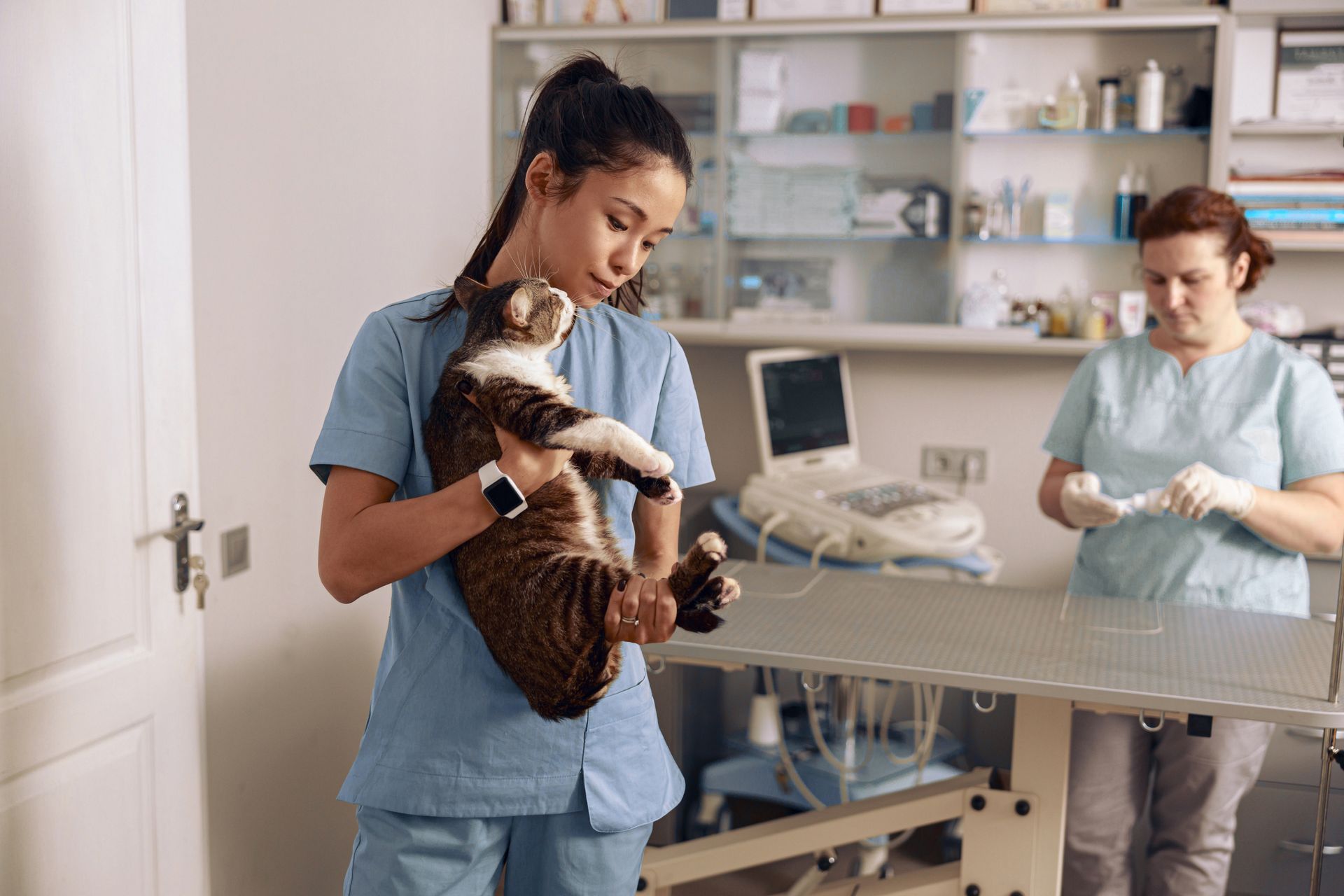
Professional and general liability, property, and workers’ comp for clinical operators with high exposure.
Hands-on · small business
Pet Groomers
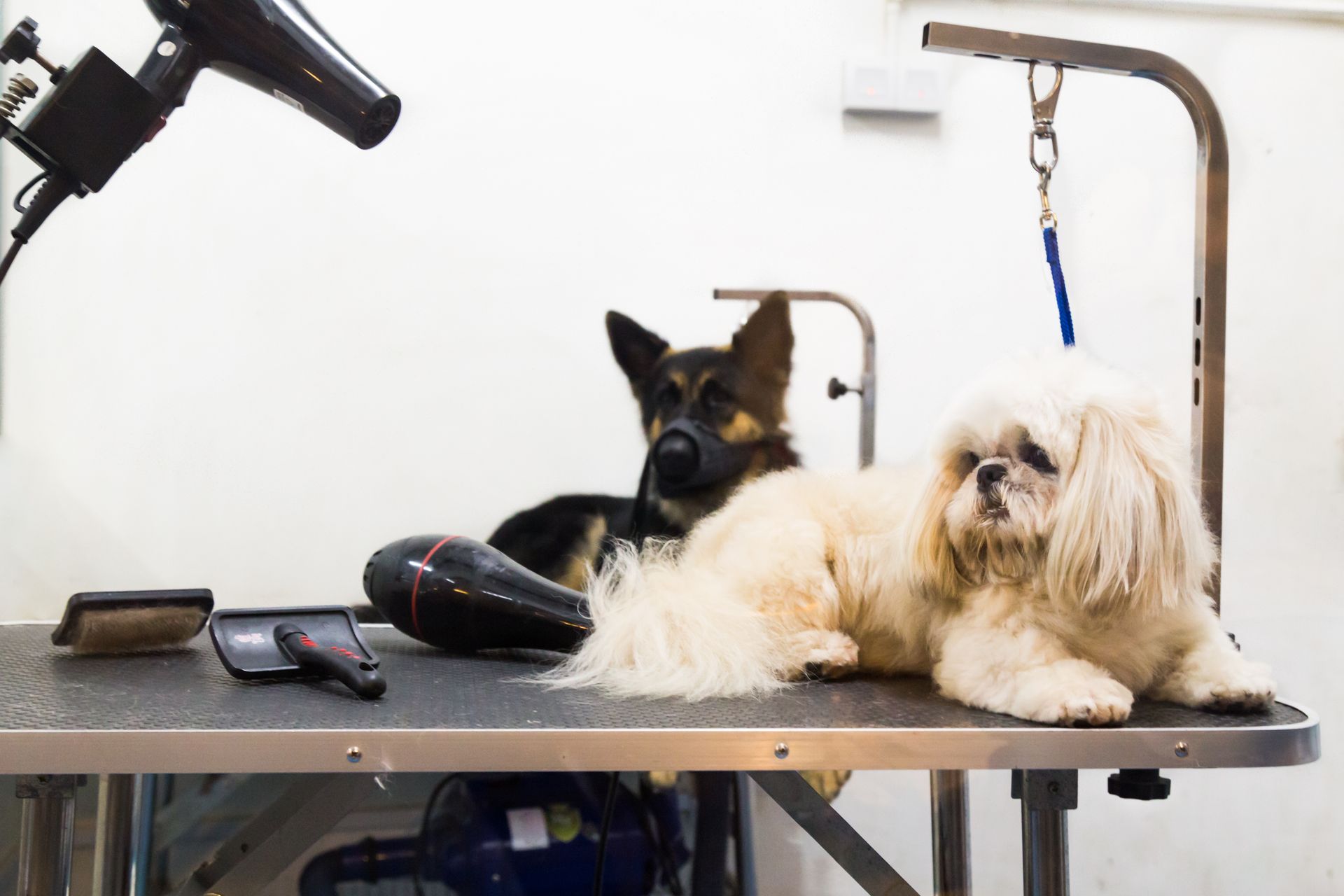
Practical protection for animal handling, equipment, and the day-to-day of the grooming table, shop or mobile.
Safety-forward · overnight
Doggy Daycare & Boarding
Coverage matched to facilities responsible for animals overnight and all day long.
Our reviews
Trusted by pet professionals.
See what owners say about working with a specialist who already understands their business.
Frequently asked
Questions pet pros ask us.
What kinds of pet businesses do you insure?
We insure businesses across the animal-care industry — veterinarians and animal hospitals, groomers, doggy daycares and boarding facilities, kennels and trainers, pet sitters and dog walkers, and pet stores. We also cover breeders, equine operations, pet transporters, shelters and rescues, pet photographers, and aquariums or wildlife facilities.
If your work involves caring for, handling, or selling animals, there is a strong chance we cover it. Tell us what you do and we will confirm.
What is care, custody, and control coverage, and why does it matter?
Care, custody, and control coverage protects you when an animal in your charge is injured, becomes ill, or is lost while in your care. Standard general liability policies often exclude this exact exposure, which leaves a serious gap for pet businesses.
For groomers, boarders, sitters, and clinics, this is one of the most important coverages you can carry. We make sure it is in place and sized to your operation.
How is an independent agency different from buying direct from a carrier?
A direct carrier sells you its own single policy. As an independent agency, we shop multiple specialty insurers and compare programs to find the coverage that fits your business and budget.
That means you get options instead of one quote, and an advocate who works for you, not the carrier. We also handle the renewals and claims support over the life of your policy.
How fast can I get a quote?
Most clients get quoted within one business day. Our industry-specific intake forms collect the right details up front, so we can take your information straight to the carriers without a long back-and-forth.
Need it sooner? Call a specialist directly at (346) 738-7297 and we will move quickly.
Which states do you serve?
We are licensed and actively writing coverage in 12 states: Connecticut, Delaware, Georgia, Kentucky, Massachusetts, New Jersey, New York, North Carolina, Pennsylvania, South Carolina, Tennessee, and Virginia.
We continue to add states as we grow. If you operate outside this list, reach out and we will let you know our latest footprint.
From the blog
Coverage notes for pet professionals.
Plain-language risk tips and coverage explainers, written for owners — not insurance pros.
Speak with a specialist
Let's find the right coverage for your business.
No quote bots, no funnel. Talk to a real pet-insurance specialist who already understands your operation — and shops multiple markets on your behalf.
Call us
(346) 738-7297
Toll-free 845-250-5366
Email
service@petindustryins.com
Visit Us
8 Joyce Plaza
Stony Point, NY 10980