Coverage for veterinary practices
Massachusetts Equine Insurance
Connecticut isn't the most expensive state for equine insurance, but it's not the least expensive either. Several variables determine what you'll actually pay.
Factors Influencing Insurance Costs in the Nutmeg State
Facility Size and Annual Revenue
Running a horse operation in Massachusetts means juggling stable licenses, instructor certifications, and the constant reality that a 1,200-pound animal can turn a routine lesson into a liability nightmare in seconds. A single kick, a loose horse on a public road, or a barn fire can wipe out years of work if you're not properly covered. The state has specific laws that both protect and obligate equine professionals, and understanding how insurance fits into that framework is the difference between surviving a bad day and closing your doors. Whether you're running a boarding facility, offering trail rides, or training competition horses, the insurance requirements for Massachusetts equine operations are more nuanced than most business owners expect. This isn't just about buying a policy and filing it away. It's about matching your actual risk exposure to the right coverage structure, staying compliant with state regulations, and making sure you don't have a gap that only shows up when you file a claim. The costs vary widely depending on what you do, where you do it, and how many people interact with your horses. Here's what you actually need to know before your next renewal, or your first policy.
Understanding Equine Liability and Massachusetts State Law
Massachusetts treats equine operations differently than many other states. The Commonwealth has specific statutes addressing liability for horse-related activities, and these laws directly affect what kind of insurance you need and how much protection it actually provides. Stable owners who assume general business liability rules apply the same way to horse operations often find out the hard way that equine law has its own set of rules.
The state requires a stable license for any facility housing horses, and riding instructors must hold a separate license issued by the Department of Agricultural Resources. These aren't optional: operating without them can void your insurance coverage entirely, because most policies include compliance with local and state regulations as a condition of coverage.
The Massachusetts Equine Activity Liability Act (MGL c.128, § 2D)
The core statute governing horse-related liability in Massachusetts is MGL Chapter 128, Section 2D. This law provides limited liability protection to equine professionals for injuries or death resulting from the inherent risks of equine activities. The key word there is "limited." The statute does not protect you if the injury results from your negligence, faulty equipment you provided, or a dangerous condition on your property that you knew about.
The law covers a range of activities: riding lessons, boarding, shows, farrier work, breeding, and even veterinary treatment. But the protection only kicks in if you've met certain posting and notification requirements. Miss those, and you could lose the liability shield entirely, leaving your insurance as the only thing standing between you and a six-figure lawsuit.
Required Signage and Warning Language for MA Barns
Massachusetts requires equine professionals to post specific warning signs in visible locations at their facility. The sign must contain the exact statutory language from Section 2D, warning participants that equine activities carry inherent risks and that the professional's liability is limited under state law. This isn't a suggestion: it's a legal prerequisite for claiming the statute's protection.
Signs must be posted at entry points to the barn or riding area, and the warning language should also appear in any written contracts or waivers participants sign. Many equine operations in Massachusetts also include this language in lesson agreements and boarding contracts. Failing to post proper signage is one of the most common compliance mistakes we see, and it's one that plaintiffs' attorneys specifically look for when building a case.
Essential Coverage Types for Massachusetts Equine Operations
Not all equine insurance policies are built the same, and the coverage gaps between a general business policy and a specialized equine policy can be enormous. A standard commercial general liability policy might cover a slip-and-fall in your parking lot but exclude injuries caused by horses entirely. That's a problem when your entire business revolves around horses.
Commercial General Liability vs. Care, Custody, or Control (CCC)
Commercial general liability (CGL) covers bodily injury and property damage claims from third parties. If a visitor trips on a loose board in your barn aisle, CGL handles that. But here's the catch: most standard CGL policies exclude animals in your care, custody, or control. That means if a client's horse is injured while in your pasture, or if their horse injures someone else while you're responsible for it, your CGL policy may deny the claim.
Care, Custody, or Control coverage fills that gap. CCC policies protect you when a horse you're boarding, training, or transporting is injured, dies, or causes damage. For any Massachusetts operation that handles horses belonging to other people, CCC coverage isn't optional: it's essential. At Pet Professional Insurance Agency, we see this gap trip up new stable owners constantly. They assume their general liability policy covers everything, and they don't find out otherwise until a boarded horse colics and the owner comes after them for veterinary bills.
Equine Mortality and Major Medical Policies
Mortality insurance covers the death of a horse from illness, injury, or accident. Major medical coverage handles veterinary expenses for serious conditions like colic surgery, fractures, or laminitis treatment. These policies are typically purchased by horse owners rather than stable operators, but if you own lesson horses or broodmares, they're worth serious consideration.
Mortality premiums generally run between 2.5% and 4% of a horse's insured value, depending on the animal's age, breed, use, and health history. A $25,000 lesson horse might cost $625 to $1,000 per year to insure for mortality alone. Major medical add-ons increase that cost but can save you from a $10,000 colic surgery bill. For operations with significant investment in their horse string, these policies protect the financial foundation of the business.
Comparison of Standard vs. Specialized Equine Policies
The difference between a generic business insurance policy and one designed for equine operations shows up most clearly in what's excluded. Standard policies are written for retail stores, offices, and restaurants. They weren't designed for a business where the primary "product" weighs half a ton and has a mind of its own.
Coverage Comparison Table: Basic vs. Extended Protection
| Coverage Area | Standard Commercial Policy | Specialized Equine Policy |
|---|---|---|
| Slip-and-fall in barn | Covered | Covered |
| Horse kicks a visitor | Often excluded | Covered |
| Boarded horse injured in turnout | Excluded (CCC gap) | Covered with CCC endorsement |
| Riding lesson participant falls | May be excluded | Covered with instructor liability |
| Horse escapes and causes car accident | Typically excluded | Covered |
| Tack and equipment theft | Limited or excluded | Covered with inland marine |
| Barn fire damaging client property | May have sublimits | Full coverage available |
| Employee injured by horse | Workers' comp only | Workers' comp + animal-specific riders |
The takeaway here is straightforward: if your business involves horses, you need a policy written for horses. A general commercial policy will leave you exposed in exactly the situations most likely to generate a claim.
Factors Influencing Insurance Costs in the Bay State
Massachusetts equine insurance premiums reflect the state's higher-than-average litigation costs, property values, and regulatory requirements. But the biggest cost drivers are specific to your operation.
Operational Risk Assessment: Boarding, Lessons, and Training
What you do with horses matters far more than how many you have. A quiet boarding-only facility with 10 stalls presents a very different risk profile than a 10-stall barn offering beginner lessons to children. Lesson programs, trail rides, and public-facing events all increase your exposure because they put inexperienced people in contact with horses.
Training operations carry their own risks, particularly if you're working with young or green horses. The more varied your services, the higher your premium. Operations that combine boarding, lessons, training, and events should expect premiums in the range of $2,500 to $7,000 annually for general liability alone, though this varies significantly based on revenue and claims history.
Massachusetts also requires licensed riding instructors to meet specific qualifications, and your insurer will want to verify that anyone teaching on your property holds the proper credentials. Unlicensed instruction is both a legal violation and a potential coverage exclusion.
Property Location and Facility Safety Standards
Where your barn sits affects your premium. Properties near busy roads, in flood zones, or in areas with limited fire department access cost more to insure. Insurers also evaluate your facility's safety features: fire extinguishers, lightning rods, electrical wiring condition, fencing quality, and footing in riding areas.
A barn with a sprinkler system and metal roofing will rate better than a century-old wooden structure with knob-and-tube wiring. If you're planning facility upgrades, talk to your agent first. Some improvements can reduce your premium enough to partially offset the construction cost. Pet Professional Insurance Agency works with multiple specialty markets that understand equine facilities, so we can often find coverage options even for older properties that other agencies struggle to place.
Frequently Asked Questions About MA Equine Insurance
Common Questions from New Stable Owners and Riders
Do I need insurance before I can get a stable license in Massachusetts? The stable license application requires you to meet certain facility standards, but insurance proof may be requested as part of the process. Most lenders and landlords also require liability coverage before you can operate.
Does the Equine Activity Liability Act mean I can't be sued? No. The act limits liability for inherent risks of equine activities, but it does not protect you from claims of negligence, failure to maintain safe premises, or providing faulty equipment. You absolutely still need insurance.
How much liability coverage should I carry? Most equine operations should carry a minimum of $1 million per occurrence with a $2 million aggregate. Operations with lesson programs or public events may want higher limits or an umbrella policy.
Are waivers enough to protect my business? Waivers help, but Massachusetts courts have historically been skeptical of liability waivers, particularly those involving minors. A waiver is one layer of protection: insurance is another. You need both.
Can I add horse show coverage to my existing policy? Many specialized equine policies allow you to add event coverage as an endorsement. If you host or attend shows regularly, discuss this with your agent before the season starts.
What happens if a horse I'm boarding gets loose and causes a car accident? This is exactly the type of claim that standard policies often exclude. A specialized equine liability policy should cover third-party property damage and bodily injury caused by horses in your care.
Your Next Steps for Securing Your Equine Business
Getting the right insurance for a Massachusetts equine operation isn't something you should handle with a quick online form from a generic carrier. The intersection of state equine liability law, stable licensing requirements, and the specific risks of your operation demands a policy tailored to what you actually do, not what a standard business template assumes you do.
Start by reviewing your current coverage against the comparison table above. If you see gaps, especially around care, custody, and control or instructor liability, those need to be addressed before your next riding season. Make sure your signage meets the statutory requirements and that every instructor on your property holds a current Massachusetts license.
Pet Professional Insurance Agency specializes in exactly this kind of coverage. Our intake process is built for equine and animal-care businesses, and most clients hear back within 24 to 48 hours with options from multiple specialty markets. You'll work directly with an agent who understands horse operations, not a generalist reading from a script.
Index
Pet Professional Insurance Agency is fully licensed and permitted to provide commercial insurance solutions for pet businesses across 12 states.
We proudly serve pet professionals throughout the Northeast, Mid-Atlantic, and Southeast. Powered by Joyce Insurance Agency, our team works with leading specialty carriers — including The Hartford, USLI, Nautilus, and Northland — to make sure veterinarians, groomers, boarding facilities, and pet-care businesses receive coverage that fits their real risks in Connecticut, Delaware, Georgia, Kentucky, Massachusetts, New Jersey, New York, North Carolina, Pennsylvania, South Carolina, Tennessee, and Virginia.
About the author
Barnaby Joyce
Founder, Pet Professional Insurance Agency · Licensed Insurance Producer
I started Pet Professional Insurance Agency because I watched pet businesses get handed generic policies that never fit. After years of placing coverage for veterinary practices, grooming salons, doggy daycares, and kennels through a generalist agency, I saw the same gaps over and over — and the same blank stares when an owner tried to explain care, custody, and control to an agent who had never insured an animal in their life.
So I built an agency that does one thing. I work directly with specialty carriers who actually want pet-industry risk, and I sit down with every client personally. You will not get a call center or a chatbot. You will get someone who already speaks your language and shops the market on your behalf. That is the whole idea.
Recommended coverages
Coverages that pair with general liability.
Most pet businesses build on general liability with the lines below. Explore each — every page cross-links to the
industries we serve.
Services & advice
Professional Liability / E&O
Covers claims tied to your professional services and advice — clinical care, training guidance, and the judgment calls you make daily.
The pet-industry gap
Care, Custody & Control
Covers the animals in your charge against injury, illness, or loss — the critical exposure standard liability policies leave out.
Bundled & cost-effective
Business Owners Policy (BOP)
Bundles property and general liability into one package built for small to mid-sized pet businesses — often the simplest base.
Your building & contents
Commercial Property
Protects your building, build-out, equipment, and inventory against fire, theft, and covered losses — front desk to back room.
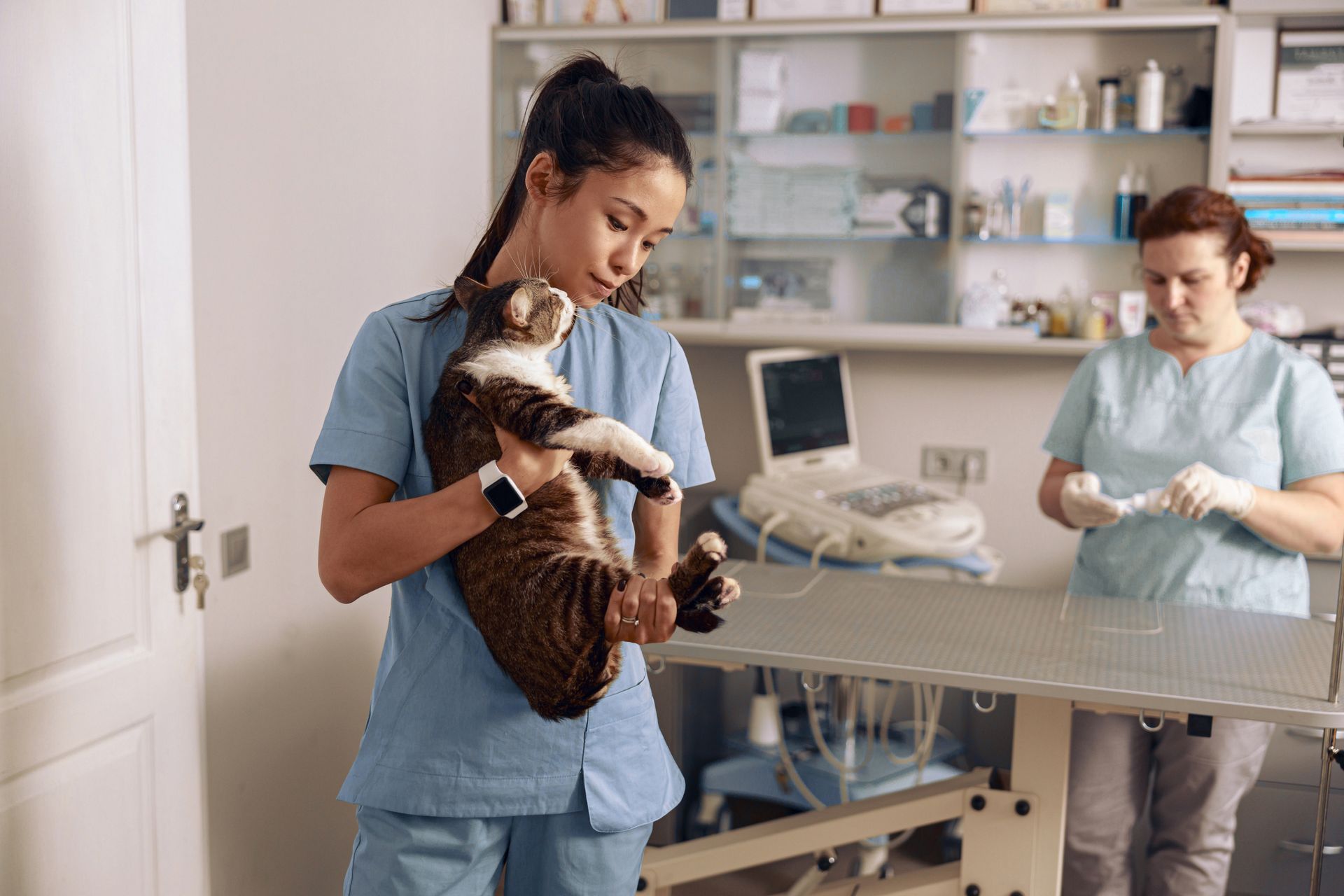
For your team
Workers’ Compensation
Covers medical costs and lost wages when a team member is hurt on the job — required in most states once you have employees.
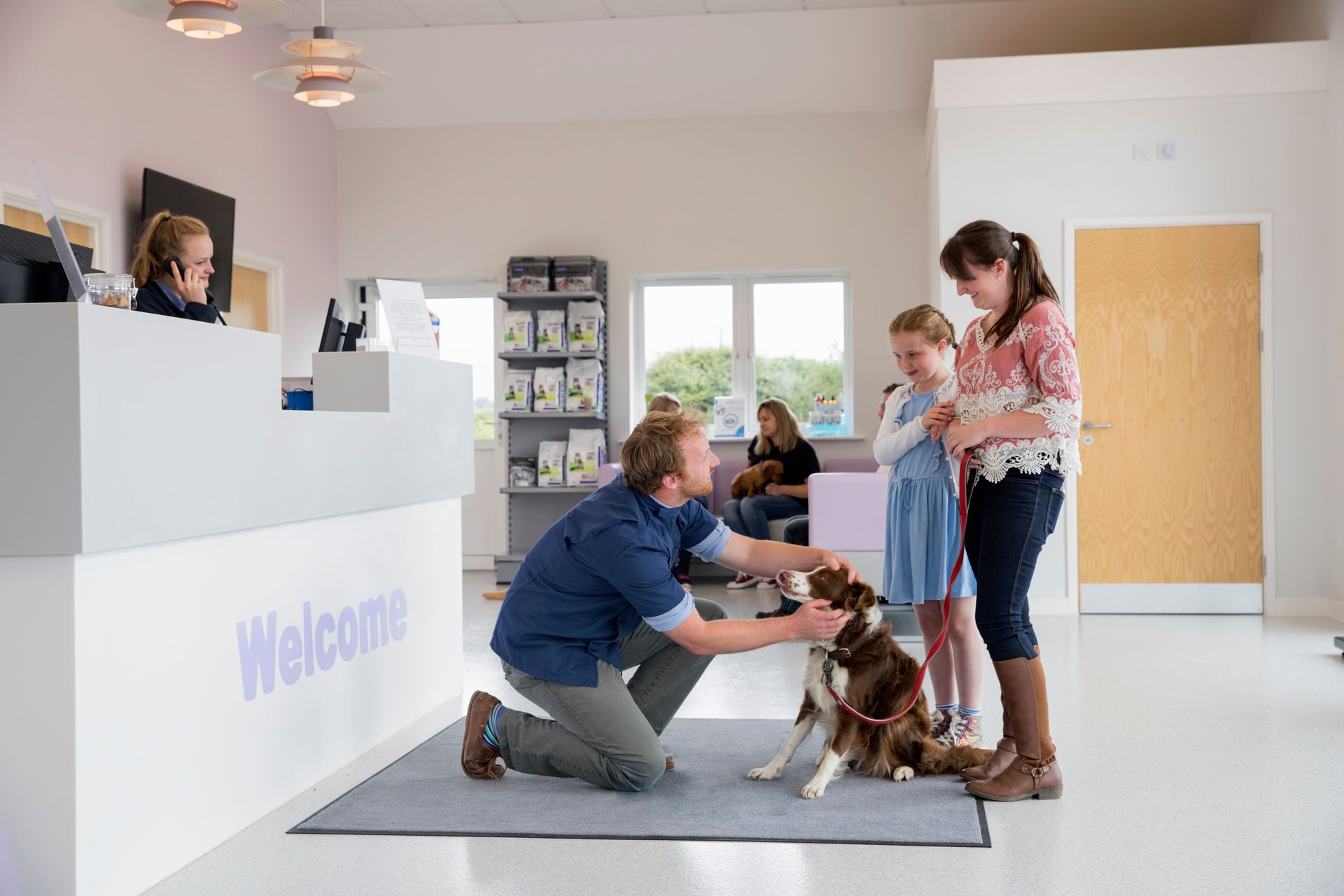
Extra protection
Commercial Umbrella
Adds liability limits above your primary policies for catastrophic claims that exceed standard coverage.
Coverage availability and terms vary by carrier and state. We recommend the right mix for your operation once we talk.
Industries we serve
Built for the businesses that care for animals.
General liability is the baseline for every segment we specialize in. Find the page built for your business.
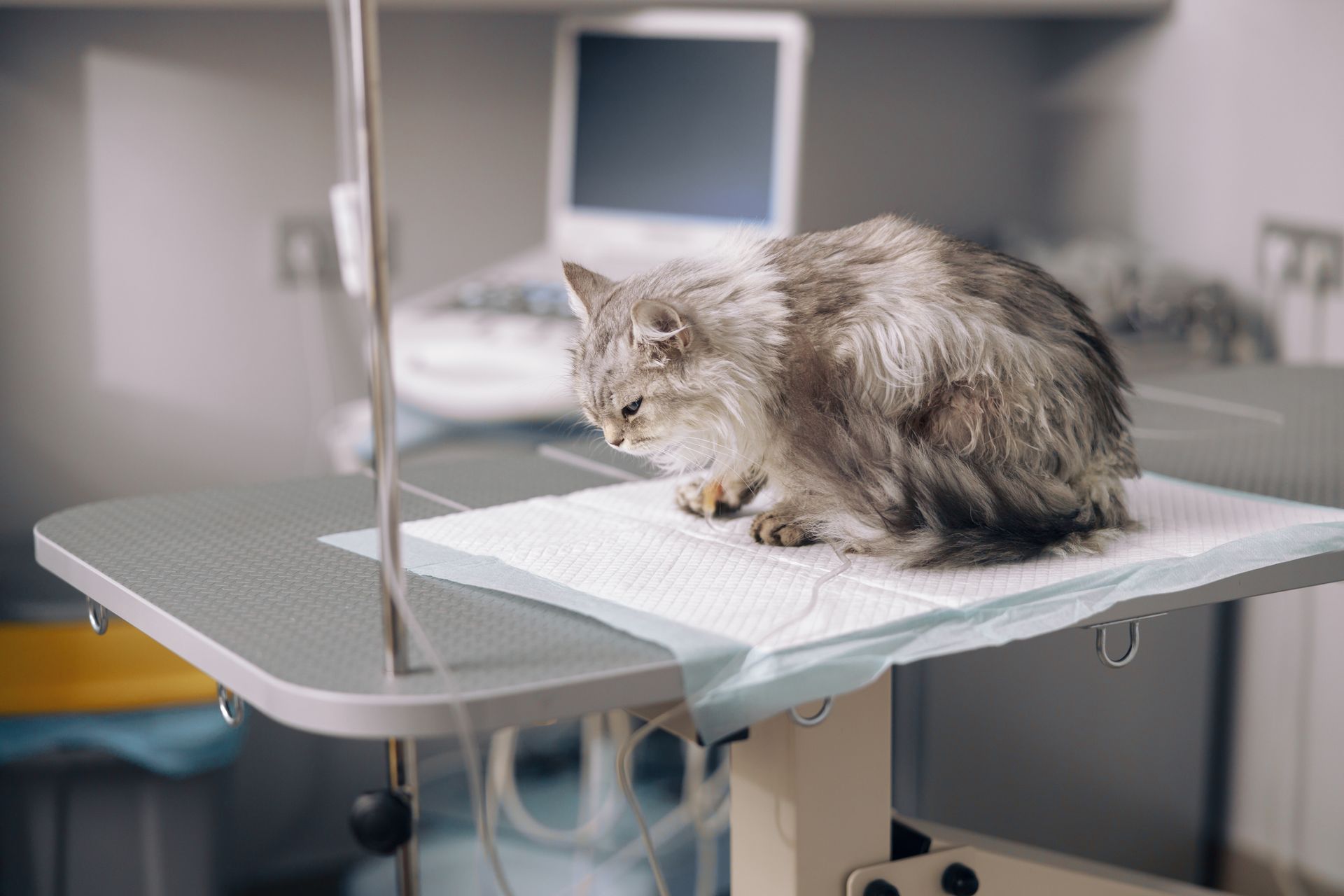
Clinical · high exposure
Veterinarians & Animal Hospitals
Professional and general liability, property, and workers’ comp for clinical operators with high exposure.
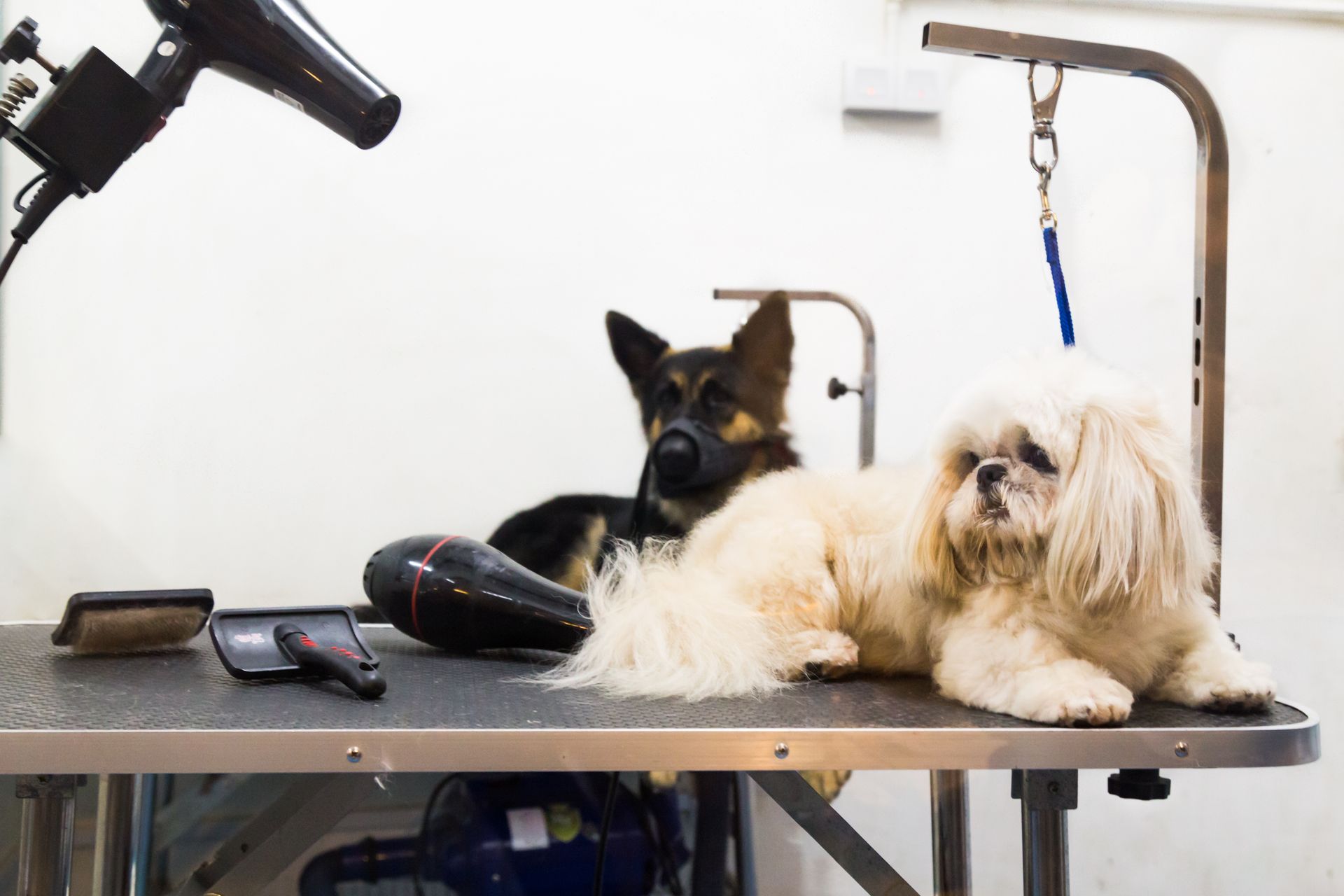
Hands-on · small business
Pet Groomers
Practical protection for animal handling, equipment, and the day-to-day of the grooming table, shop or mobile.

Safety-forward · overnight
Doggy Daycare & Boarding
Coverage matched to facilities responsible for animals overnight and all day long.
Our reviews
Trusted by pet professionals.
See what owners say about working with a specialist who already understands their business.
Frequently asked
Questions pet pros ask us.
What kinds of pet businesses do you insure?
We insure businesses across the animal-care industry — veterinarians and animal hospitals, groomers, doggy daycares and boarding facilities, kennels and trainers, pet sitters and dog walkers, and pet stores. We also cover breeders, equine operations, pet transporters, shelters and rescues, pet photographers, and aquariums or wildlife facilities.
If your work involves caring for, handling, or selling animals, there is a strong chance we cover it. Tell us what you do and we will confirm.
What is care, custody, and control coverage, and why does it matter?
Care, custody, and control coverage protects you when an animal in your charge is injured, becomes ill, or is lost while in your care. Standard general liability policies often exclude this exact exposure, which leaves a serious gap for pet businesses.
For groomers, boarders, sitters, and clinics, this is one of the most important coverages you can carry. We make sure it is in place and sized to your operation.
How is an independent agency different from buying direct from a carrier?
A direct carrier sells you its own single policy. As an independent agency, we shop multiple specialty insurers and compare programs to find the coverage that fits your business and budget.
That means you get options instead of one quote, and an advocate who works for you, not the carrier. We also handle the renewals and claims support over the life of your policy.
How fast can I get a quote?
Most clients get quoted within one business day. Our industry-specific intake forms collect the right details up front, so we can take your information straight to the carriers without a long back-and-forth.
Need it sooner? Call a specialist directly at (346) 738-7297 and we will move quickly.
Which states do you serve?
We are licensed and actively writing coverage in 12 states: Connecticut, Delaware, Georgia, Kentucky, Massachusetts, New Jersey, New York, North Carolina, Pennsylvania, South Carolina, Tennessee, and Virginia.
We continue to add states as we grow. If you operate outside this list, reach out and we will let you know our latest footprint.
From the blog
Coverage notes for pet professionals.
Plain-language risk tips and coverage explainers, written for owners — not insurance pros.
Speak with a specialist
Let's find the right coverage for your business.
No quote bots, no funnel. Talk to a real pet-insurance specialist who already understands your operation — and shops multiple markets on your behalf.
Call us
(346) 738-7297
Toll-free 845-250-5366
Email
service@petindustryins.com
Visit Us
2 Joyce Plaza
Stony Point, NY 10980