Running a public aquarium in New York means managing risks that most business owners never think about: a chiller failure at 2 a.m. that threatens a million-dollar reef tank, a child slipping on a wet observation deck, or a hurricane surge flooding your coastal facility. The insurance needs for these operations are genuinely unique, sitting at the intersection of animal care, heavy mechanical infrastructure, and high-volume public access. If you're operating or planning to open an aquarium anywhere in the state, your coverage has to reflect that complexity, or you're exposed in ways that a standard commercial policy simply won't address.
Aquarium insurance in New York involves specific state mandates, specialized endorsements for living collections, and compliance obligations that differ significantly from other pet-care or entertainment businesses. The costs vary widely depending on your facility's size, location, and the species you house. Getting this wrong doesn't just mean a denied claim; it can mean fines, lawsuits, or being forced to close your doors. This guide breaks down the coverage requirements, cost factors, and compliance details that NY aquarium operators actually need to understand before signing a policy. Laws vary by jurisdiction and change frequently, so always consult a qualified attorney for your specific situation.
Core Insurance Requirements for New York Aquarium Operators
New York imposes several non-negotiable insurance obligations on businesses that welcome the public and employ staff. Aquariums face an especially layered set of requirements because they combine elements of animal exhibition, retail, education, and sometimes food service under one roof. Missing even one mandatory coverage can result in state penalties, and it often surfaces at the worst possible time: during a claim.
The state also regulates animal exhibition facilities through multiple agencies. The USDA's Animal and Plant Health Inspection Service enforces the Animal Welfare Act for exhibitors, while New York's own Agriculture and Markets Law has specific provisions for animal care standards that directly affect your liability profile. Your insurance program needs to account for compliance with both federal and state frameworks.
Mandatory State Coverages: Workers' Comp and Disability
Every New York employer, regardless of industry, must carry workers' compensation and disability benefits insurance. There are no exemptions for small aquariums. If you have even one employee, you need both policies in place before they start work.
Workers' comp for aquarium staff carries some specific risk considerations. Employees handle marine animals that can sting, bite, or cause allergic reactions. They work around high-voltage equipment, wet surfaces, and chemical water treatments. These exposures mean your experience modification rate (your "mod") can climb quickly if you don't manage safety protocols. A single serious injury from a moray eel bite or a slip on an algae-covered service walkway can spike your premiums for three years.
New York also requires paid family leave and statutory disability coverage. These are separate from workers' comp and have their own compliance deadlines. Failure to maintain any of these coverages can result in stop-work orders from the Workers' Compensation Board.
General Liability and Public Safety Standards
General liability insurance isn't technically mandated by state law for all businesses, but no aquarium can realistically operate without it. Your landlord will require it. Your municipality will require it for permits. Any school or group that books a field trip will ask for a certificate of insurance.
For aquariums, the key exposure is premises liability: someone gets hurt on your property. Wet floors near touch tanks, crowded walkways during peak hours, and children reaching into exhibits all create injury scenarios. Most aquarium operators carry at least $1 million per occurrence and $2 million aggregate, though larger facilities with interactive exhibits often need $5 million or more. Umbrella policies fill the gap between your primary limits and realistic lawsuit exposure in New York, where jury awards tend to run high.
AZA-accredited institutions follow rigorous safety and animal care standards that can positively influence your underwriting. Even if you're not AZA-accredited, adopting similar protocols demonstrates risk management maturity to insurers.
Specialized Animal Welfare and Mortality Clauses
Standard commercial policies don't cover your living collection. You need a separate animal mortality policy or a specialized endorsement that values your aquatic specimens and covers death from covered perils like equipment failure, disease, or transit accidents.
Valuation is tricky. A single large shark or a rare coral colony can be worth tens of thousands of dollars. Your policy needs an agreed-value schedule that's updated regularly, because replacement costs for certain species fluctuate with availability and import regulations. Some underwriters also offer coverage for veterinary expenses related to illness or injury, which matters when a single procedure on a sea turtle can run $5,000 or more.
Specialized Protection for Aquatic Infrastructure
An aquarium is essentially a life-support building. The mechanical systems keeping your animals alive represent both your largest capital investment and your greatest single point of failure.
Equipment Breakdown and Life Support Systems
Chillers, heaters, protein skimmers, UV sterilizers, backup generators, and automated dosing systems: if any of these fail, you can lose animals within hours. Equipment breakdown coverage (sometimes called boiler and machinery insurance) pays for the repair or replacement of failed mechanical and electrical equipment, plus the resulting loss of your living collection if the failure causes deaths.
This coverage is separate from your property policy, which typically excludes mechanical breakdown. A property policy covers a fire that destroys your filtration system; equipment breakdown coverage handles the compressor that simply burns out at 3 a.m. on a Saturday. The distinction matters enormously for aquarium operators. At Pet Professional Insurance Agency, we've seen clients discover this gap only after a catastrophic chiller failure wiped out an entire cold-water exhibit.
Water Damage and Sudden Seepage Liability
Aquariums hold thousands of gallons of saltwater in acrylic and glass enclosures, often on upper floors or in shared commercial buildings. A tank failure or pipe burst doesn't just damage your facility: it can flood neighboring tenants and cause structural damage to the building itself.
Your general liability policy should cover third-party property damage from sudden water releases, but check the exclusions carefully. Many policies exclude "continuous or repeated seepage," meaning a slow leak that causes mold damage over weeks might not be covered. You want a policy that clearly distinguishes between sudden discharge (covered) and gradual seepage (often excluded), and you may need a separate environmental liability endorsement if your facility uses chemicals for water treatment.
Security standards for facilities housing live animals also play a role. Institutions following established security protocols for zoos and aquariums tend to experience fewer catastrophic losses and can often negotiate better terms with underwriters.
Comparing Essential vs. Comprehensive Coverage
Not every aquarium needs every type of coverage, but understanding the spectrum helps you make informed decisions about where to invest your premium dollars.
Coverage Comparison Table
| Coverage Type | Essential Plan | Comprehensive Plan |
|---|---|---|
| General Liability | $1M per occurrence / $2M aggregate | $5M+ with umbrella |
| Workers' Compensation | State minimum (mandatory) | State minimum (mandatory) |
| Property | Building and contents | Building, contents, and exhibits |
| Animal Mortality | Not included | Agreed-value schedule for full collection |
| Equipment Breakdown | Not included | Full mechanical/electrical coverage |
| Cyber Liability | Not included | Included with breach response |
| Business Interruption | Basic (30-day limit) | Extended (up to 12 months) |
| Environmental Liability | Not included | Chemical discharge and cleanup |
One note on cyber liability: if your aquarium sells tickets online or stores customer payment data, you're subject to New York's cybersecurity regulations. The NYDFS recently finalized a $2.25 million settlement over cybersecurity failures, and enforcement actions have emphasized the importance of early notification and incident response plans. Cyber coverage isn't optional anymore for any business handling consumer data in New York.
Factors Influencing Aquarium Insurance Premiums in NY
Premium calculations for aquarium operations involve variables that most business owners don't encounter in other industries. Two facilities with identical revenue can see dramatically different rates based on geography and visitor interaction models.
Location Risks: Coastal vs. Inland Facilities
A facility on Long Island or in lower Manhattan faces flood and storm surge exposure that an upstate operation simply doesn't. Flood insurance through the NFIP or private markets is essential for any coastal aquarium, and the premiums reflect the risk. Post-hurricane claim data from the last decade has pushed coastal commercial flood rates significantly higher, particularly in FEMA-designated high-risk zones.
Wind and named-storm deductibles also apply differently depending on your proximity to the coast. Some property policies impose percentage-based deductibles (2% to 5% of insured value) for hurricane damage, which on a $3 million facility means you're absorbing $60,000 to $150,000 out of pocket before coverage kicks in. Inland facilities avoid most of these surcharges but may face other risks like river flooding or ice damage to outdoor exhibits.
Visitor Volume and Interactive Exhibit Exposure
An aquarium welcoming 500,000 visitors per year presents a fundamentally different risk profile than a small educational facility seeing 20,000. More visitors mean more slip-and-fall claims, more potential animal contact incidents, and more vehicle traffic in your parking areas.
Touch tanks and interactive feeding experiences increase your liability exposure substantially. Insurers want to know exactly what species visitors can contact, what supervision protocols you follow, and whether you require waivers. A stingray touch pool, for example, carries documented injury risks that underwriters price specifically. Pet Professional Insurance Agency works with specialty insurance markets that understand these animal-contact exposures and can structure policies that don't simply exclude interactive exhibits altogether.
Common Questions About Insuring NY Aquariums
Do I need a special license to exhibit marine animals in New York? Yes. You'll need a USDA exhibitor license for most species, and New York's Department of Agriculture and Markets has additional permit requirements depending on the animals you house.
How much does aquarium insurance typically cost in New York? Small educational aquariums might pay $8,000 to $15,000 annually for a basic package. Large public facilities with interactive exhibits can spend $50,000 to $200,000 or more, depending on collection value and visitor volume.
Does my property policy cover fish deaths from a power outage? Usually not. You need a separate animal mortality policy or equipment breakdown coverage that specifically includes consequential loss of living specimens.
Can I bundle all my coverages into one policy? Some specialty markets offer package policies for animal exhibition facilities, but you'll almost always need separate workers' comp, flood (if applicable), and possibly cyber liability policies.
What happens if a visitor is bitten or stung by an exhibit animal? Your general liability policy should respond, but the claim outcome depends on your safety protocols, signage, and whether the visitor followed posted rules. Waivers help but aren't bulletproof in New York courts.
Are volunteer docents covered under my workers' comp? New York requires workers' comp coverage for volunteers in certain situations. Check with your agent, because an uncovered volunteer injury can result in significant penalties.
Your Next Steps for Securing a Policy
Getting the right insurance for a New York aquarium operation isn't something you should handle with a generalist agent who writes auto policies and homeowners coverage on the side. The risks are too specialized, and the regulatory requirements are too specific.
Start by documenting your complete collection inventory with current replacement values. Map out every piece of mechanical equipment that keeps your animals alive. Calculate your realistic business interruption exposure: how long could you survive with no revenue if a major system failed? These numbers form the foundation of any meaningful coverage discussion.
Index
Pet Professional Insurance Agency is fully licensed and permitted to provide commercial insurance solutions for pet businesses across 12 states.
We proudly serve pet professionals throughout the Northeast, Mid-Atlantic, and Southeast. Powered by Joyce Insurance Agency, our team works with leading specialty carriers — including The Hartford, USLI, Nautilus, and Northland — to make sure veterinarians, groomers, boarding facilities, and pet-care businesses receive coverage that fits their real risks in Connecticut, Delaware, Georgia, Kentucky, Massachusetts, New Jersey, New York, North Carolina, Pennsylvania, South Carolina, Tennessee, and Virginia.
About the author
Barnaby Joyce
Founder, Pet Professional Insurance Agency · Licensed Insurance Producer
I started Pet Professional Insurance Agency because I watched pet businesses get handed generic policies that never fit. After years of placing coverage for veterinary practices, grooming salons, doggy daycares, and kennels through a generalist agency, I saw the same gaps over and over — and the same blank stares when an owner tried to explain care, custody, and control to an agent who had never insured an animal in their life.
So I built an agency that does one thing. I work directly with specialty carriers who actually want pet-industry risk, and I sit down with every client personally. You will not get a call center or a chatbot. You will get someone who already speaks your language and shops the market on your behalf. That is the whole idea.
Recommended coverages
Coverages that pair with general liability.
Most pet businesses build on general liability with the lines below. Explore each — every page cross-links to the
industries we serve.
Services & advice
Professional Liability / E&O
Covers claims tied to your professional services and advice — clinical care, training guidance, and the judgment calls you make daily.
The pet-industry gap
Care, Custody & Control
Covers the animals in your charge against injury, illness, or loss — the critical exposure standard liability policies leave out.
Bundled & cost-effective
Business Owners Policy (BOP)
Bundles property and general liability into one package built for small to mid-sized pet businesses — often the simplest base.
Your building & contents
Commercial Property
Protects your building, build-out, equipment, and inventory against fire, theft, and covered losses — front desk to back room.
For your team
Workers’ Compensation
Covers medical costs and lost wages when a team member is hurt on the job — required in most states once you have employees.
Extra protection
Commercial Umbrella
Adds liability limits above your primary policies for catastrophic claims that exceed standard coverage.
Coverage availability and terms vary by carrier and state. We recommend the right mix for your operation once we talk.
Industries we serve
Built for the businesses that care for animals.
General liability is the baseline for every segment we specialize in. Find the page built for your business.
Clinical · high exposure
Veterinarians & Animal Hospitals
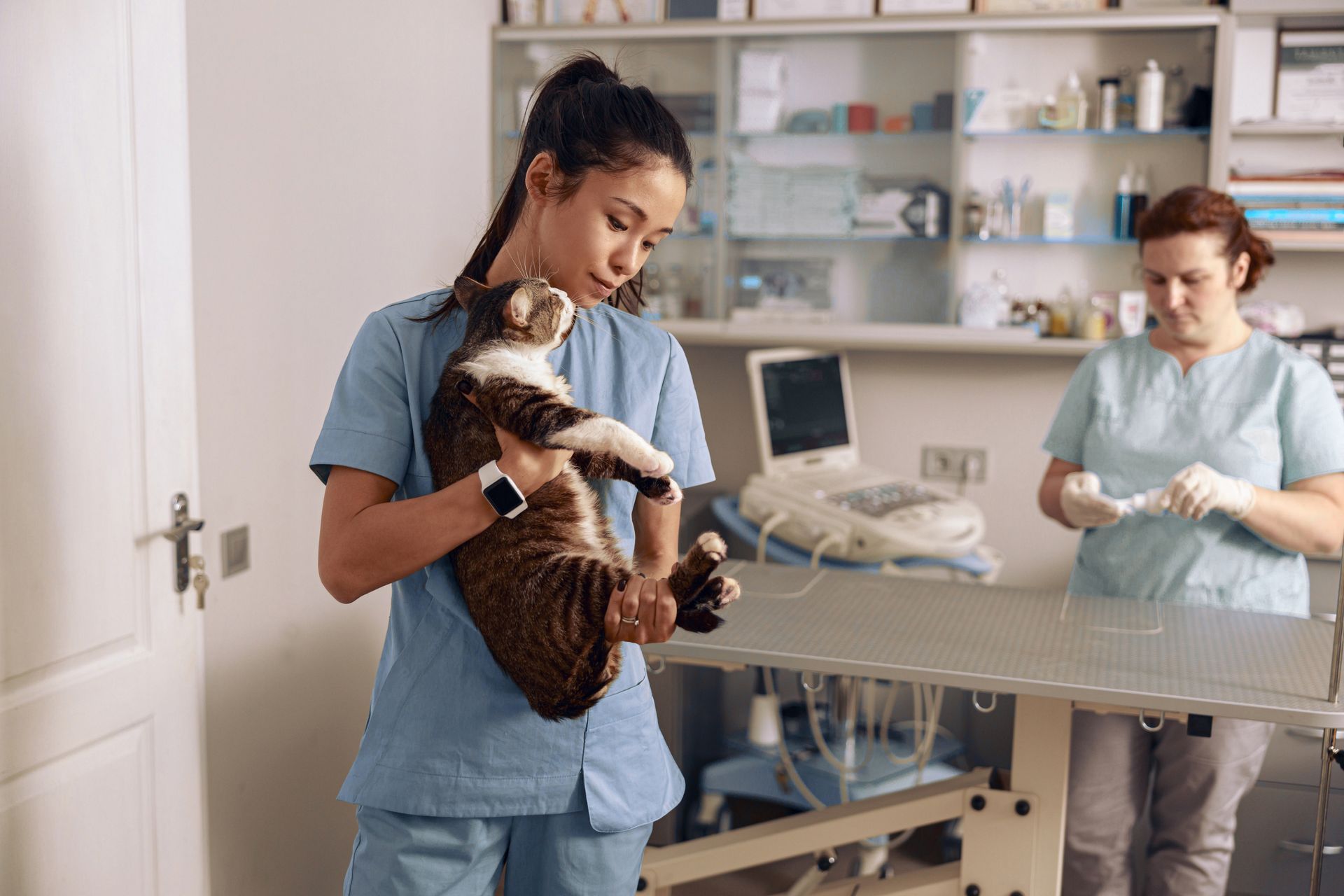
Professional and general liability, property, and workers’ comp for clinical operators with high exposure.
Hands-on · small business
Pet Groomers
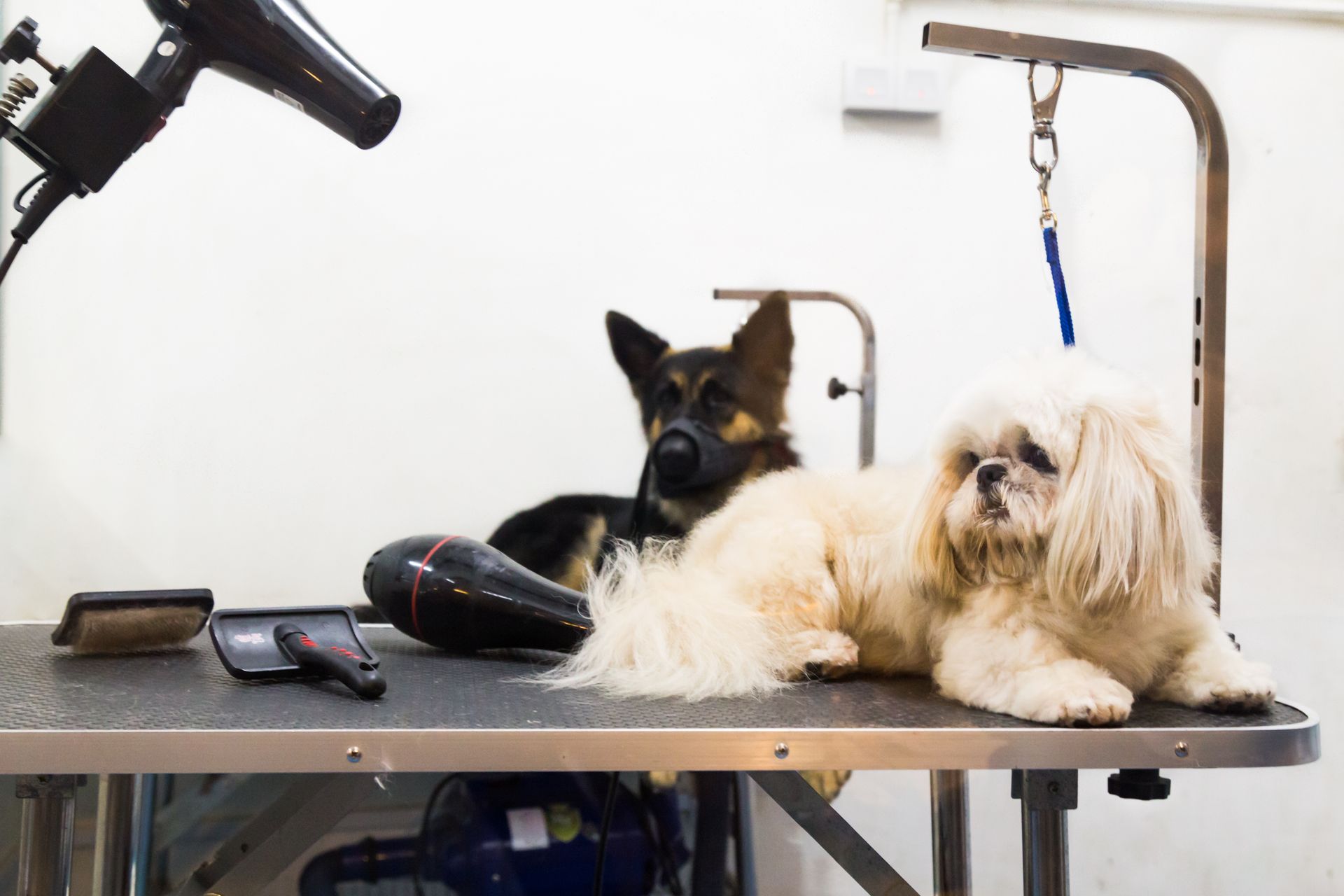
Practical protection for animal handling, equipment, and the day-to-day of the grooming table, shop or mobile.

Safety-forward · overnight
Doggy Daycare & Boarding
Coverage matched to facilities responsible for animals overnight and all day long.
Our reviews
Trusted by pet professionals.
See what owners say about working with a specialist who already understands their business.
Frequently asked
Questions pet pros ask us.
What kinds of pet businesses do you insure?
We insure businesses across the animal-care industry — veterinarians and animal hospitals, groomers, doggy daycares and boarding facilities, kennels and trainers, pet sitters and dog walkers, and pet stores. We also cover breeders, equine operations, pet transporters, shelters and rescues, pet photographers, and aquariums or wildlife facilities.
If your work involves caring for, handling, or selling animals, there is a strong chance we cover it. Tell us what you do and we will confirm.
What is care, custody, and control coverage, and why does it matter?
Care, custody, and control coverage protects you when an animal in your charge is injured, becomes ill, or is lost while in your care. Standard general liability policies often exclude this exact exposure, which leaves a serious gap for pet businesses.
For groomers, boarders, sitters, and clinics, this is one of the most important coverages you can carry. We make sure it is in place and sized to your operation.
How is an independent agency different from buying direct from a carrier?
A direct carrier sells you its own single policy. As an independent agency, we shop multiple specialty insurers and compare programs to find the coverage that fits your business and budget.
That means you get options instead of one quote, and an advocate who works for you, not the carrier. We also handle the renewals and claims support over the life of your policy.
How fast can I get a quote?
Most clients get quoted within one business day. Our industry-specific intake forms collect the right details up front, so we can take your information straight to the carriers without a long back-and-forth.
Need it sooner? Call a specialist directly at (346) 738-7297 and we will move quickly.
Which states do you serve?
We are licensed and actively writing coverage in 12 states: Connecticut, Delaware, Georgia, Kentucky, Massachusetts, New Jersey, New York, North Carolina, Pennsylvania, South Carolina, Tennessee, and Virginia.
We continue to add states as we grow. If you operate outside this list, reach out and we will let you know our latest footprint.
From the blog
Coverage notes for pet professionals.
Plain-language risk tips and coverage explainers, written for owners — not insurance pros.
Speak with a specialist
Let's find the right coverage for your business.
No quote bots, no funnel. Talk to a real pet-insurance specialist who already understands your operation — and shops multiple markets on your behalf.
Call us
(346) 738-7297
Toll-free 845-250-5366
Email
service@petindustryins.com
Visit Us
8 Joyce Plaza
Stony Point, NY 10980