Coverage for veterinary practices
Norwalk, CT Pet Store Insurance
Because we are independent, we compare general liability programs across specialty carriers that want pet-industry risk — which often reveals real premium differences for identical coverage.
General liability covers bodily injury and property damage that occur during your business operations. If a client's dog knocks over a lamp in their home while you're on a visit, or if someone trips over a leash you left on a sidewalk, general liability responds.
Professional liability (sometimes called errors and omissions) covers mistakes in your professional judgment. If you fail to administer medication as instructed and the pet gets sick, or if you miss signs of a medical emergency, professional liability is what protects you. Most pet sitters need both, and confusing the two is one of the most common mistakes new business owners make.
Not all insurance policies are built the same, and pet sitters need coverage that addresses the specific ways things go wrong in animal care. A standard business owner's policy won't cover a dog that escapes your care and gets hit by a car, or a cat that develops a medical emergency while you're watching it overnight.
Core Coverage Types for Pet Care Professionals
FAQ: Does my insurance cover vet bills if a dog gets sick?
This scenario falls under your general liability policy, which covers third-party bodily injury claims and associated legal defense costs. If your employee was walking a boarded dog and it bit someone on a Rochester sidewalk, your GL policy would respond to the claim.
Animal Bailee and Care, Custody, or Control
General Liability vs. Professional Liability
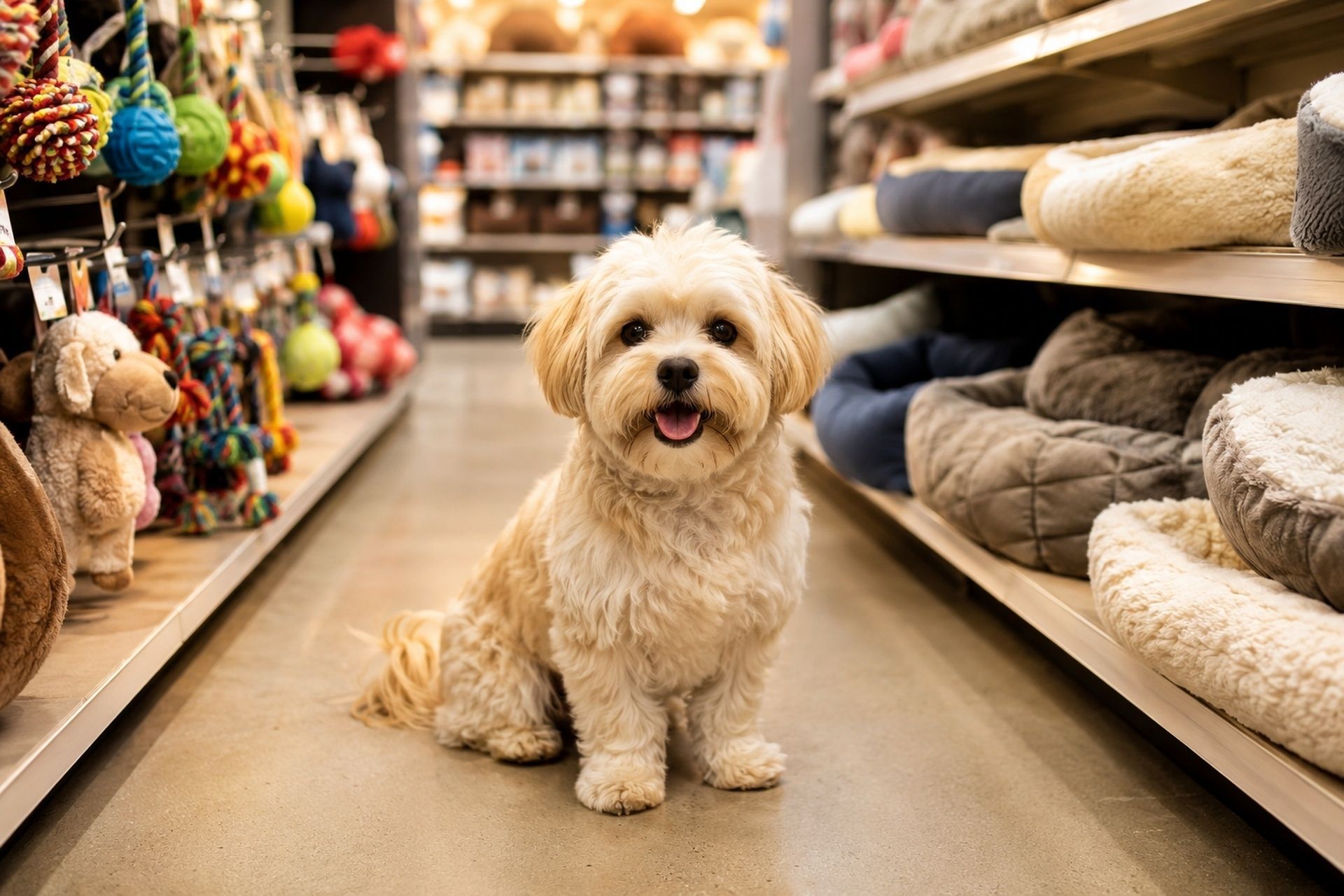
Running a pet store in Norwalk means dealing with risks that most general business owners never think about: a dog biting a customer in the store, a parrot escaping during a nail trim, or a bag of contaminated food making someone's cat sick. These aren't hypothetical scenarios. They're actual claims that pet retailers across Connecticut have filed in recent years. And if you don't have the right insurance in place, a single incident can drain your savings faster than a puppy chews through a leash.
Pet store insurance in Norwalk requires understanding both Connecticut's specific regulatory requirements and the unique hazards that come with selling live animals, food products, and grooming supplies. The costs aren't uniform either: what a small fish-and-reptile shop on Wall Street pays looks very different from what a full-service pet retailer with grooming stations near Stew Leonard's pays. This guide breaks down what coverage you actually need, what Connecticut law demands, and what Norwalk pet store owners are realistically paying in 2026.
One thing worth knowing upfront: pet retail insurance is a specialty niche. A generalist agent who mostly writes policies for restaurants and offices may not understand care, custody, and control coverage or animal bailee liability. That gap in expertise can leave you dangerously underinsured without realizing it until a claim hits.
Understanding Pet Store Insurance in Norwalk
Norwalk sits in Fairfield County, one of the higher-cost commercial insurance markets in Connecticut. That's partly because property values are elevated, foot traffic is significant in retail corridors, and litigation costs in the county tend to run higher than in rural parts of the state. All of those factors influence what insurers charge for commercial policies here.
Pet stores also occupy a unique risk category. You're not just selling merchandise off shelves. You're housing live animals, handling food products subject to recall, and potentially offering services like grooming or nail trimming. Each of those activities creates a distinct liability exposure that a standard retail policy might not fully address.
Why Local Norwalk Businesses Need Specific Protection
A pet store on Main Avenue faces different exposures than one in a strip mall off Route 1. Foot traffic patterns, building age, proximity to residential areas, and even local flood zone designations all affect your risk profile. Norwalk's coastal location means some properties fall within FEMA flood zones, which can require separate flood coverage that standard commercial property policies exclude.
Local zoning also matters. Connecticut municipalities regulate where live animals can be sold, and Norwalk has its own set of ordinances governing animal retail. If you're found operating outside those parameters, your insurer could deny a claim based on a compliance exclusion. Working with an agency that understands pet-industry risks, like Pet Professional Insurance Agency, helps ensure your policy actually matches how your store operates day to day.
Common Risks for Connecticut Pet Retailers
The claims pet stores file most frequently fall into a few predictable categories. Animal bites top the list: dogs, cats, and even small mammals like ferrets can injure customers or employees. Slip-and-fall injuries from wet floors (common in stores with aquariums or grooming areas) come in second. Product liability claims tied to contaminated food or defective toys round out the top three.
Connecticut law holds pet sellers to specific standards regarding animal health. If you sell a puppy or kitten that turns out to have a congenital condition, the buyer has legal recourse under Connecticut's animal health statutes. That kind of claim falls under product liability, and without proper coverage, you're paying veterinary bills and potential damages out of pocket.
Connecticut State Insurance Requirements for Pet Businesses
Connecticut doesn't have a single "pet store insurance" mandate, but several state laws create insurance obligations that apply to pet retailers. Understanding these requirements isn't optional: violating them can result in fines, business license revocation, or personal liability for the store owner.
Mandatory Workers' Compensation Rules
Connecticut requires workers' compensation insurance for any business with one or more employees. There's no exemption for small businesses or family-run shops. If you have even a single part-time employee stocking shelves or cleaning cages, you need a workers' comp policy. The penalties for non-compliance are steep: fines up to $50,000 and potential criminal charges for willful violations.
Workers' comp rates for pet retail in Connecticut are based on classification codes that reflect the risk level of the work. Pet store employees face higher-than-average injury rates compared to general retail because of animal handling. Expect to pay somewhere between $1.50 and $3.00 per $100 of payroll, depending on your claims history and the specific duties your staff performs.
Commercial Auto Insurance for Delivery Services
If your Norwalk pet store offers delivery, whether that's dropping off aquarium supplies or delivering bulk dog food orders, you need commercial auto insurance. Personal auto policies exclude business use, and if an employee gets into an accident while making a delivery in a company vehicle (or even their own car on company time), your personal policy won't cover it.
Connecticut requires minimum auto liability limits of 25/50/25 ($25,000 per person, $50,000 per accident for bodily injury, $25,000 for property damage). Most insurance professionals recommend carrying significantly higher limits, especially if you're driving in Norwalk's congested downtown corridors. A hired and non-owned auto endorsement covers employees using their personal vehicles for store business, which is a common gap that catches small retailers off guard.
Essential Coverage Types: Basic vs. Extended
Not every pet store needs the same policy structure. A shop selling only fish and supplies has a very different risk profile than one offering live puppies, grooming, and training classes. The key is matching your coverage to your actual operations.
Comparison of Standard and Enhanced Policy Options
| Coverage Type | Standard Policy | Enhanced Policy |
|---|---|---|
| General Liability | $1M per occurrence / $2M aggregate | $2M per occurrence / $4M aggregate |
| Property Coverage | Building and contents at replacement cost | Includes equipment breakdown and spoilage |
| Animal Bailee | Not included | Covers animals in your care, custody, and control |
| Product Liability | Basic coverage for sold goods | Extended to include recall expense coverage |
| Professional Liability | Not included | Covers grooming errors, training advice claims |
| Business Interruption | 30-day waiting period, limited payout | 24-hour waiting period, 12-month coverage |
| Cyber Liability | Not included | Covers POS system breaches, customer data theft |
Most Norwalk pet stores that sell live animals should seriously consider the enhanced tier. Animal bailee coverage alone can save you tens of thousands if a boarded animal or a display animal is injured, escapes, or dies while in your care. Pet Professional Insurance Agency works with multiple specialty markets that offer these coverages specifically designed for pet retailers, which is worth exploring if your current agent doesn't specialize in this space.
Factors Influencing Insurance Costs in Norwalk
Your premium isn't pulled from thin air. Insurers use a combination of location-specific data, business-specific variables, and industry loss history to calculate what you'll pay. Norwalk's position in Fairfield County means you're starting from a slightly higher baseline than stores in less densely populated parts of Connecticut.
Average Premiums for Local Small Businesses
A typical Norwalk pet store with $300,000 to $500,000 in annual revenue, two to four employees, and no grooming services can expect to pay roughly $2,500 to $4,500 per year for a general liability and property package. Add grooming services, and that number jumps to $4,000 to $7,000. Stores selling live dogs and cats often see premiums in the $5,500 to $9,000 range because of the additional product liability and animal bailee exposures.
These figures are 2026 estimates based on current market conditions in Fairfield County. Your actual premium could be higher or lower depending on your claims history, building construction type, and the specific coverages you select. Connecticut's animal sale regulations also create compliance-related exposures that insurers factor into pricing.
How Revenue and Staff Size Impact Your Rate
General liability premiums are typically calculated per $1,000 of revenue. More revenue means more customer interactions, which means more potential claims. A store doing $800,000 in annual sales will pay roughly 40-60% more in GL premiums than one doing $300,000.
Staff size affects workers' compensation costs directly, since those premiums are based on total payroll. But it also indirectly influences your liability rates. More employees handling animals means more opportunities for bites, scratches, and handling errors. Stores with five or more employees should also consider an employment practices liability policy, which covers claims like wrongful termination or discrimination that general liability excludes.
Frequently Asked Questions About Pet Store Insurance
Does my landlord's insurance cover my pet store? No. Your landlord's policy covers the building structure, not your inventory, equipment, or liability. You need your own commercial policy to protect your business assets and cover claims from customers.
Am I liable if an animal I sold bites someone after the sale? Potentially, yes. Connecticut law holds sellers responsible for known health or behavioral issues in animals sold. Product liability coverage helps protect you against these claims.
Do I need separate insurance for my online sales? If you ship products, your general liability policy may need a products-completed operations endorsement that covers shipped goods. Check with your agent to confirm your e-commerce activity is included.
What happens if a power outage kills my fish or reptile inventory? Standard property policies often exclude losses from utility interruption. Equipment breakdown coverage with a spoilage endorsement can cover livestock losses from power failures or HVAC malfunctions.
Can I bundle grooming insurance with my retail policy? Yes, most specialty pet-industry insurers offer package policies that combine retail and grooming coverages. This is usually more cost-effective than buying separate policies, and agencies like Pet Professional Insurance Agency can place these through markets that understand both exposures.
Is flood insurance required in Norwalk?
If your store is in a FEMA-designated flood zone and you have a federally backed mortgage, yes. Even if it's not required, Norwalk's coastal proximity makes it worth considering. Standard commercial property policies exclude flood damage entirely.
Making the Right Choice for Your Norwalk Store
Picking the right insurance for your Norwalk pet store isn't about finding the lowest premium. It's about making sure the policy actually responds when something goes wrong. A $3,000 policy that excludes animal bailee coverage is worthless when a customer's dog gets injured during a grooming session you offered as a side service.
Start by documenting every activity your store engages in: retail sales, live animal sales, grooming, training, boarding, delivery, online sales. Then make sure each activity has corresponding coverage. Gaps between what you do and what your policy covers are where claims get denied.
Index
Pet Professional Insurance Agency is fully licensed and permitted to provide commercial insurance solutions for pet businesses across 12 states.
We proudly serve pet professionals throughout the Northeast, Mid-Atlantic, and Southeast. Powered by Joyce Insurance Agency, our team works with leading specialty carriers — including The Hartford, USLI, Nautilus, and Northland — to make sure veterinarians, groomers, boarding facilities, and pet-care businesses receive coverage that fits their real risks in Connecticut, Delaware, Georgia, Kentucky, Massachusetts, New Jersey, New York, North Carolina, Pennsylvania, South Carolina, Tennessee, and Virginia.
About the author
Barnaby Joyce
Founder, Pet Professional Insurance Agency · Licensed Insurance Producer
I started Pet Professional Insurance Agency because I watched pet businesses get handed generic policies that never fit. After years of placing coverage for veterinary practices, grooming salons, doggy daycares, and kennels through a generalist agency, I saw the same gaps over and over — and the same blank stares when an owner tried to explain care, custody, and control to an agent who had never insured an animal in their life.
So I built an agency that does one thing. I work directly with specialty carriers who actually want pet-industry risk, and I sit down with every client personally. You will not get a call center or a chatbot. You will get someone who already speaks your language and shops the market on your behalf. That is the whole idea.
Recommended coverages
Coverages that pair with general liability.
Most pet businesses build on general liability with the lines below. Explore each — every page cross-links to the
industries we serve.
Services & advice
Professional Liability / E&O
Covers claims tied to your professional services and advice — clinical care, training guidance, and the judgment calls you make daily.
The pet-industry gap
Care, Custody & Control
Covers the animals in your charge against injury, illness, or loss — the critical exposure standard liability policies leave out.
Bundled & cost-effective
Business Owners Policy (BOP)
Bundles property and general liability into one package built for small to mid-sized pet businesses — often the simplest base.
Your building & contents
Commercial Property
Protects your building, build-out, equipment, and inventory against fire, theft, and covered losses — front desk to back room.
For your team
Workers’ Compensation
Covers medical costs and lost wages when a team member is hurt on the job — required in most states once you have employees.
Extra protection
Commercial Umbrella
Adds liability limits above your primary policies for catastrophic claims that exceed standard coverage.
Coverage availability and terms vary by carrier and state. We recommend the right mix for your operation once we talk.
Industries we serve
Built for the businesses that care for animals.
General liability is the baseline for every segment we specialize in. Find the page built for your business.
Clinical · high exposure
Veterinarians & Animal Hospitals
Professional and general liability, property, and workers’ comp for clinical operators with high exposure.
Hands-on · small business
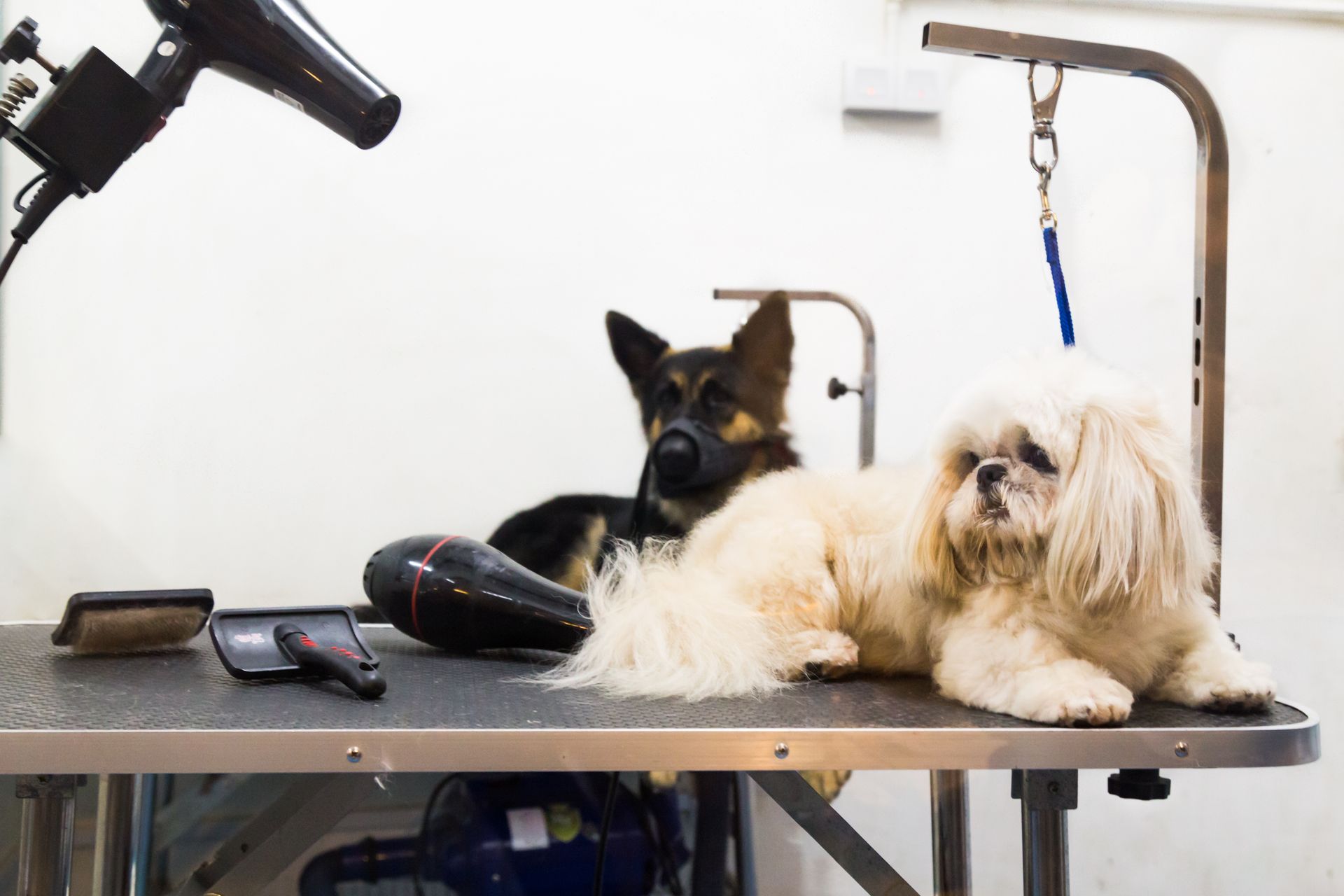
Pet Groomers
Practical protection for animal handling, equipment, and the day-to-day of the grooming table, shop or mobile.
Safety-forward · overnight
Doggy Daycare & Boarding
Coverage matched to facilities responsible for animals overnight and all day long.
Our reviews
Trusted by pet professionals.
See what owners say about working with a specialist who already understands their business.
Frequently asked
Questions pet pros ask us.
What kinds of pet businesses do you insure?
We insure businesses across the animal-care industry — veterinarians and animal hospitals, groomers, doggy daycares and boarding facilities, kennels and trainers, pet sitters and dog walkers, and pet stores. We also cover breeders, equine operations, pet transporters, shelters and rescues, pet photographers, and aquariums or wildlife facilities.
If your work involves caring for, handling, or selling animals, there is a strong chance we cover it. Tell us what you do and we will confirm.
What is care, custody, and control coverage, and why does it matter?
Care, custody, and control coverage protects you when an animal in your charge is injured, becomes ill, or is lost while in your care. Standard general liability policies often exclude this exact exposure, which leaves a serious gap for pet businesses.
For groomers, boarders, sitters, and clinics, this is one of the most important coverages you can carry. We make sure it is in place and sized to your operation.
How is an independent agency different from buying direct from a carrier?
A direct carrier sells you its own single policy. As an independent agency, we shop multiple specialty insurers and compare programs to find the coverage that fits your business and budget.
That means you get options instead of one quote, and an advocate who works for you, not the carrier. We also handle the renewals and claims support over the life of your policy.
How fast can I get a quote?
Most clients get quoted within one business day. Our industry-specific intake forms collect the right details up front, so we can take your information straight to the carriers without a long back-and-forth.
Need it sooner? Call a specialist directly at (346) 738-7297 and we will move quickly.
Which states do you serve?
We are licensed and actively writing coverage in 12 states: Connecticut, Delaware, Georgia, Kentucky, Massachusetts, New Jersey, New York, North Carolina, Pennsylvania, South Carolina, Tennessee, and Virginia.
We continue to add states as we grow. If you operate outside this list, reach out and we will let you know our latest footprint.
From the blog
Coverage notes for pet professionals.
Plain-language risk tips and coverage explainers, written for owners — not insurance pros.
Speak with a specialist
Let's find the right coverage for your business.
No quote bots, no funnel. Talk to a real pet-insurance specialist who already understands your operation — and shops multiple markets on your behalf.
Call us
(346) 738-7297
Toll-free 845-250-5366
Email
service@petindustryins.com
Visit Us
2 Joyce Plaza
Stony Point, NY 10980