New Jersey ranks among the most horse-dense states in the country, with roughly 42,000 horses spread across all 21 counties. The equine industry contributes approximately $3.2 billion to the state's economy annually, supporting thousands of jobs in breeding, training, boarding, and racing. That economic footprint comes with real risk: a single kicked stable hand, a loose horse on a county road, or a colic surgery on a six-figure warmblood can generate losses that bankrupt an uninsured operation overnight.
If you run a horse farm, training facility, or boarding stable in New Jersey, the insurance questions you face are different from those of a typical livestock operation. The state has its own liability statutes, specific workers' compensation thresholds, and a competitive show and racing circuit that raises the stakes. Getting coverage right means understanding what the law requires, what gaps exist in standard farm policies, and where specialized equine insurance fills those gaps. This guide breaks down coverage requirements, cost factors, and compliance details for NJ equine operations so you can protect your business without overpaying.
Understanding Equine Liability and New Jersey State Laws
New Jersey treats equine activities differently than many states. While the Garden State does offer some liability protection for horse professionals, that protection is narrower than operators often assume. A trail ride gone wrong, a lesson student's broken collarbone, or a boarder's horse injuring a visitor can all generate lawsuits that test the limits of whatever statutory shield you think you have.
The state also imposes specific obligations around employee coverage that catch small operations off guard. A farm with just two or three paid workers may already be subject to workers' compensation requirements, and the penalties for non-compliance are steep. Understanding both the protections and the obligations under New Jersey law is the starting point for building the right insurance program.
The NJ Equine Activity Liability Act Explained
New Jersey's Equine Activities Liability Act (N.J.S.A. 5:15-1 et seq.) provides limited liability protection for equine professionals, but it is not a blanket shield. The law generally states that participants in equine activities assume inherent risks associated with horses, such as unpredictable behavior, kicking, or bolting. This means a rider who falls during a lesson can't automatically sue the instructor for an injury caused by the horse's natural behavior.
Here's the catch: the exceptions to this protection are significant. If you provide faulty tack, fail to match a horse to a rider's skill level, or neglect to warn participants about known hazards, the liability shield disappears. You're also required to post specific warning signs on your property and include liability language in contracts. Miss any of these steps, and you may lose your statutory protection entirely.
The Act also doesn't cover spectators, delivery drivers, farriers, or other non-participants injured on your property. A comprehensive general liability policy fills the gaps the statute leaves open, and legal guidance specific to equine businesses strongly recommends pairing statutory compliance with adequate insurance.
Mandatory Workers' Compensation for Farm Employees
New Jersey requires workers' compensation coverage for virtually all employers, and horse farms are no exception. Under N.J.S.A. 34:15-134.1, agricultural employers with one or more employees must carry workers' comp. That includes part-time barn staff, exercise riders, and seasonal help.
The 2026 benefit rates in New Jersey reflect annual adjustments tied to the state's average weekly wage. Maximum weekly benefits for temporary disability, permanent disability, and death benefits all increase accordingly. For equine operations, where injuries from handling horses, mucking stalls, and operating farm equipment are common, the classification codes used to rate your policy can significantly affect your premium.
Failing to carry workers' comp exposes you to both civil liability and criminal penalties. The state's Uninsured Employer's Fund can pursue you for reimbursement of any benefits paid, and you lose the exclusive remedy protection that workers' comp normally provides, meaning injured employees can sue you directly.
Essential Coverage Types for Garden State Horse Operations
A standard farm owner's policy might cover your barn and house, but it typically falls short for commercial equine activities. The moment you accept a boarding fee, charge for a lesson, or host a clinic, you've crossed into commercial territory and need coverage designed for those exposures.
Commercial General Liability vs. Care, Custody, or Control
Commercial general liability (CGL) is the foundation of any equine business insurance program. It covers bodily injury and property damage claims from third parties: a visitor who trips on a loose board, a spectator kicked at a show, or a car that hits a horse that escaped your fence.
But CGL policies almost always exclude animals in your care, custody, or control (CCC). That means if a boarded horse colics and you're alleged to have missed the signs, or a horse in training is injured because of a paddock hazard, your CGL won't respond. You need a separate CCC endorsement or standalone policy to cover damage to or death of horses entrusted to you. This distinction is one of the most common coverage gaps we see at Pet Professional Insurance Agency when reviewing existing equine policies. Operators assume their liability policy covers everything, and it simply doesn't.
Understanding the legal considerations around insuring boarding and event operations is critical before selecting your coverage structure.
Mortality and Major Medical Insurance for High-Value Horses
If you own horses worth $25,000 or more, mortality insurance is essentially a business continuity tool. It pays the insured value of the horse if it dies from illness, injury, or has to be humanely euthanized on veterinary advice. Think of it as life insurance for your horse.
Major medical coverage, often purchased as an add-on to mortality, reimburses veterinary expenses for covered illnesses and injuries. Policies typically offer limits ranging from $5,000 to $15,000 per incident, though higher limits are available for elite sport horses. The 2026 insurance market for equine mortality and medical coverage has tightened somewhat, with underwriters scrutinizing pre-existing conditions and requiring more detailed veterinary histories.
For breeding operations, loss-of-use coverage is another consideration. If a stallion can no longer breed or a competition horse can no longer perform, loss-of-use pays a percentage of the insured value, typically 50% to 60%.
Comparison of Standard vs. Specialized Equine Policies
Not all policies are created equal, and the differences between a standard farm policy and a specialized equine policy can mean the difference between a covered claim and a denial letter.
| Coverage Feature | Standard Farm Policy | Specialized Equine Policy |
|---|---|---|
| General Liability | Basic premises liability | Includes equine activity exposures |
| Care, Custody, Control | Typically excluded | Available as endorsement or included |
| Instructor/Trainer Liability | Not covered | Covered for lessons, clinics, camps |
| Horse Show/Event Coverage | Not covered | Off-premises liability available |
| Mortality/Major Medical | Not available | Available for owned horses |
| Hired/Non-Owned Auto | May be included | Available for horse transport |
| Tack & Equipment | Limited or excluded | Scheduled coverage available |
A specialized equine policy from an agency with deep knowledge of equine industry risk trends will also understand how to structure coverage for mixed-use operations: farms that board, train, give lessons, and host events simultaneously. At Pet Professional Insurance Agency, we access multiple specialty markets to match the right carrier to each operation's specific risk profile, which matters because not every insurer underwrites jumping barns the same way they underwrite Standardbred training centers.
Factors Influencing Insurance Costs in New Jersey
Premiums for equine operations in New Jersey vary widely. A small five-stall boarding barn might pay $2,500 to $4,000 annually for general liability, while a 40-stall facility with a lesson program, summer camps, and regular shows could see premiums of $8,000 to $15,000 or more.
Revenue, Boarding Capacity, and Training Disciplines
Underwriters price equine policies based on the scope and scale of your operation. Key rating factors include annual gross revenue, number of horses boarded, number of lessons taught per week, and the disciplines involved. A dressage barn with controlled arena work generally presents lower risk than an eventing facility where horses and riders regularly jump cross-country obstacles at speed.
The economic impact of horse racing in New Jersey also means that Thoroughbred and Standardbred training operations face their own underwriting considerations, including track-related liabilities and jockey/driver injury exposures. If you host events that draw outside participants, your premium will reflect the additional foot traffic and the increased chance of injury claims.
Safety Protocols and Property Risk Assessments
Insurers reward operations that take safety seriously. Documented safety protocols, signed liability waivers, helmet requirements for all mounted riders, and regular property maintenance all factor into your premium. An underwriter who sees a well-maintained facility with fire extinguishers in every barn aisle, proper fencing, and a written emergency plan will price the risk more favorably than one looking at deferred maintenance and no documentation.
Property risk assessments also consider your barn construction type, proximity to fire departments, and whether you have lightning rods or sprinkler systems. In New Jersey, where property values are high and replacement costs for barns and indoor arenas can exceed $500,000, these details matter. Operations that comply with state fair and show animal health regulations also demonstrate the kind of operational rigor that insurers appreciate.
Common Questions About NJ Horse Farm Insurance
Do I need insurance if I only board a few horses for friends? Yes. The moment you accept any compensation, even informal arrangements, you're operating a commercial boarding facility. A single injury claim from a boarder or visitor could exceed $100,000.
Does the Equine Activity Liability Act mean I can't be sued? No. The Act limits liability for inherent risks of equine activities, but it does not prevent lawsuits. Negligence, faulty equipment, and failure to warn are all exceptions that can expose you to full liability.
Can I add equine coverage to my homeowner's policy? Almost never for commercial activities. Homeowner's policies exclude business pursuits, and most will not cover horse-related injuries or property damage once money changes hands.
How much CCC coverage do I need? That depends on the total value of horses in your care. If you board 20 horses averaging $30,000 each, you have $600,000 in potential exposure. Your CCC limit should reflect realistic worst-case scenarios.
Are volunteers covered under my liability policy? Typically yes, under a CGL policy, but workers' comp may also apply depending on how New Jersey classifies the volunteer relationship. Discuss this with your agent.
What happens if a horse I'm training injures someone off my property? You need off-premises liability coverage, which is available through specialized equine policies but rarely included in standard farm policies.
Before You Buy a Policy
Getting equine insurance right in New Jersey requires more than picking the first policy that shows up in a search. You need coverage that accounts for the state's specific liability statutes, workers' compensation requirements, and the particular risks your operation faces daily.
Start by documenting everything: your revenue, the number and value of horses in your care, your lesson and event schedule, your safety protocols, and your employee headcount. This information is what underwriters need to price your policy accurately, and having it organized speeds up the process significantly. Pet Professional Insurance Agency typically gets clients their coverage options within 24 to 48 hours because our intake process is built specifically for animal-related businesses.
Index
Pet Professional Insurance Agency is fully licensed and permitted to provide commercial insurance solutions for pet businesses across 12 states.
We proudly serve pet professionals throughout the Northeast, Mid-Atlantic, and Southeast. Powered by Joyce Insurance Agency, our team works with leading specialty carriers — including The Hartford, USLI, Nautilus, and Northland — to make sure veterinarians, groomers, boarding facilities, and pet-care businesses receive coverage that fits their real risks in Connecticut, Delaware, Georgia, Kentucky, Massachusetts, New Jersey, New York, North Carolina, Pennsylvania, South Carolina, Tennessee, and Virginia.
About the author
Barnaby Joyce
Founder, Pet Professional Insurance Agency · Licensed Insurance Producer
I started Pet Professional Insurance Agency because I watched pet businesses get handed generic policies that never fit. After years of placing coverage for veterinary practices, grooming salons, doggy daycares, and kennels through a generalist agency, I saw the same gaps over and over — and the same blank stares when an owner tried to explain care, custody, and control to an agent who had never insured an animal in their life.
So I built an agency that does one thing. I work directly with specialty carriers who actually want pet-industry risk, and I sit down with every client personally. You will not get a call center or a chatbot. You will get someone who already speaks your language and shops the market on your behalf. That is the whole idea.
Recommended coverages
Coverages that pair with general liability.
Most pet businesses build on general liability with the lines below. Explore each — every page cross-links to the
industries we serve.
Services & advice
Professional Liability / E&O
Covers claims tied to your professional services and advice — clinical care, training guidance, and the judgment calls you make daily.
The pet-industry gap
Care, Custody & Control
Covers the animals in your charge against injury, illness, or loss — the critical exposure standard liability policies leave out.
Bundled & cost-effective
Business Owners Policy (BOP)
Bundles property and general liability into one package built for small to mid-sized pet businesses — often the simplest base.
Your building & contents
Commercial Property
Protects your building, build-out, equipment, and inventory against fire, theft, and covered losses — front desk to back room.
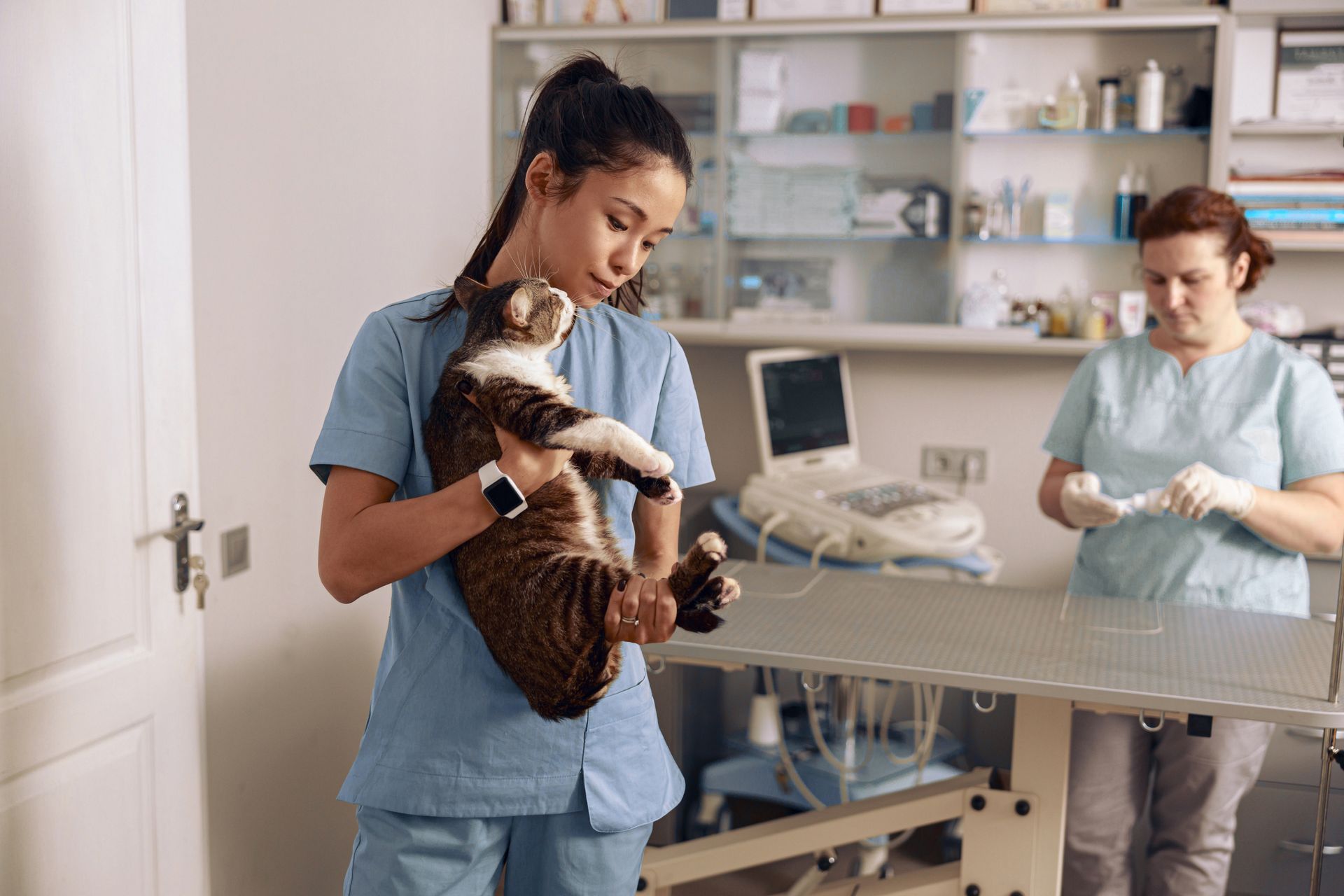
For your team
Workers’ Compensation
Covers medical costs and lost wages when a team member is hurt on the job — required in most states once you have employees.
Extra protection
Commercial Umbrella
Adds liability limits above your primary policies for catastrophic claims that exceed standard coverage.
Coverage availability and terms vary by carrier and state. We recommend the right mix for your operation once we talk.
Industries we serve
Built for the businesses that care for animals.
General liability is the baseline for every segment we specialize in. Find the page built for your business.
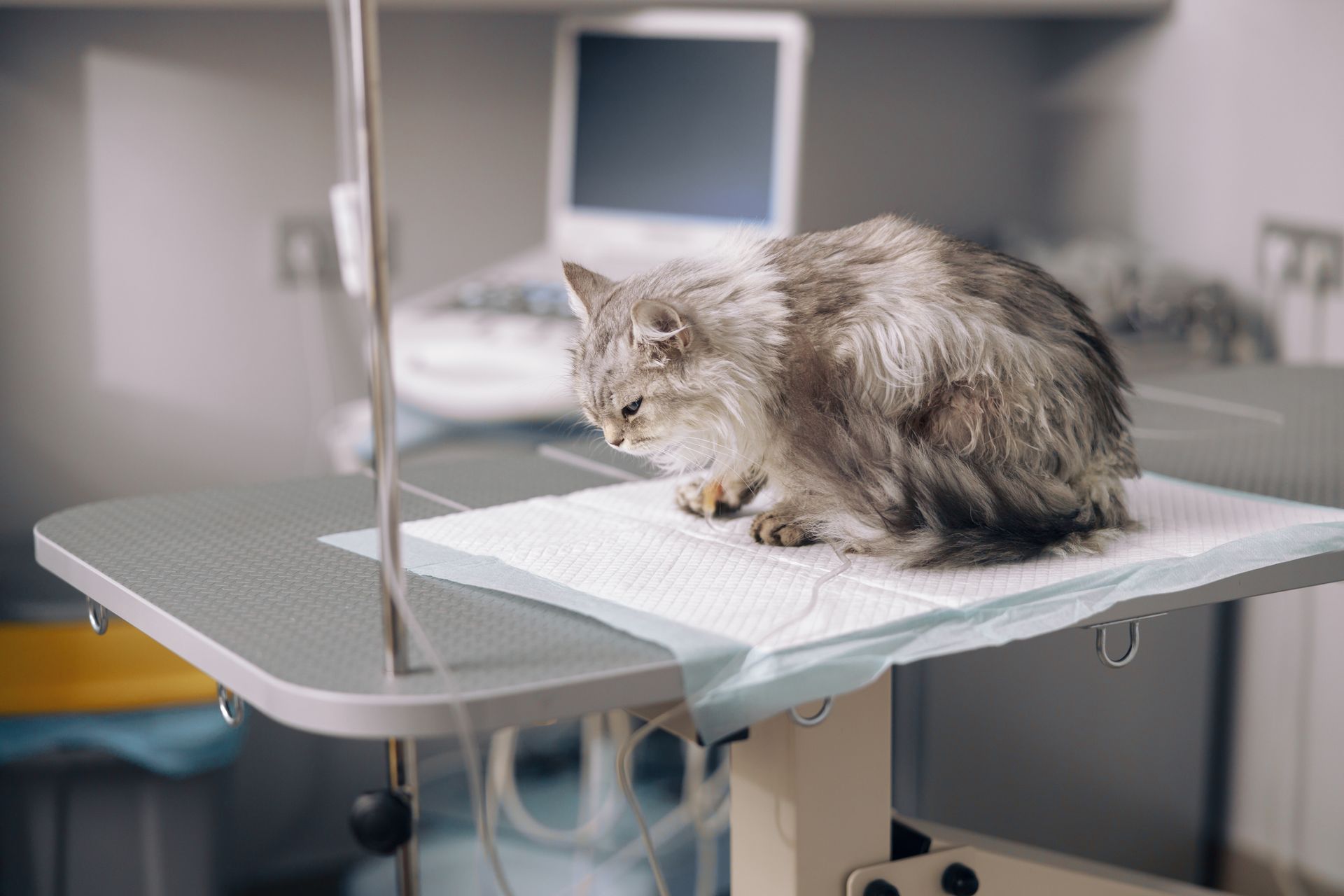
Clinical · high exposure
Veterinarians & Animal Hospitals
Professional and general liability, property, and workers’ comp for clinical operators with high exposure.
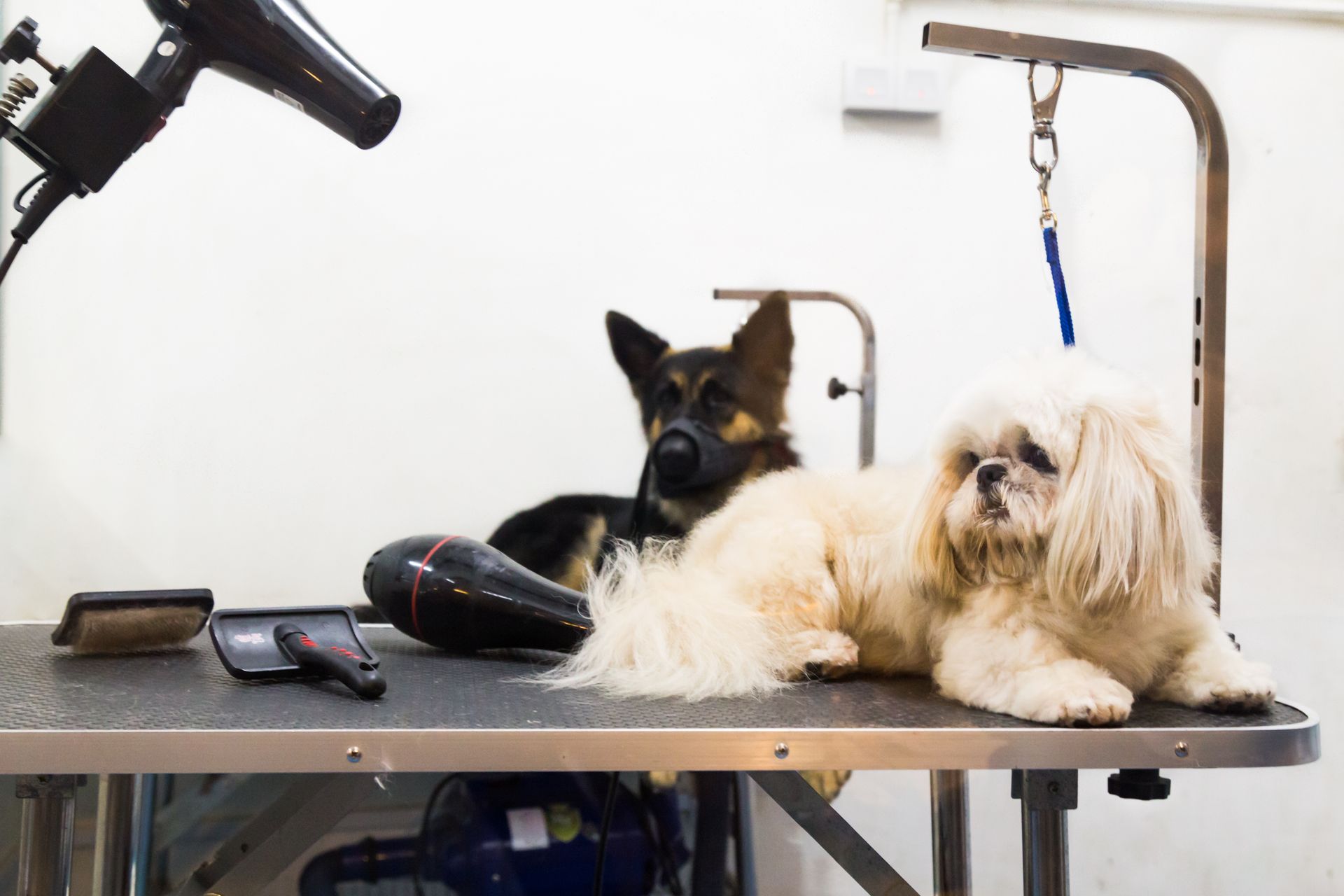
Hands-on · small business
Pet Groomers
Practical protection for animal handling, equipment, and the day-to-day of the grooming table, shop or mobile.

Safety-forward · overnight
Doggy Daycare & Boarding
Coverage matched to facilities responsible for animals overnight and all day long.
Our reviews
Trusted by pet professionals.
See what owners say about working with a specialist who already understands their business.
Frequently asked
Questions pet pros ask us.
What kinds of pet businesses do you insure?
We insure businesses across the animal-care industry — veterinarians and animal hospitals, groomers, doggy daycares and boarding facilities, kennels and trainers, pet sitters and dog walkers, and pet stores. We also cover breeders, equine operations, pet transporters, shelters and rescues, pet photographers, and aquariums or wildlife facilities.
If your work involves caring for, handling, or selling animals, there is a strong chance we cover it. Tell us what you do and we will confirm.
What is care, custody, and control coverage, and why does it matter?
Care, custody, and control coverage protects you when an animal in your charge is injured, becomes ill, or is lost while in your care. Standard general liability policies often exclude this exact exposure, which leaves a serious gap for pet businesses.
For groomers, boarders, sitters, and clinics, this is one of the most important coverages you can carry. We make sure it is in place and sized to your operation.
How is an independent agency different from buying direct from a carrier?
A direct carrier sells you its own single policy. As an independent agency, we shop multiple specialty insurers and compare programs to find the coverage that fits your business and budget.
That means you get options instead of one quote, and an advocate who works for you, not the carrier. We also handle the renewals and claims support over the life of your policy.
How fast can I get a quote?
Most clients get quoted within one business day. Our industry-specific intake forms collect the right details up front, so we can take your information straight to the carriers without a long back-and-forth.
Need it sooner? Call a specialist directly at (346) 738-7297 and we will move quickly.
Which states do you serve?
We are licensed and actively writing coverage in 12 states: Connecticut, Delaware, Georgia, Kentucky, Massachusetts, New Jersey, New York, North Carolina, Pennsylvania, South Carolina, Tennessee, and Virginia.
We continue to add states as we grow. If you operate outside this list, reach out and we will let you know our latest footprint.
From the blog
Coverage notes for pet professionals.
Plain-language risk tips and coverage explainers, written for owners — not insurance pros.
Speak with a specialist
Let's find the right coverage for your business.
No quote bots, no funnel. Talk to a real pet-insurance specialist who already understands your operation — and shops multiple markets on your behalf.
Call us
(346) 738-7297
Toll-free 845-250-5366
Email
service@petindustryins.com
Visit Us
2 Joyce Plaza
Stony Point, NY 10980