Connecticut isn't the most expensive state for equine insurance, but it's not the least expensive either. Several variables determine what you'll actually pay.
Factors Influencing Insurance Costs in the Nutmeg State
Facility Size and Annual Revenue
A single loose horse on a county road, one kicked boarder, or a fall during a lesson: any of these can turn a Pennsylvania equine operation into a financial disaster overnight. The state's horse industry contributes over $6 billion annually to the economy, and with roughly 255,000 horses across the Commonwealth, the density of operations means risk is everywhere. Whether you run a small boarding stable in Chester County or a large training facility near the Poconos, understanding equine insurance coverage requirements and compliance obligations in Pennsylvania isn't optional. It's how you stay in business. State law offers some protections for horse professionals, but those protections have limits, and the gaps are exactly where lawsuits land. The right insurance program fills those gaps before a claim does. This piece breaks down what PA equine operations actually need: the laws that shape your liability, the policies that protect your assets, the costs you should expect, and the compliance steps most operators overlook until it's too late.
Understanding Pennsylvania Equine Liability Laws
Pennsylvania has specific statutes designed to protect equine professionals from certain types of lawsuits, but the protections are narrower than most barn owners assume. The state recognizes that horseback riding and related activities carry inherent risks, and it places some responsibility on participants to accept those risks. That said, the law doesn't give operators blanket immunity. Negligence on the part of the stable owner, trainer, or facility manager can still expose you to full liability.
The real challenge is understanding where the statutory protection ends and your insurance responsibility begins. Operators who rely solely on the state's liability protections without carrying proper coverage are gambling with their farms, their homes, and their personal savings.
The PA Equine Activity Liability Act Explained
Pennsylvania's Equine Activity Liability Act limits an equine professional's liability for injuries or death resulting from the inherent risks of equine activities. The law covers a broad range of activities including riding, training, boarding, shoeing, and veterinary treatment. The statute e outlines specific conditions under which equine professionals receive liability protection,but it does not protect against negligence, faulty equipment, or failure to disclose known dangerous conditions.
Here's where operators get tripped up: the Act requires strict compliance with its notice provisions. If you fail to post the required warnings or include mandatory language in your contracts, you may lose the statute's protections entirely. A 2025 review of equine-related claims in the Mid-Atlantic region showed that roughly 40% of denied liability defenses stemmed from improper notice compliance, not from the underlying incident itself.
Mandatory Signage and Contract Language Requirements
The Act requires that specific warning language be posted in at least one conspicuous location on the premises and included in all written contracts related to equine activities. The warning must notify participants that the equine professional is not liable for injuries resulting from the inherent risks of equine activities, and it must use the exact statutory language.
Many PA operations miss the contract piece. Every boarding agreement, lesson contract, training agreement, and event waiver should contain the statutory warning language. The Pennsylvania Equine Council provides detailed FAQs on legislative requirements that operators should review annually. Keep in mind that contract and signage requirements can shift with legislative updates, so consulting a qualified equine attorney for your specific situation is a smart move. Laws vary by jurisdiction, and what works for a Chester County lesson barn may not cover a Lancaster County breeding operation.
Essential Coverage Types for PA Horse Owners
Not every equine policy is the same, and the coverage you need depends entirely on your operation. A trail riding outfit faces different exposures than a dressage training facility. Getting the right mix of coverages starts with understanding what each policy type actually does.
Commercial General Liability vs. Care, Custody, or Control
Commercial general liability (CGL) covers bodily injury and property damage claims from third parties: a visitor who trips in your barn aisle, a rider who falls during a lesson, or a horse that escapes and causes a car accident. This is the foundational policy for any equine business.
But CGL policies typically exclude animals in your care, custody, or control (CCC). That means if a client's horse is injured or dies while boarded at your facility, your CGL policy likely won't respond. You need a separate CCC endorsement or policy to cover damage to horses entrusted to you. This is one of the most common coverage gaps we see at Pet Professional Insurance Agency when working with equine operations. Operators assume their general liability covers everything, and then a boarded horse colics and dies, and they discover the hard way that it doesn't.
Mortality and Major Medical for Performance Horses
If you own performance horses or have significant financial investment in your herd, mortality insurance covers the agreed-upon value of the horse in case of death from illness, injury, or accident. Major medical coverage handles veterinary bills for covered conditions, which can easily run $10,000 to $30,000 for colic surgery or a serious lameness workup. The US Eventing Association recommends that horse owners evaluate insurance as a yearly priority, and that advice applies doubly to professionals whose income depends on these animals.
Premiums for mortality coverage typically run 3% to 5% of the horse's insured value annually. A horse valued at $50,000 might cost $1,500 to $2,500 per year to insure for mortality alone.
Comparison of Standard Equine Insurance Policies
Table: General Liability vs. Professional Liability Coverage
| Feature | General Liability | Professional Liability |
|---|---|---|
| What it covers | Bodily injury, property damage to third parties | Claims of negligence in professional services (training, instruction, breeding advice) |
| Typical limits | $1M per occurrence / $2M aggregate | $500K to $1M per occurrence |
| Common claims | Rider falls, horse bites visitor, property damage | Improper training methods, bad breeding advice, lesson-related negligence |
| Who needs it | Every equine operation | Trainers, instructors, breeding consultants, equine therapists |
| CCC included? | Usually excluded; requires endorsement | Not included; separate coverage needed |
| Average annual cost (PA) | $1,200 - $3,500 | $800 - $2,000 |
This distinction matters because a professional liability claim looks very different from a general liability claim. If a client alleges that your training methods injured their horse, that's a professional liability issue, not a CGL claim. Carrying both ensures you're covered from multiple angles.
Factors Influencing Insurance Costs in Pennsylvania
Premiums for PA equine operations vary widely based on the type and scale of activities you offer. A 10-stall boarding barn with no lessons will pay significantly less than a 40-stall facility offering lessons, clinics, trail rides, and summer camps. Insurers evaluate your operation based on revenue, number of horses, types of activities, claims history, and the condition of your facilities.
Location within Pennsylvania also plays a role. Operations in densely populated suburban areas near Philadelphia tend to face higher premiums than rural facilities in the northern tier, partly because of higher property values and greater exposure to third-party foot traffic.
Operational Risks: Lessons, Boarding, and Training
Lesson programs are among the highest-risk activities for equine operations. Every time a student mounts a horse, you're accepting liability for their safety. Insurers look at instructor qualifications, student-to-instructor ratios, helmet policies, and whether you use school horses or allow students to ride client-owned animals.
Boarding operations carry CCC risk, as discussed earlier. Training adds professional liability exposure. If you offer multiple services, your premium reflects the combined risk profile. One thing to keep in mind: legal guidance for boarding stables and event hosts emphasizes that contracts and insurance should be reviewed together, since gaps in one often mirror gaps in the other.
Workers' Compensation Requirements for Stable Employees
Pennsylvania requires workers' compensation coverage for nearly all employees, including part-time barn staff, grooms, and exercise riders. If someone is on your payroll and gets kicked, stepped on, or thrown, workers' comp covers their medical bills and lost wages. Operating without it is a criminal offense in PA and can result in fines, lawsuits, and personal liability for the business owner.
Recent legislative discussions have highlighted the importance of animal health and safety standards at Pennsylvania fairs and exhibitions, reinforcing the state's broader focus on accountability in animal-related operations. Even seasonal employees at events or fairs need coverage.
Common Questions About PA Equine Insurance
FAQ: Coverage Limits, Waivers, and Claims
Do liability waivers replace insurance? No. Waivers reduce your legal exposure but don't eliminate it. Pennsylvania courts can invalidate waivers that are poorly written or unconscionable. Insurance is your financial backstop when a waiver fails.
What liability limits should a PA equine operation carry? Most operations should carry at least $1 million per occurrence and $2 million aggregate. Larger facilities with lesson programs, events, or public access should consider umbrella policies that extend coverage to $5 million or more.
Does my homeowner's policy cover my horse business? Almost certainly not. Homeowner's policies exclude business activities. If you're running any commercial equine operation from your property, you need a separate commercial policy.
What happens if a boarded horse injures another boarded horse? This is a CCC scenario. Without care, custody, or control coverage, you could be personally responsible for the injured horse's veterinary bills and loss of value.
How quickly can I get coverage for a new operation? At Pet Professional Insurance Agency, most equine clients hear back within 24 to 48 hours. Because we work with multiple specialty insurance markets, we can often find coverage even for operations that have been turned down elsewhere.
Are volunteers covered under my policy? It depends on your policy. Some CGL policies extend coverage to volunteers; others don't. Ask your agent specifically about volunteer coverage, especially if you host clinics or charity events.
Do I need separate coverage for horse shows or off-site events? Yes, in most cases. Your premises-based policy may not extend to off-site activities. Event-specific coverage or an endorsement is usually required.
Your Next Steps for Securing Your Operation
Pennsylvania equine insurance isn't a one-size-fits-all product. Your operation's specific activities, size, location, and risk profile determine what you need and what you'll pay. The critical steps are straightforward: verify your compliance with the Equine Activity Liability Act's signage and contract requirements, identify your coverage gaps (especially CCC and professional liability), and make sure your workers' comp is current.
If you're unsure where your operation stands, working with an agent who understands equine risk makes a real difference. Pet Professional Insurance Agency specializes in animal-related businesses and uses intake forms tailored specifically to equine operations, so nothing gets missed. You work directly with your agent, not a call center, and you'll typically have options in hand within 48 hours.
Index
Pet Professional Insurance Agency is fully licensed and permitted to provide commercial insurance solutions for pet businesses across 12 states.
We proudly serve pet professionals throughout the Northeast, Mid-Atlantic, and Southeast. Powered by Joyce Insurance Agency, our team works with leading specialty carriers — including The Hartford, USLI, Nautilus, and Northland — to make sure veterinarians, groomers, boarding facilities, and pet-care businesses receive coverage that fits their real risks in Connecticut, Delaware, Georgia, Kentucky, Massachusetts, New Jersey, New York, North Carolina, Pennsylvania, South Carolina, Tennessee, and Virginia.
About the author
Barnaby Joyce
Founder, Pet Professional Insurance Agency · Licensed Insurance Producer
I started Pet Professional Insurance Agency because I watched pet businesses get handed generic policies that never fit. After years of placing coverage for veterinary practices, grooming salons, doggy daycares, and kennels through a generalist agency, I saw the same gaps over and over — and the same blank stares when an owner tried to explain care, custody, and control to an agent who had never insured an animal in their life.
So I built an agency that does one thing. I work directly with specialty carriers who actually want pet-industry risk, and I sit down with every client personally. You will not get a call center or a chatbot. You will get someone who already speaks your language and shops the market on your behalf. That is the whole idea.
Recommended coverages
Coverages that pair with general liability.
Most pet businesses build on general liability with the lines below. Explore each — every page cross-links to the
industries we serve.
Services & advice
Professional Liability / E&O
Covers claims tied to your professional services and advice — clinical care, training guidance, and the judgment calls you make daily.
The pet-industry gap
Care, Custody & Control
Covers the animals in your charge against injury, illness, or loss — the critical exposure standard liability policies leave out.
Bundled & cost-effective
Business Owners Policy (BOP)
Bundles property and general liability into one package built for small to mid-sized pet businesses — often the simplest base.
Your building & contents
Commercial Property
Protects your building, build-out, equipment, and inventory against fire, theft, and covered losses — front desk to back room.
For your team
Workers’ Compensation
Covers medical costs and lost wages when a team member is hurt on the job — required in most states once you have employees.
Extra protection
Commercial Umbrella
Adds liability limits above your primary policies for catastrophic claims that exceed standard coverage.
Coverage availability and terms vary by carrier and state. We recommend the right mix for your operation once we talk.
Industries we serve
Built for the businesses that care for animals.
General liability is the baseline for every segment we specialize in. Find the page built for your business.
Clinical · high exposure
Veterinarians & Animal Hospitals
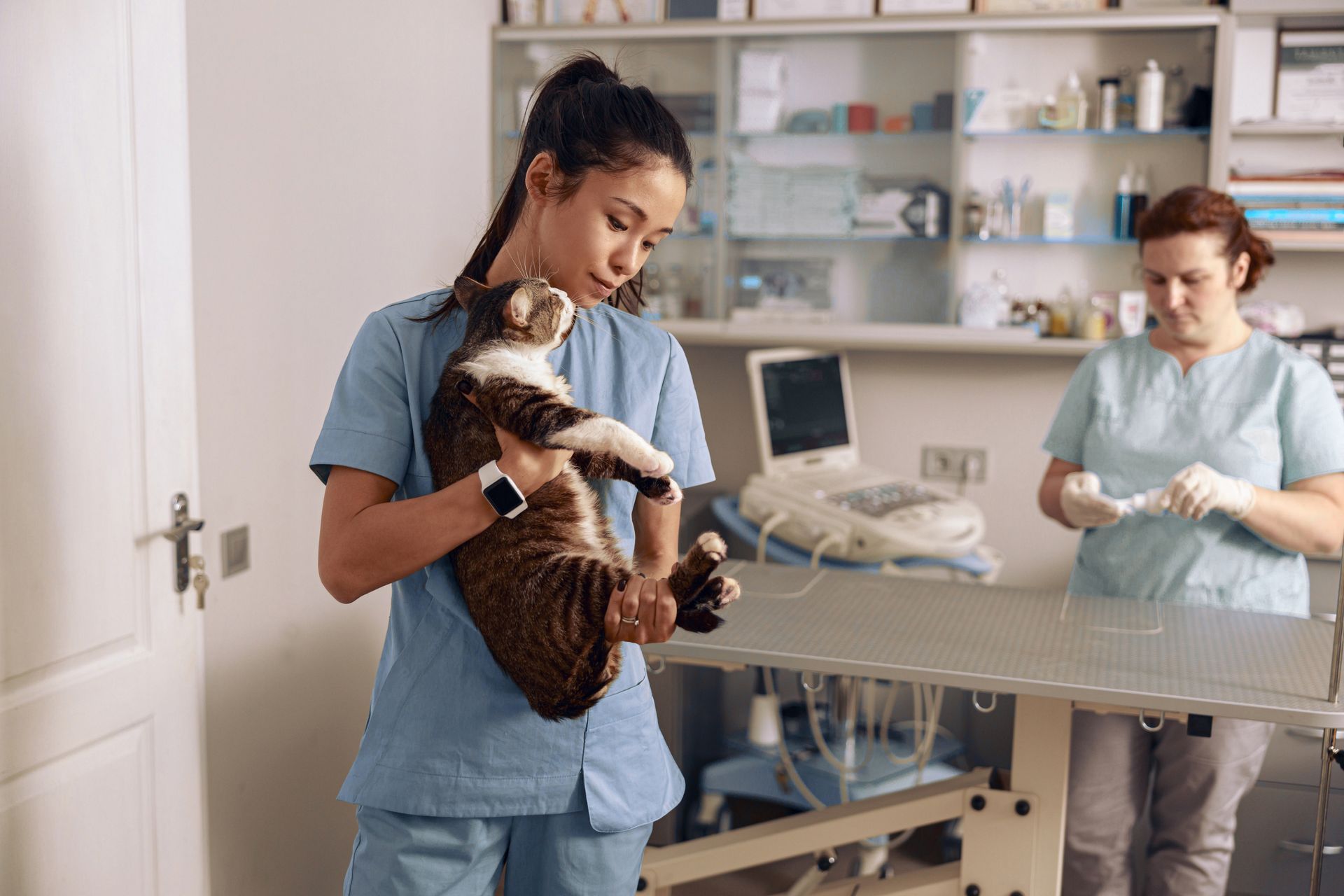
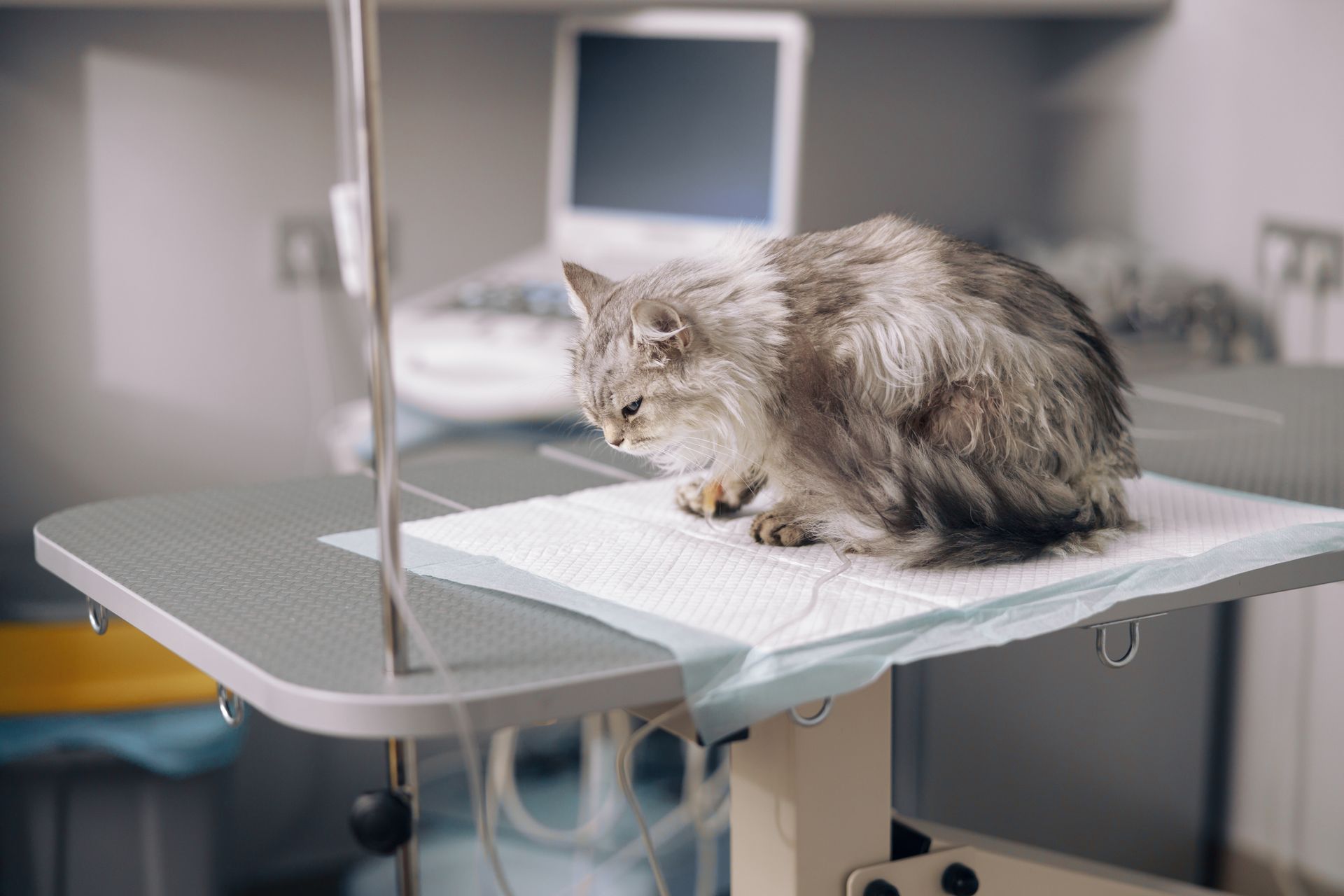
Professional and general liability, property, and workers’ comp for clinical operators with high exposure.
Hands-on · small business
Pet Groomers
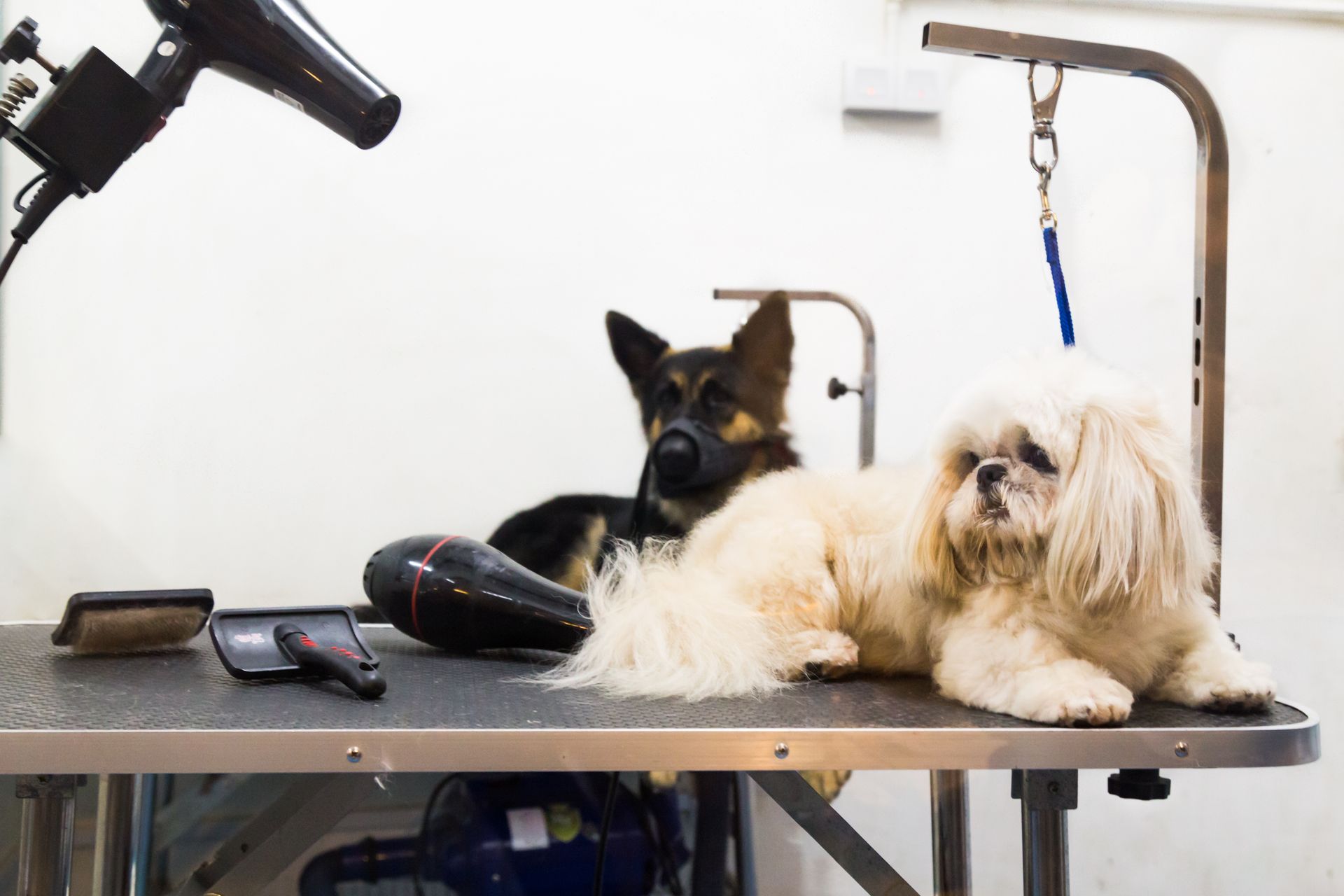
Practical protection for animal handling, equipment, and the day-to-day of the grooming table, shop or mobile.
Safety-forward · overnight
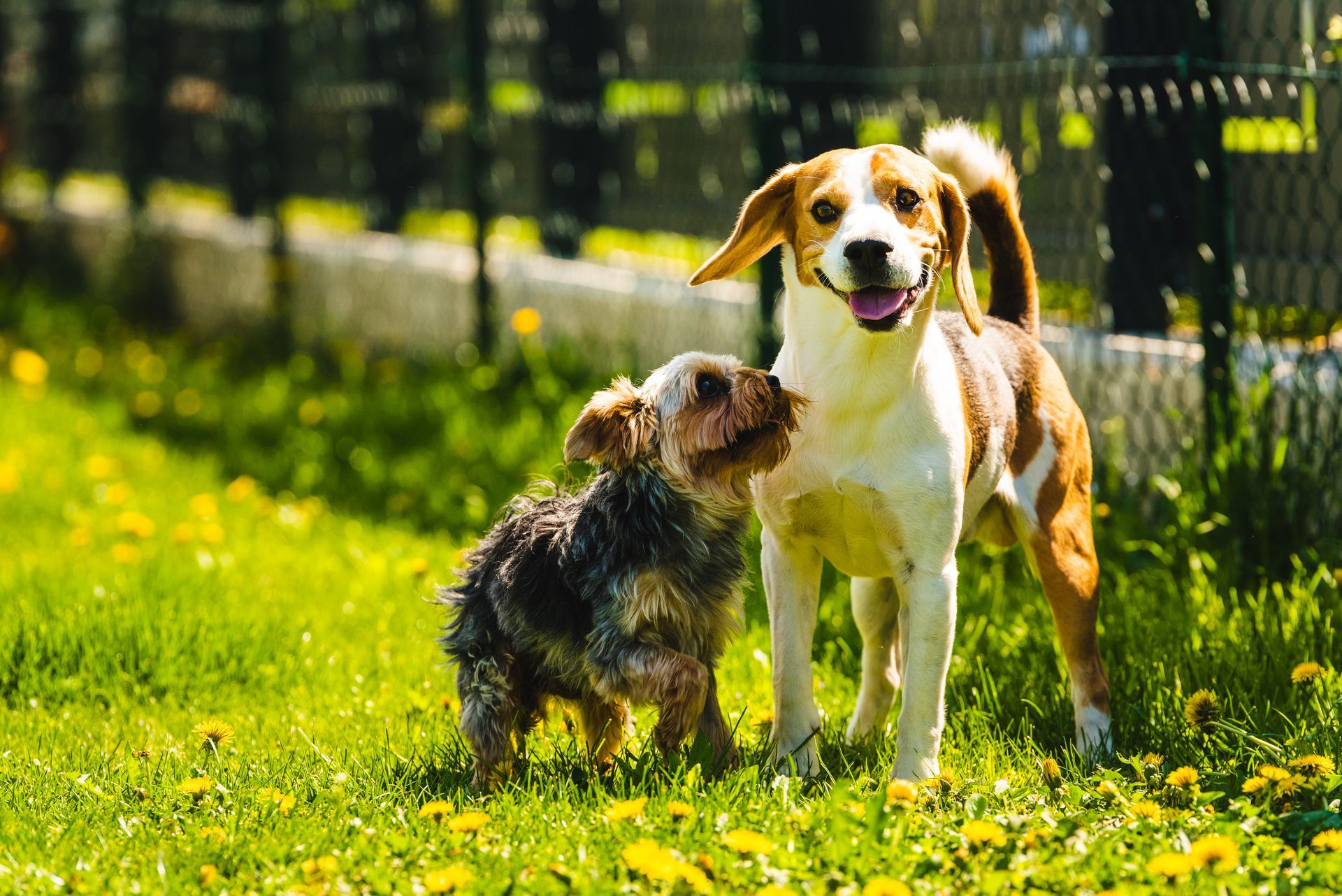
Doggy Daycare & Boarding
Coverage matched to facilities responsible for animals overnight and all day long.
Our reviews
Trusted by pet professionals.
See what owners say about working with a specialist who already understands their business.
Frequently asked
Questions pet pros ask us.
What kinds of pet businesses do you insure?
We insure businesses across the animal-care industry — veterinarians and animal hospitals, groomers, doggy daycares and boarding facilities, kennels and trainers, pet sitters and dog walkers, and pet stores. We also cover breeders, equine operations, pet transporters, shelters and rescues, pet photographers, and aquariums or wildlife facilities.
If your work involves caring for, handling, or selling animals, there is a strong chance we cover it. Tell us what you do and we will confirm.
What is care, custody, and control coverage, and why does it matter?
Care, custody, and control coverage protects you when an animal in your charge is injured, becomes ill, or is lost while in your care. Standard general liability policies often exclude this exact exposure, which leaves a serious gap for pet businesses.
For groomers, boarders, sitters, and clinics, this is one of the most important coverages you can carry. We make sure it is in place and sized to your operation.
How is an independent agency different from buying direct from a carrier?
A direct carrier sells you its own single policy. As an independent agency, we shop multiple specialty insurers and compare programs to find the coverage that fits your business and budget.
That means you get options instead of one quote, and an advocate who works for you, not the carrier. We also handle the renewals and claims support over the life of your policy.
How fast can I get a quote?
Most clients get quoted within one business day. Our industry-specific intake forms collect the right details up front, so we can take your information straight to the carriers without a long back-and-forth.
Need it sooner? Call a specialist directly at (346) 738-7297 and we will move quickly.
Which states do you serve?
We are licensed and actively writing coverage in 12 states: Connecticut, Delaware, Georgia, Kentucky, Massachusetts, New Jersey, New York, North Carolina, Pennsylvania, South Carolina, Tennessee, and Virginia.
We continue to add states as we grow. If you operate outside this list, reach out and we will let you know our latest footprint.
From the blog
Coverage notes for pet professionals.
Plain-language risk tips and coverage explainers, written for owners — not insurance pros.
Speak with a specialist
Let's find the right coverage for your business.
No quote bots, no funnel. Talk to a real pet-insurance specialist who already understands your operation — and shops multiple markets on your behalf.
Call us
(346) 738-7297
Toll-free 845-250-5366
Email
service@petindustryins.com
Visit Us
2 Joyce Plaza
Stony Point, NY 10980