A single 300-gallon reef tank can hold $15,000 worth of coral and livestock. The custom acrylic alone costs thousands. And the property it sits in? That belongs to your client. One cracked seam at 2 a.m. sends hundreds of gallons of saltwater through a hardwood floor, down into a finished basement, and straight into a liability nightmare that a standard business policy was never designed to handle.
If you install, maintain, or service aquariums professionally, your risk profile looks nothing like a dog groomer's or a pet sitter's. The combination of high-value livestock, pressurized water systems, electrical equipment, and work performed inside other people's homes and offices creates a coverage puzzle that generic pet business policies simply can't solve. Understanding what aquarium insurance actually covers, and how much of it you need, is the difference between surviving a major claim and closing your doors.
This is a niche within the pet industry that's growing fast, and the insurance side is finally catching up. Here's what matters.
Why Standard Pet Business Insurance Isn't Enough for Aquarium Pros
Most pet business owners start with a general liability policy, and for good reason: it covers the basics. But aquarium professionals face a set of risks that fall outside the scope of a typical pet-care policy. The gap between what you think you're covered for and what your policy actually pays out can be enormous.
The Unique Risks of Water, Glass, and Livestock
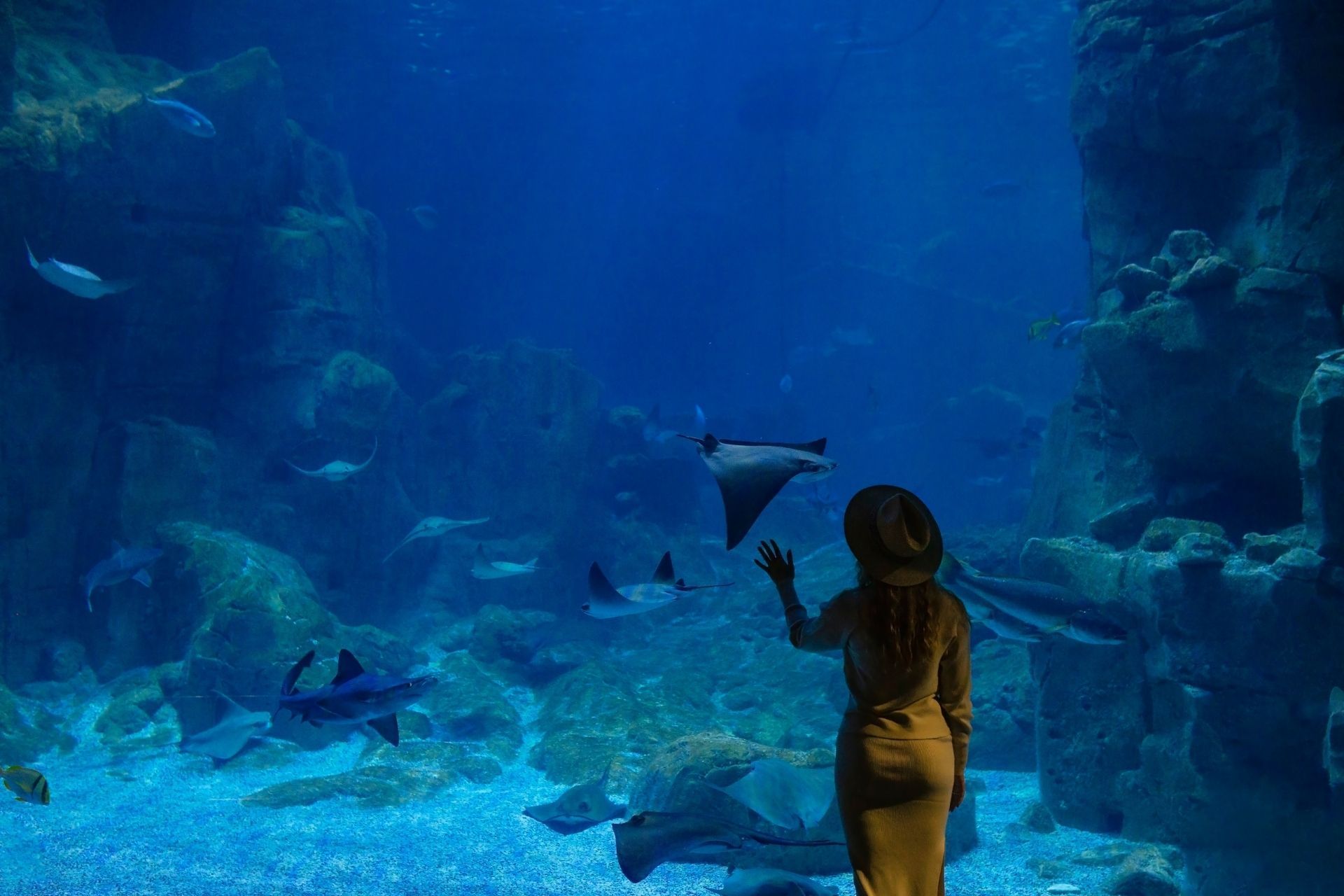
Think about what you bring into a client's space every time you service a tank. You're working with pressurized water lines, electrical components submerged in saltwater, glass or acrylic panels under constant hydrostatic pressure, and living animals worth hundreds or thousands of dollars each. A standard policy might cover a slip-and-fall in your shop, but it often excludes or severely limits coverage for water damage caused by your work at a client's location.
Saltwater is especially destructive. It corrodes wiring, warps wood, and ruins electronics. A freshwater leak is bad enough, but a saltwater incident can triple the damage estimate. Pet-care businesses working with animals on land don't face this kind of cascading property destruction, which is why their policies aren't built for it.
General Liability vs. Professional Liability for Aquarists
General liability covers bodily injury and property damage caused by your operations: someone trips over your hose, or your employee knocks over a vase. Professional liability (sometimes called errors and omissions) covers mistakes in your professional judgment: you recommend the wrong water chemistry, introduce an incompatible species, or fail to catch a failing heater during a maintenance visit.
Most aquarium professionals need both. If you're only carrying general liability, a client who loses a $5,000 arowana because you misadjusted their pH has no coverage under your policy. That claim comes out of your pocket. The hidden liability risks in routine pet services are exactly the kind of exposures that professional liability is designed to address.
Core Coverage: What Your Policy Actually Protects
A well-structured aquarium insurance policy typically bundles several types of coverage. Knowing what each piece does helps you avoid paying for things you don't need and, more importantly, not skipping things you do.
Property Damage and Water Leakage Liability
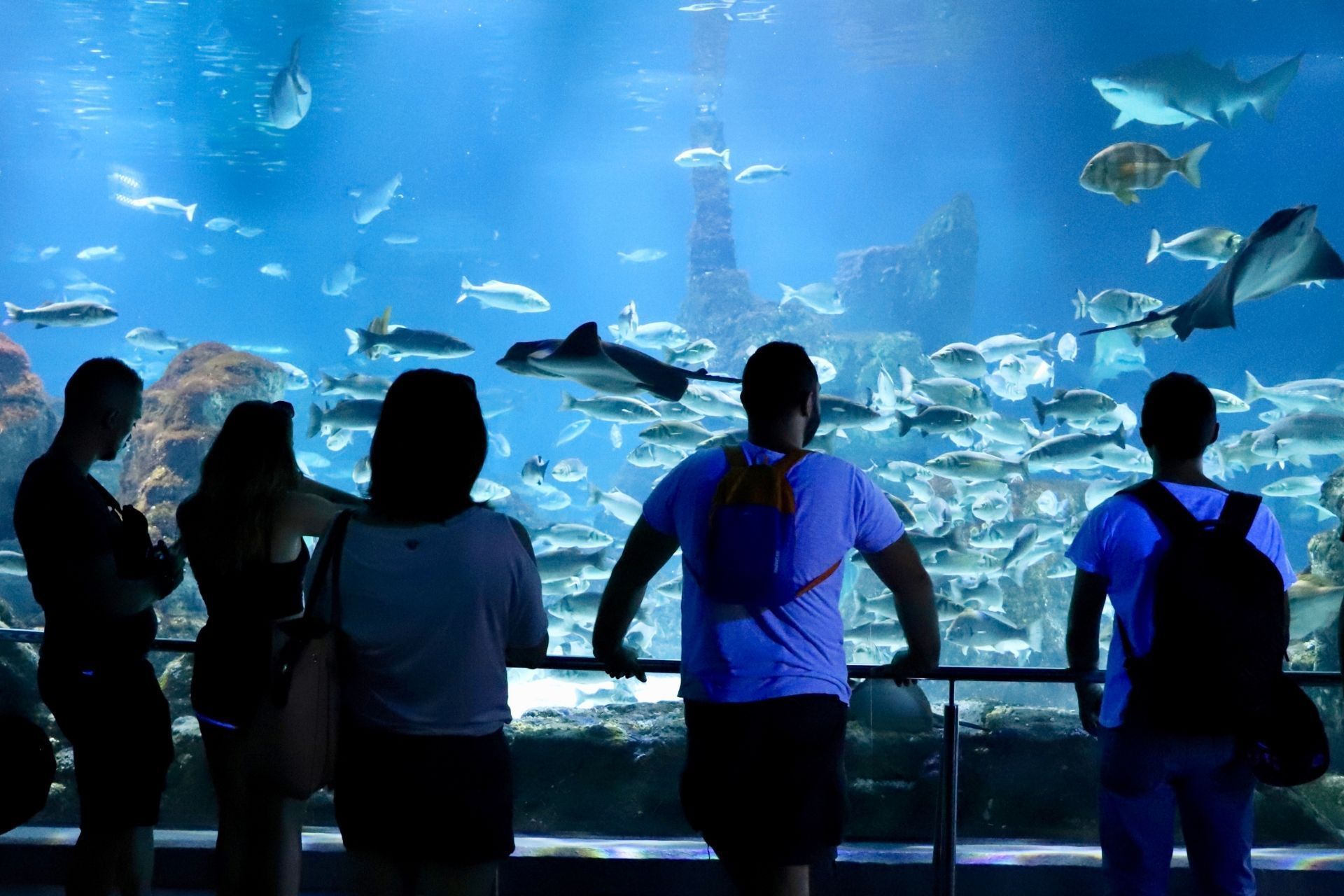
This is the big one. Water leakage liability covers damage your work causes to a client's property. If a fitting you installed fails and floods a dental office over a weekend, this coverage pays for the restoration. Without it, you're personally liable for drywall replacement, flooring, electronics, and whatever else the water touched.
Look for policies that specifically name water damage rather than relying on the general liability section. Some general liability policies have water damage exclusions or sublimits that cap payouts at $25,000 or $50,000, which won't come close to covering a serious flood in a commercial space. The type of policy aquarium businesses actually need should explicitly address this exposure.
Animal Bailee Coverage for High-Value Fish
Animal bailee coverage protects livestock that's temporarily in your care, custody, or control. If you're transporting fish between locations, quarantining new arrivals, or holding animals during a tank upgrade, you're responsible for their value if something goes wrong.
This coverage matters more than most aquarium pros realize. A power outage in your holding facility, a heater malfunction during transport, or a disease outbreak in your quarantine system can wipe out thousands of dollars in livestock in hours. Standard pet business policies typically cap animal bailee coverage at levels that make sense for dogs and cats, not rare marine fish or high-end koi.
Equipment Breakdown and Transit Protection
Your work depends on expensive, specialized equipment: protein skimmers, calcium reactors, LED lighting systems, controllers, and dosing pumps. Equipment breakdown coverage pays to repair or replace this gear when it fails due to mechanical or electrical causes, not just theft or fire.
Transit protection covers your equipment and client livestock while you're moving between job sites. If your van is rear-ended and the impact cracks a $2,000 protein skimmer and kills $3,000 worth of coral frags in your transport containers, transit coverage handles both losses. This is a coverage area where understanding the insurance needs specific to aquarium maintenance businesses really pays off.
Comparison: Basic vs. Comprehensive Aquarium Coverage
Not every aquarium business needs the same level of protection. A solo maintenance tech servicing residential tanks has different exposure than a company that designs and installs large commercial systems. Here's how the two tiers typically break down.
Coverage Limits and Deductibles Table
| Coverage Type | Basic Policy | Comprehensive Policy |
|---|---|---|
| General Liability | $1M per occurrence / $2M aggregate | $1M per occurrence / $2M aggregate |
| Professional Liability | Not included | $1M per occurrence |
| Water Damage Sublimit | $25,000-$50,000 | Full policy limits apply |
| Animal Bailee | $5,000-$10,000 | $25,000-$50,000+ |
| Equipment Breakdown | Not included | $25,000-$50,000 |
| Transit Coverage | Not included | $10,000-$25,000 |
| Typical Deductible | $1,000-$2,500 | $500-$1,000 |
| Annual Premium Range | $800-$1,500 | $2,000-$4,500 |
The right tier depends on your client base and the value of the systems you work on. If you're installing $50,000 reef systems in luxury homes, the basic policy is a liability in itself. A comprehensive policy with adequate water damage limits is worth every dollar.
At Pet Professional Insurance Agency, we work with multiple specialty insurance markets to find policies that actually match the risk profile of aquarium businesses, not just generic pet-care operations. Our intake forms are tailored to the specific exposures aquarium pros face, which means your coverage reflects what you actually do.
Common Claims in the Aquarium Industry
Knowing what goes wrong most often helps you understand why certain coverages exist and why skipping them is risky.
Catastrophic Tank Failure and Property Flooding
Tank failures are the most expensive claims in this industry, and they're more common than people think. A 500-gallon system holds over 4,000 pounds of water. When that glass or acrylic gives way, the resulting flood can cause $50,000 to $200,000 in property damage depending on the location.
The claims that hurt most involve tanks installed above ground-floor level. Water flows down, and every floor it touches multiplies the damage. One claim we've seen involved a 200-gallon tank in a second-floor office that failed overnight, damaging the office itself, the restaurant below it, and the restaurant's inventory. Without adequate water leakage liability, the aquarium maintenance company would have been personally responsible for all of it.
Livestock Loss Due to Maintenance Errors
These claims are smaller individually but more frequent. A tech accidentally overdoses a client's reef tank with alkalinity supplement and kills $8,000 worth of SPS coral. A maintenance visit misses a failing return pump, and the tank overheats over the weekend. A new employee connects a freshwater line to a saltwater system.
Professional liability covers these mistakes. The growing insurance needs for pet-care businesses include exactly these types of professional errors, and they're becoming more common as the hobby grows and system complexity increases.
Common Questions About Aquarium Insurance
Frequently Asked Questions
How much coverage do I actually need? About 95% of commercial contracts in 2026 require aquarium professionals to carry a minimum of $1 million per occurrence and $2 million aggregate in general liability. If you service commercial accounts, this is effectively the floor, not the ceiling. Many pros carry higher limits through umbrella policies.
Does my homeowner's policy cover my aquarium business? No. Homeowner's policies exclude business activities. If you run your aquarium business from home, including storing equipment or holding livestock, you need a separate commercial policy. Operating without one puts both your business and personal assets at risk.
Are my employees covered under my aquarium policy? General liability and professional liability cover claims from third parties, not employee injuries. You need workers' compensation for that, and most states require it as soon as you hire your first employee. Some states require it even for sole proprietors in certain trades.
Can I get coverage for livestock I'm breeding or selling? Yes, but it typically falls under inland marine or stock coverage rather than animal bailee. The distinction matters because animal bailee covers animals owned by others that are temporarily in your care, while stock coverage protects inventory you own. Make sure your policy addresses both if you breed and sell fish alongside your maintenance work.
How quickly can I get a policy in place? Through agencies that specialize in pet-industry coverage, like Pet Professional Insurance Agency, most clients hear back within 24 to 48 hours. Working with an agent who understands aquarium-specific risks means fewer back-and-forth questions and a policy that's right the first time.
Do I need separate coverage for installations vs. maintenance? Not necessarily, but your policy needs to reflect both activities. Installation work typically carries higher risk because you're modifying a client's property, including plumbing, electrical, and structural elements. Make sure your agent knows the full scope of your services so your coverage matches.
Making the Right Choice for Your Business
Aquarium insurance isn't a luxury or a box-checking exercise. It's the thing that keeps your business alive when a tank fails, a client's floor is ruined, or a maintenance error kills irreplaceable livestock. The coverage you carry should match the actual risks you face, not just the minimum a contract requires.
Start by honestly assessing your exposure. What's the largest system you service? What's the most expensive livestock you handle? What would a worst-case water damage claim look like at your highest-risk client site? Those answers tell you what your policy limits should be.
If you're unsure where your current coverage falls short, talk to an agent who specializes in pet-industry risks. The difference between a generalist and a specialist is the difference between a policy that sounds good and one that actually pays when you need it. Laws and requirements vary by state, so consulting with a qualified insurance professional or attorney about your specific situation is always a smart move.
Index
Pet Professional Insurance Agency is fully licensed and permitted to provide commercial insurance solutions for pet businesses across 12 states.
We proudly serve pet professionals throughout the Northeast, Mid-Atlantic, and Southeast. Powered by Joyce Insurance Agency, our team works with leading specialty carriers — including The Hartford, USLI, Nautilus, and Northland — to make sure veterinarians, groomers, boarding facilities, and pet-care businesses receive coverage that fits their real risks in Connecticut, Delaware, Georgia, Kentucky, Massachusetts, New Jersey, New York, North Carolina, Pennsylvania, South Carolina, Tennessee, and Virginia.
About the author
Barnaby Joyce
Founder, Pet Professional Insurance Agency · Licensed Insurance Producer
I started Pet Professional Insurance Agency because I watched pet businesses get handed generic policies that never fit. After years of placing coverage for veterinary practices, grooming salons, doggy daycares, and kennels through a generalist agency, I saw the same gaps over and over — and the same blank stares when an owner tried to explain care, custody, and control to an agent who had never insured an animal in their life.
So I built an agency that does one thing. I work directly with specialty carriers who actually want pet-industry risk, and I sit down with every client personally. You will not get a call center or a chatbot. You will get someone who already speaks your language and shops the market on your behalf. That is the whole idea.
Recommended coverages
Coverages that pair with general liability.
Most pet businesses build on general liability with the lines below. Explore each — every page cross-links to the
industries we serve.
Services & advice
Professional Liability / E&O
Covers claims tied to your professional services and advice — clinical care, training guidance, and the judgment calls you make daily.
The pet-industry gap
Care, Custody & Control
Covers the animals in your charge against injury, illness, or loss — the critical exposure standard liability policies leave out.
Bundled & cost-effective
Business Owners Policy (BOP)
Bundles property and general liability into one package built for small to mid-sized pet businesses — often the simplest base.
Your building & contents
Commercial Property
Protects your building, build-out, equipment, and inventory against fire, theft, and covered losses — front desk to back room.
For your team
Workers’ Compensation
Covers medical costs and lost wages when a team member is hurt on the job — required in most states once you have employees.
Extra protection
Commercial Umbrella
Adds liability limits above your primary policies for catastrophic claims that exceed standard coverage.
Coverage availability and terms vary by carrier and state. We recommend the right mix for your operation once we talk.
Industries we serve
Built for the businesses that care for animals.
General liability is the baseline for every segment we specialize in. Find the page built for your business.
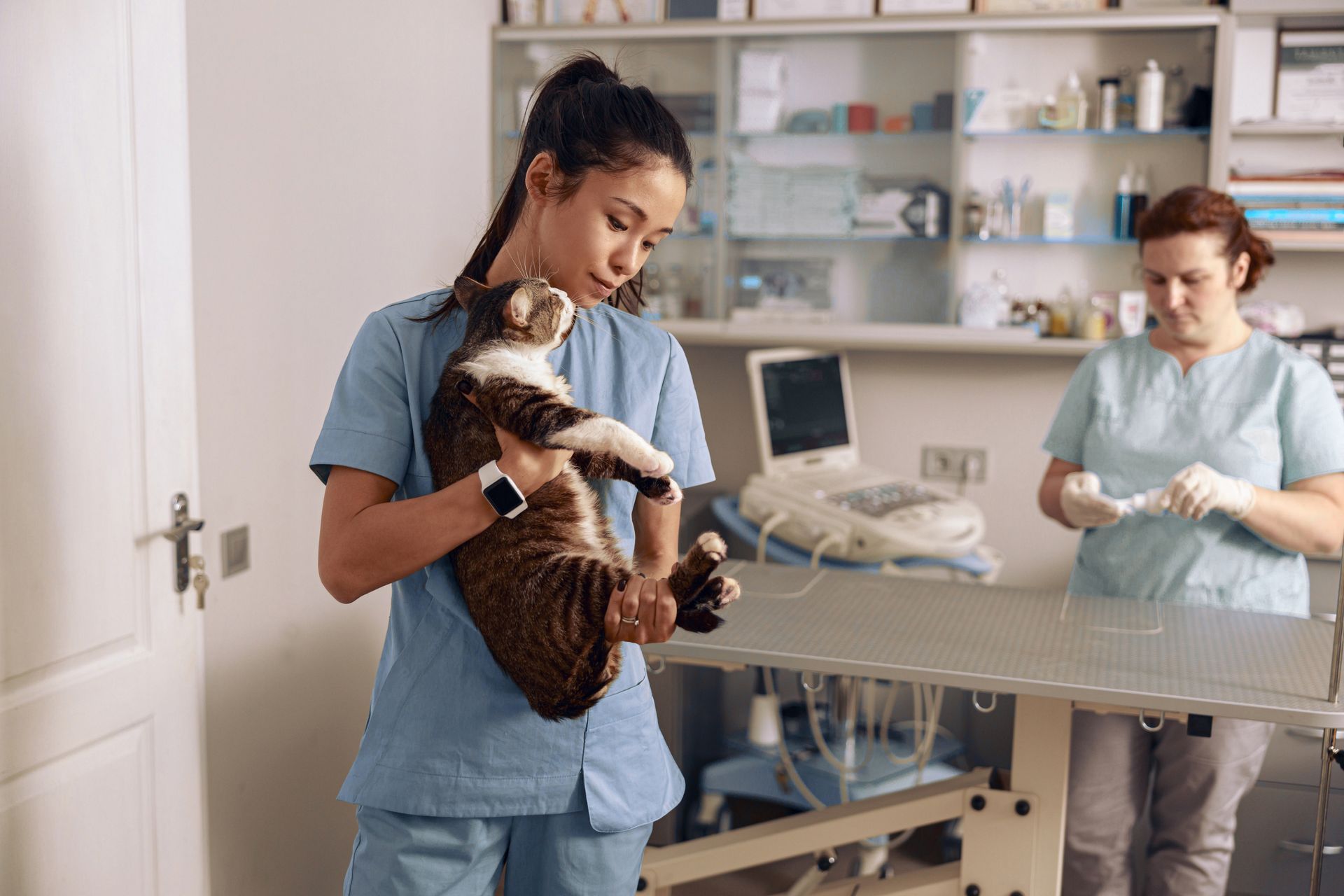
Clinical · high exposure
Veterinarians & Animal Hospitals
Professional and general liability, property, and workers’ comp for clinical operators with high exposure.
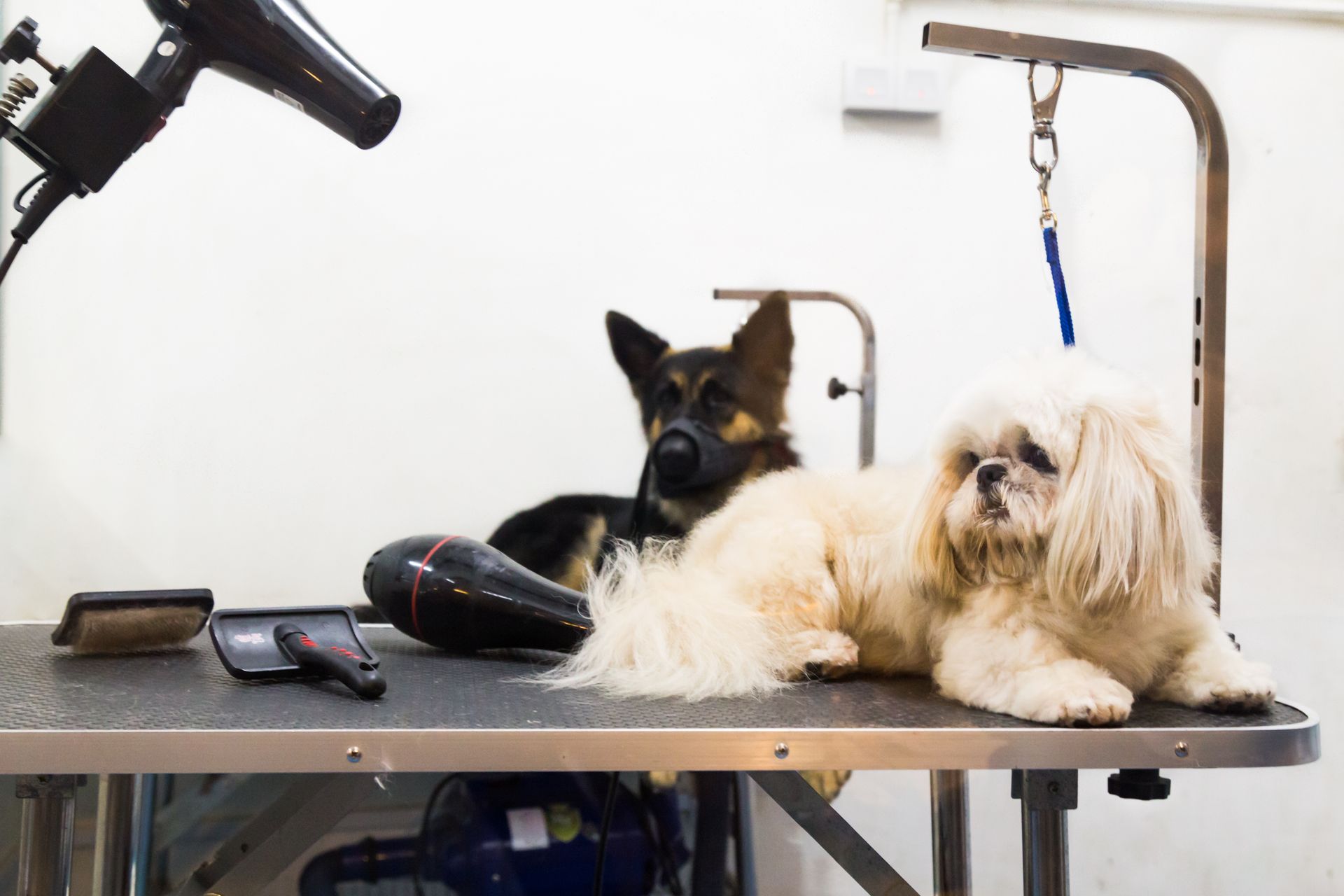
Hands-on · small business
Pet Groomers
Practical protection for animal handling, equipment, and the day-to-day of the grooming table, shop or mobile.

Safety-forward · overnight
Doggy Daycare & Boarding
Coverage matched to facilities responsible for animals overnight and all day long.
Our reviews
Trusted by pet professionals.
See what owners say about working with a specialist who already understands their business.
Frequently asked
Questions pet pros ask us.
What kinds of pet businesses do you insure?
We insure businesses across the animal-care industry — veterinarians and animal hospitals, groomers, doggy daycares and boarding facilities, kennels and trainers, pet sitters and dog walkers, and pet stores. We also cover breeders, equine operations, pet transporters, shelters and rescues, pet photographers, and aquariums or wildlife facilities.
If your work involves caring for, handling, or selling animals, there is a strong chance we cover it. Tell us what you do and we will confirm.
What is care, custody, and control coverage, and why does it matter?
Care, custody, and control coverage protects you when an animal in your charge is injured, becomes ill, or is lost while in your care. Standard general liability policies often exclude this exact exposure, which leaves a serious gap for pet businesses.
For groomers, boarders, sitters, and clinics, this is one of the most important coverages you can carry. We make sure it is in place and sized to your operation.
How is an independent agency different from buying direct from a carrier?
A direct carrier sells you its own single policy. As an independent agency, we shop multiple specialty insurers and compare programs to find the coverage that fits your business and budget.
That means you get options instead of one quote, and an advocate who works for you, not the carrier. We also handle the renewals and claims support over the life of your policy.
How fast can I get a quote?
Most clients get quoted within one business day. Our industry-specific intake forms collect the right details up front, so we can take your information straight to the carriers without a long back-and-forth.
Need it sooner? Call a specialist directly at (346) 738-7297 and we will move quickly.
Which states do you serve?
We are licensed and actively writing coverage in 12 states: Connecticut, Delaware, Georgia, Kentucky, Massachusetts, New Jersey, New York, North Carolina, Pennsylvania, South Carolina, Tennessee, and Virginia.
We continue to add states as we grow. If you operate outside this list, reach out and we will let you know our latest footprint.
From the blog
Coverage notes for pet professionals.
Plain-language risk tips and coverage explainers, written for owners — not insurance pros.
Speak with a specialist
Let's find the right coverage for your business.
No quote bots, no funnel. Talk to a real pet-insurance specialist who already understands your operation — and shops multiple markets on your behalf.
Call us
(346) 738-7297
Toll-free 845-250-5366
Email
service@petindustryins.com
Visit Us
8 Joyce Plaza
Stony Point, NY 10980