Coverage for veterinary practices
Delaware Animal Rescue Insurance
Running a rescue in Delaware means dealing with risks most nonprofits never think about: a foster dog biting a neighbor, a volunteer getting hurt during a transport, or a board member being personally sued after a bad adoption outcome. The state has tightened its oversight of animal welfare organizations in recent years, and the insurance market has responded with more specialized products - but also more complexity. Most rescue founders I've worked with started their organizations out of passion, not a love of paperwork, and insurance tends to fall to the bottom of the priority list until something goes wrong.
That's a mistake. Delaware rescue operations face a unique combination of liability exposures that general nonprofit policies don't adequately cover. You're housing animals with unpredictable behavior, relying on volunteer labor, operating out of foster homes you don't own, and often providing or coordinating veterinary care. Each of those activities creates distinct insurance needs. Getting the right coverage for your Delaware animal rescue isn't just about compliance - it's about making sure one bad incident doesn't shut down years of lifesaving work.
This guide breaks down what Delaware law actually requires, what coverage types matter most, what drives your costs, and how to avoid the gaps that leave rescues exposed. Whether you're a newly formed 501(c)(3) or an established operation with dozens of foster homes, the details here should help you make smarter decisions about protecting your organization.
Understanding Delaware Insurance Laws for Animal Rescues
Delaware has become increasingly serious about regulating animal welfare organizations. Shelters and rescues must be licensed by the Office of Animal Welfare or face civil penalties of up to $1,000 per violation. That licensing process includes inspections, recordkeeping requirements, and operational standards that directly affect your insurance needs.
The state doesn't mandate a specific insurance policy for rescue organizations, but the licensing requirements create implicit obligations. If your rescue is cited for a violation - say, inadequate housing conditions that lead to an animal injury or escape - you'll want coverage that responds to third-party claims arising from those operations. A general nonprofit policy often won't cover animal-specific incidents.
Delaware law also imposes specific responsibilities around bite reporting and dangerous animal designations. If an animal in your care bites someone, the legal and financial consequences can escalate quickly, especially if the animal has a known history. Your insurance needs to account for these state-specific exposures.
State-Mandated Workers' Compensation Rules
Delaware requires workers' compensation coverage for virtually all employers, and that includes nonprofits. If your rescue has even one paid employee - an office coordinator, a kennel manager, a part-time vet tech - you need a workers' comp policy. The penalties for non-compliance include fines and personal liability for the organization's directors.
Here's where it gets tricky for rescues: volunteers. Delaware doesn't require workers' comp coverage for volunteers, but some rescues choose to carry volunteer accident coverage anyway. A volunteer who gets bitten during an intake or injured lifting heavy supplies can still file a claim against your organization. Without some form of accident coverage, you're relying on your general liability policy to respond, and that's not always a clean fit.
Liability Thresholds for Non-Profit Organizations
Many rescue founders assume their nonprofit status provides some kind of legal shield. Delaware does offer limited liability protections for volunteer directors and officers under its nonprofit corporation laws, but those protections have gaps. They typically don't cover gross negligence, willful misconduct, or situations where the organization failed to maintain adequate insurance.
The practical threshold is this: if someone gets hurt by an animal in your care, or if an adoption goes badly and the adopter sues, your nonprofit status won't stop the lawsuit. It might limit personal exposure for board members in some scenarios, but the organization itself is fully exposed. That's why proper insurance matters more than corporate structure when it comes to real-world protection.
Essential Coverage Types for DE Rescue Operations
Not every policy is built for the risks rescues actually face. A standard business owner's policy designed for a retail shop won't respond properly when a foster animal destroys a landlord's property or a transported dog escapes at a rest stop. You need coverage specifically structured for animal care operations.
General Liability and Animal Bailee Coverage
General liability is the foundation. It covers third-party bodily injury and property damage claims, which for a rescue typically means bite incidents, slip-and-fall injuries at adoption events, or damage caused by animals in your custody. Look for policies that specifically include animal bailee coverage, which protects the animals themselves while they're in your care, custody, and control.
Animal bailee coverage is often overlooked but critically important. If a foster animal needs emergency surgery after an accident in your facility, or if a valuable purebred in your rescue program is injured due to negligence, bailee coverage helps pay for the animal's veterinary care. Without it, those costs come straight out of your operating budget. Agencies like Pet Professional Insurance Agency that specialize in animal-care businesses can help you find policies where this coverage is built in rather than bolted on as an afterthought.
Directors and Officers (D&O) Insurance for Boards
D&O coverage protects your board members and officers from personal liability arising from their management decisions. This matters more than most rescue leaders realize. Common D&O claims against animal rescues include allegations of mismanagement of donated funds, wrongful termination of staff, discrimination in adoption policies, and failure to properly supervise operations.
Delaware's strengthened animal protection laws mean that board decisions about intake policies, euthanasia protocols, and facility standards carry real legal weight. A board member who votes to adopt out an animal with a known bite history could face personal liability if that animal injures someone. D&O coverage is typically inexpensive relative to the protection it provides - often a few hundred dollars per year for smaller rescues.
Professional Liability for Veterinary Services
If your rescue employs or contracts with veterinarians, you need professional liability coverage for those services. This is separate from general liability and specifically covers claims of veterinary malpractice: a misdiagnosis, a surgical error, or a medication mistake.
Even rescues that don't have staff vets may need this coverage if volunteers with veterinary credentials are providing care. The line between "volunteer help" and "professional services" gets blurry fast in a legal dispute. If a foster coordinator who happens to be a vet tech administers medication that causes an adverse reaction, the question of professional liability comes up immediately.
Comparison of Standard vs. Comprehensive Rescue Policies
The difference between a basic policy and one designed for rescue operations is significant. Here's how they typically compare:
| Coverage Feature | Standard Nonprofit Policy | Comprehensive Rescue Policy |
|---|---|---|
| General Liability | Included | Included |
| Animal Bailee | Not included | Included |
| Bite Liability | Limited or excluded | Included with higher limits |
| Foster Home Coverage | Not included | Included |
| Transport Coverage | Not included | Available as endorsement |
| D&O | Optional add-on | Often bundled |
| Veterinary Professional Liability | Not available | Available as endorsement |
| Volunteer Accident | Rarely included | Commonly available |
The premium difference between these two approaches might be $500 to $1,500 per year for a mid-sized rescue. That's a meaningful cost for a nonprofit, but it's a fraction of what a single uninsured claim could cost. Pet Professional Insurance Agency works with multiple specialty markets that understand these distinctions, which means you're not trying to explain what "animal bailee" means to an underwriter who normally insures accounting firms.
Factors Influencing Insurance Costs in Delaware
Your premium depends on several variables, and understanding them gives you some control over what you pay. The biggest factors are your annual budget, the number of animals in your care at any given time, your claims history, and the scope of your operations.
A rescue that handles 50 animals per year with no foster network will pay significantly less than one managing 500 animals across 30 foster homes with regular transport operations. Annual premiums for Delaware rescues typically range from $800 to $3,500, depending on these factors. The pet insurance industry overall has seen sustained growth, and the commercial side covering pet businesses and rescues has followed a similar trajectory.
Impact of Foster Home Networks on Premiums
Foster networks are a rescue's greatest asset and its biggest insurance headache. Every foster home is essentially an extension of your operation, and each one introduces new risks: different property conditions, different household members, different neighborhoods, and different levels of animal handling experience.
Insurers want to know how many foster homes you use, whether you have written foster agreements, what screening process you follow, and whether foster families carry their own renters' or homeowners' insurance. Rescues with formal foster programs - written contracts, home checks, training requirements - typically get more favorable rates than those with informal arrangements. If you can document your foster protocols, you'll have a stronger case for lower premiums.
Breed Restrictions and High-Risk Designations
Some insurance markets restrict coverage for certain breeds or animal types. Pit bulls, Rottweilers, wolf hybrids, and exotic animals often trigger exclusions or surcharges. For a rescue that takes all breeds, this creates a real problem: you might find that your policy excludes the very animals most likely to generate claims.
The solution is working with specialty markets that understand rescue operations. A generalist insurer might blanket-exclude "aggressive breeds," while a specialty market will look at your actual handling protocols, training requirements, and adoption screening processes. The fact that only about 4.27% of U.S. pets carry insurance means most animals coming into rescue have no coverage history, which makes your organizational policy even more important.
Common Questions About Insuring Your Rescue
Does my homeowners' insurance cover foster animals? Most homeowners' policies exclude business or organizational activities from coverage. If you're fostering as part of a rescue's program, your personal policy probably won't respond to a claim. The rescue's commercial policy should extend to foster homes.
How quickly can I get coverage for a new rescue? With a specialty agency like Pet Professional Insurance Agency, most rescues hear back within 24 to 48 hours. You'll need basic information about your operations, budget, and animal capacity. Getting covered before your first intake is strongly recommended.
Do I need separate coverage for adoption events? Your general liability policy should cover adoption events at your own facility. Off-site events - at pet stores, parks, or community centers - may require a special event endorsement or a certificate of insurance naming the venue as an additional insured.
What happens if a volunteer is bitten? Your general liability policy should cover the volunteer's medical expenses as a third-party claim. Volunteer accident coverage provides a more direct path to payment without requiring a liability determination.
Are transport operations covered under a standard policy? Usually not. Animal transport - whether local or interstate - introduces auto liability and cargo risks that need specific endorsements. If you regularly transport animals, make sure your policy addresses this.
Can I be personally sued as a board member? Yes, though Delaware law provides some protections for volunteer directors. D&O insurance fills the gaps and covers legal defense costs even if the claim is ultimately dismissed.
Protecting Your Organization's Future
Insurance for Delaware rescue operations isn't a one-time purchase. Your coverage needs will shift as your organization grows, takes on new programs, or changes its geographic reach. Review your policy annually, and definitely revisit it whenever you add a new foster network, start a transport program, or bring on paid staff.
The rescues that handle insurance well treat it like any other operational requirement: they budget for it, they document their protocols, and they work with agents who actually understand animal welfare operations. The ones that struggle are usually trying to fit rescue-specific risks into generic policies that weren't designed for them.
Index
Pet Professional Insurance Agency is fully licensed and permitted to provide commercial insurance solutions for pet businesses across 12 states.
We proudly serve pet professionals throughout the Northeast, Mid-Atlantic, and Southeast. Powered by Joyce Insurance Agency, our team works with leading specialty carriers — including The Hartford, USLI, Nautilus, and Northland — to make sure veterinarians, groomers, boarding facilities, and pet-care businesses receive coverage that fits their real risks in Connecticut, Delaware, Georgia, Kentucky, Massachusetts, New Jersey, New York, North Carolina, Pennsylvania, South Carolina, Tennessee, and Virginia.
About the author
Barnaby Joyce
Founder, Pet Professional Insurance Agency · Licensed Insurance Producer
I started Pet Professional Insurance Agency because I watched pet businesses get handed generic policies that never fit. After years of placing coverage for veterinary practices, grooming salons, doggy daycares, and kennels through a generalist agency, I saw the same gaps over and over — and the same blank stares when an owner tried to explain care, custody, and control to an agent who had never insured an animal in their life.
So I built an agency that does one thing. I work directly with specialty carriers who actually want pet-industry risk, and I sit down with every client personally. You will not get a call center or a chatbot. You will get someone who already speaks your language and shops the market on your behalf. That is the whole idea.
Recommended coverages
Coverages that pair with general liability.
Most pet businesses build on general liability with the lines below. Explore each — every page cross-links to the
industries we serve.
Services & advice
Professional Liability / E&O
Covers claims tied to your professional services and advice — clinical care, training guidance, and the judgment calls you make daily.
The pet-industry gap
Care, Custody & Control
Covers the animals in your charge against injury, illness, or loss — the critical exposure standard liability policies leave out.
Bundled & cost-effective
Business Owners Policy (BOP)
Bundles property and general liability into one package built for small to mid-sized pet businesses — often the simplest base.
Your building & contents
Commercial Property
Protects your building, build-out, equipment, and inventory against fire, theft, and covered losses — front desk to back room.
For your team
Workers’ Compensation
Covers medical costs and lost wages when a team member is hurt on the job — required in most states once you have employees.
Extra protection
Commercial Umbrella
Adds liability limits above your primary policies for catastrophic claims that exceed standard coverage.
Coverage availability and terms vary by carrier and state. We recommend the right mix for your operation once we talk.
Industries we serve
Built for the businesses that care for animals.
General liability is the baseline for every segment we specialize in. Find the page built for your business.
Clinical · high exposure
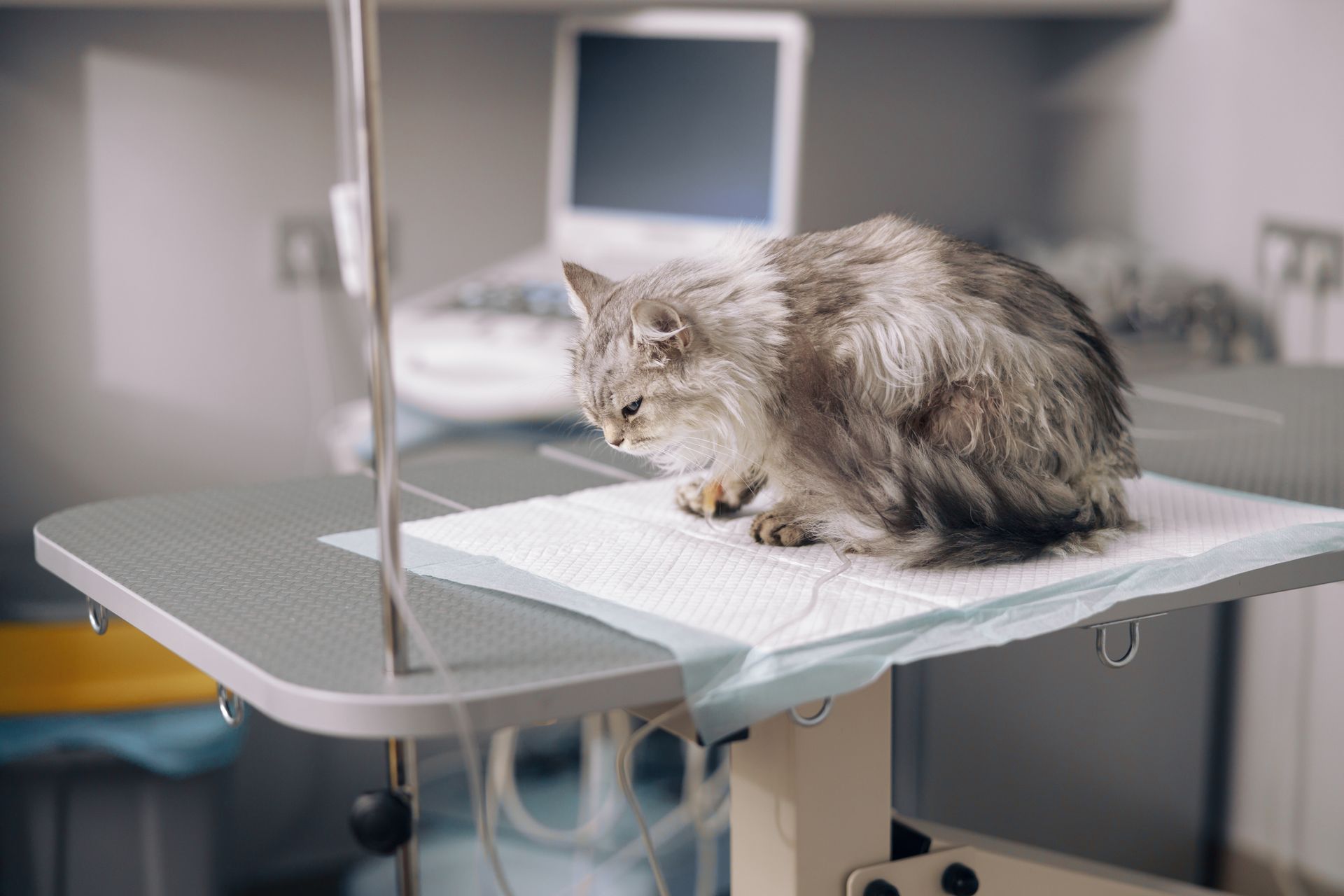
Veterinarians & Animal Hospitals
Professional and general liability, property, and workers’ comp for clinical operators with high exposure.
Hands-on · small business
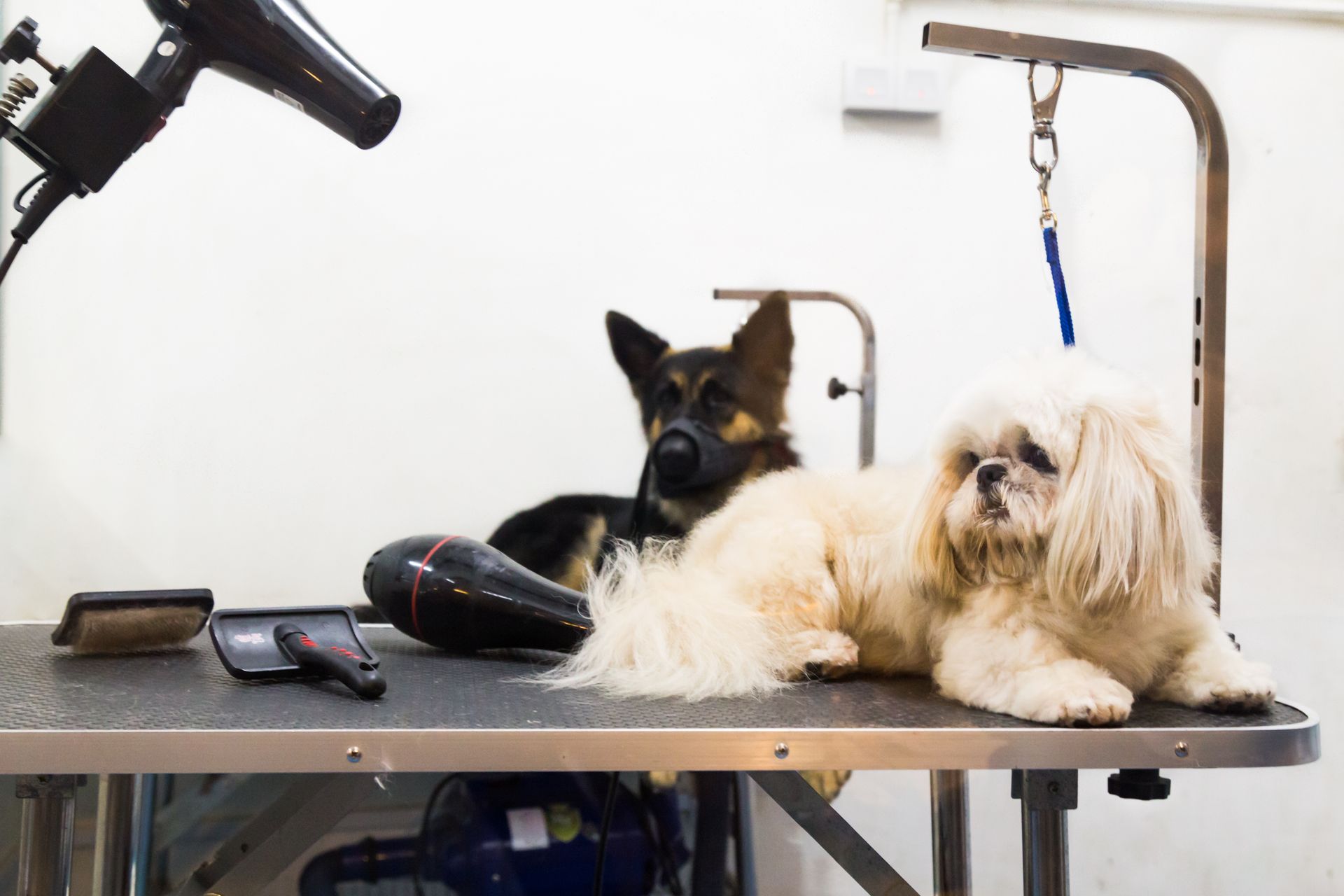
Pet Groomers
Practical protection for animal handling, equipment, and the day-to-day of the grooming table, shop or mobile.

Safety-forward · overnight
Doggy Daycare & Boarding
Coverage matched to facilities responsible for animals overnight and all day long.
Our reviews
Trusted by pet professionals.
See what owners say about working with a specialist who already understands their business.
Frequently asked
Questions pet pros ask us.
What kinds of pet businesses do you insure?
We insure businesses across the animal-care industry — veterinarians and animal hospitals, groomers, doggy daycares and boarding facilities, kennels and trainers, pet sitters and dog walkers, and pet stores. We also cover breeders, equine operations, pet transporters, shelters and rescues, pet photographers, and aquariums or wildlife facilities.
If your work involves caring for, handling, or selling animals, there is a strong chance we cover it. Tell us what you do and we will confirm.
What is care, custody, and control coverage, and why does it matter?
Care, custody, and control coverage protects you when an animal in your charge is injured, becomes ill, or is lost while in your care. Standard general liability policies often exclude this exact exposure, which leaves a serious gap for pet businesses.
For groomers, boarders, sitters, and clinics, this is one of the most important coverages you can carry. We make sure it is in place and sized to your operation.
How is an independent agency different from buying direct from a carrier?
A direct carrier sells you its own single policy. As an independent agency, we shop multiple specialty insurers and compare programs to find the coverage that fits your business and budget.
That means you get options instead of one quote, and an advocate who works for you, not the carrier. We also handle the renewals and claims support over the life of your policy.
How fast can I get a quote?
Most clients get quoted within one business day. Our industry-specific intake forms collect the right details up front, so we can take your information straight to the carriers without a long back-and-forth.
Need it sooner? Call a specialist directly at (346) 738-7297 and we will move quickly.
Which states do you serve?
We are licensed and actively writing coverage in 12 states: Connecticut, Delaware, Georgia, Kentucky, Massachusetts, New Jersey, New York, North Carolina, Pennsylvania, South Carolina, Tennessee, and Virginia.
We continue to add states as we grow. If you operate outside this list, reach out and we will let you know our latest footprint.
From the blog
Coverage notes for pet professionals.
Plain-language risk tips and coverage explainers, written for owners — not insurance pros.
Speak with a specialist
Let's find the right coverage for your business.
No quote bots, no funnel. Talk to a real pet-insurance specialist who already understands your operation — and shops multiple markets on your behalf.
Call us
(346) 738-7297
Toll-free 845-250-5366
Email
service@petindustryins.com
Visit Us
2 Joyce Plaza
Stony Point, NY 10980