Coverage for veterinary practices
Commercial Property Insurance for Pet Businesses
A burst pipe floods your grooming salon overnight. By morning, your hydraulic grooming tables are waterlogged, your retail shelves of premium dog food are ruined, and the drywall behind your tub station is buckling. The repair bill? Easily $40,000 or more, depending on the damage. Without the right property coverage in place, that cost comes straight out of your pocket, and for many small pet businesses, a hit like that is enough to close the doors permanently.
Commercial property insurance for pet businesses covers your building, equipment, and contents against losses from fire, theft, storms, vandalism, and other covered perils. But the details matter enormously. A boarding kennel has different exposures than a mobile grooming van or a veterinary clinic. The type of policy form you choose, the valuation method on your equipment, and whether your lease shifts building risk to you or your landlord - all of these shape whether a claim actually makes you whole or leaves you scrambling. Here's what you need to know to protect the physical assets your pet business depends on.
Why Pet Businesses Need Specialized Property Coverage
Most general commercial property policies weren't designed with a 50-run boarding facility or a veterinary surgical suite in mind. Pet businesses face a unique mix of risks: water damage from bathing stations, animal-caused destruction, specialized HVAC systems running around the clock, and expensive medical or grooming equipment that standard policies might undervalue or exclude.
The commercial insurance market in 2026 has stabilized somewhat after years of volatility, but stability doesn't mean simplicity. Older frame buildings used as kennels or daycare facilities, for example, are seeing renewed options in the surplus lines market after years of being nearly uninsurable through standard carriers. That's good news, but it means you need an agent who understands which markets fit your specific building type and operation.
A pet retailer stocking $80,000 in inventory has very different needs than a trainer renting a small studio space. Specialized property coverage accounts for these differences rather than forcing your operation into a one-size-fits-all template.
Protecting Your Physical Storefront or Facility
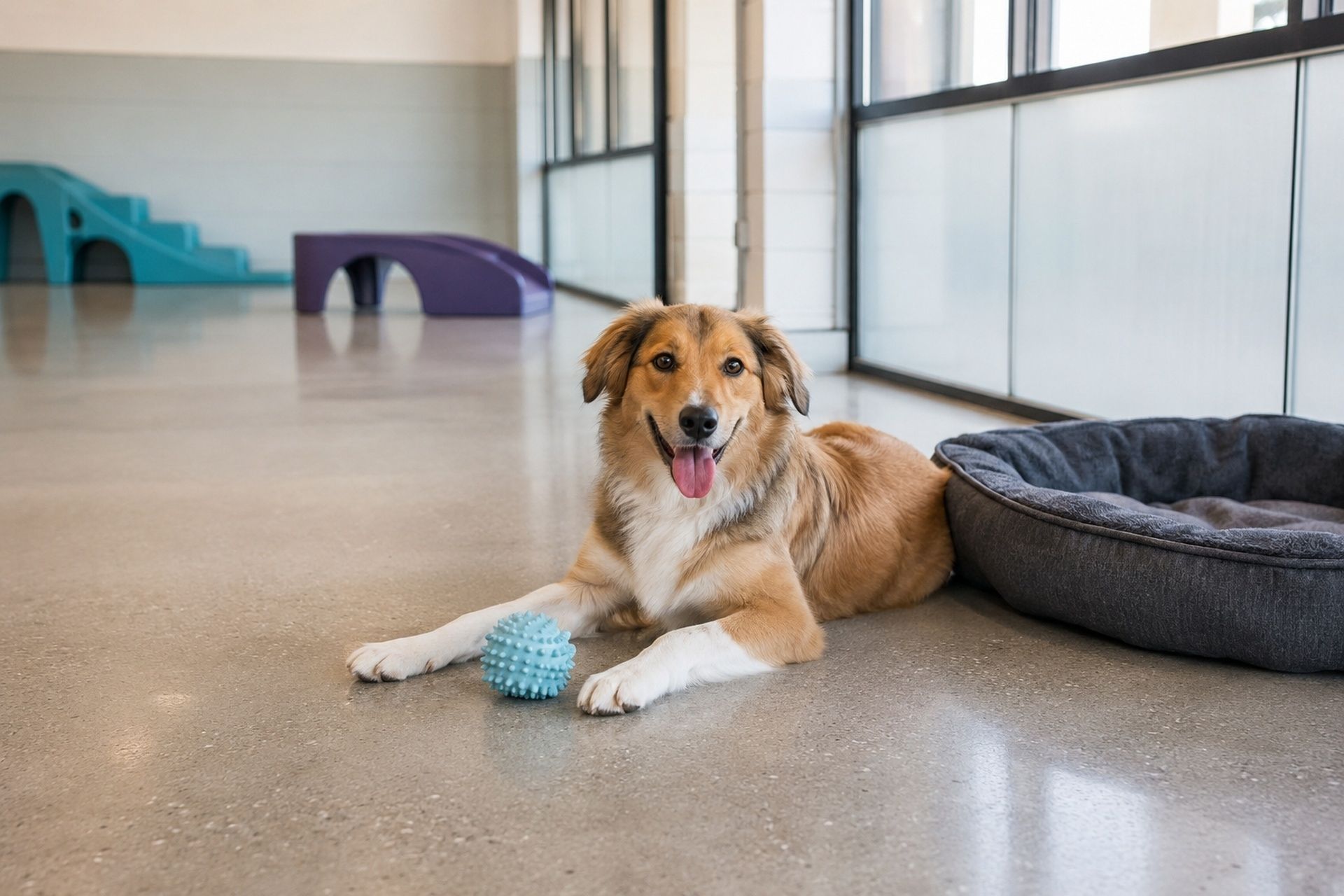
If you own your building, your property policy covers the structure itself: walls, roof, plumbing, electrical, HVAC, and permanently installed fixtures. For pet businesses, this often includes built-in kennels, drainage systems for grooming areas, and commercial-grade ventilation required to manage air quality in boarding and daycare spaces.
Storm damage is a frequent concern, especially for facilities in hurricane-prone or tornado-prone regions. A kennel in Texas, for instance, must meet specific structural and safety requirements that affect both building costs and insurance valuations. If your building doesn't meet code after a loss, you may need an ordinance or law endorsement to cover the cost of bringing the rebuilt structure up to current standards.
One thing to keep in mind: building coverage is based on replacement cost, not market value. Your insurer cares about what it costs to rebuild, not what the property would sell for.
The Difference Between Building and Contents Insurance
Building coverage and contents coverage are two distinct components of a commercial property policy, and confusing them is one of the most common mistakes pet business owners make.
Building coverage applies to the structure and anything permanently attached to it. Contents coverage, often called business personal property, covers everything inside that you own and use to operate: grooming tables, crates, computer systems, retail inventory, and furniture. If you lease your space, you typically don't need building coverage (your landlord's policy handles the structure), but you absolutely need contents coverage for your own property inside.
The distinction matters at claim time. If a fire damages both the building and your equipment, two different coverage sections respond, and they may have different limits, deductibles, and valuation methods.
Protecting Your Grooming, Training, and Veterinary Equipment
Equipment is often the most underinsured category for pet businesses. Owners know the value of their building and their inventory, but they underestimate what it would cost to replace every piece of equipment simultaneously after a total loss.
A single veterinary digital X-ray system can run $30,000 to $70,000. Hydraulic grooming tables cost $1,500 to $4,000 each. Autoclaves, anesthesia machines, dental units, commercial washers and dryers - it adds up fast. Your property policy should reflect the actual replacement cost of all this equipment, not the depreciated value.
Coverage for High-Value Medical and Grooming Tools
Standard property policies cover equipment against named perils like fire, lightning, windstorm, and theft. But if you carry high-value veterinary or grooming equipment, you want to make sure your policy uses replacement cost valuation rather than actual cash value. The difference is significant: replacement cost pays what it takes to buy new equivalent equipment, while actual cash value deducts depreciation.
Pet businesses with substantial equipment investments should maintain a detailed equipment schedule with serial numbers, purchase dates, and current replacement values. Update this annually. When a claim happens, having this documentation speeds up the process dramatically and prevents disputes over what you actually owned.
An agency like Pet Professional Insurance Agency, which works exclusively with pet-care businesses, can help you identify coverage gaps specific to your equipment type, whether that's a $60,000 surgical laser or a fleet of grooming dryers.
Inland Marine: Protecting Gear on the Go
If you're a mobile groomer, mobile veterinarian, or trainer who hauls equipment between locations, standard property coverage may not follow your gear off-premises. That's where inland marine insurance comes in.
Inland marine covers movable property and equipment in transit or at temporary locations. For a mobile grooming van, this might cover the grooming equipment mounted inside the vehicle (the van itself is covered under commercial auto). For a trainer who brings agility equipment to parks and client homes, inland marine fills the gap that a standard property policy leaves open.
This coverage is typically written as a separate policy or endorsement. Premiums are based on the total value of the equipment being covered and the nature of the transit risk.
Insuring Your Inventory and Business Personal Property
Retail Stock: Food, Toys, and Supplies
Pet retailers and hybrid businesses (think a grooming salon with a retail section) carry inventory that fluctuates seasonally. A property policy covers this stock against covered perils, but you need to set your limit high enough to account for peak inventory periods, not just your average stock level.
If you stock $25,000 in retail goods most of the year but ramp up to $45,000 before the holidays, your coverage limit needs to reflect that peak. Some policies offer a peak season endorsement or automatic increase provision for exactly this scenario. Pet care businesses that carry diverse product lines - from refrigerated raw food to premium leashes - should review their inventory limits at least twice a year.
Furniture, Fixtures, and Office Tech
Don't overlook the "boring" stuff. Reception desks, waiting room furniture, point-of-sale systems, computers, security cameras, and phone systems all fall under business personal property. A break-in that takes your POS system and security DVR could cost $5,000 to $10,000 to replace, and that's before you factor in the disruption to your operations.
Fixtures permanently attached to the building (built-in cabinetry, custom reception counters) can fall into a gray area between building and contents coverage. Clarify with your agent which policy section covers what, especially if you're a tenant who installed custom improvements.
Comparison: Basic vs. Special Form Property Coverage
Not all property policies are created equal. The two most common policy forms are Basic (or Named Perils) and Special Form (sometimes called Open Perils or All-Risk). Here's how they compare:
| Feature | Basic Form (Named Perils) | Special Form (Open Perils) |
|---|---|---|
| What's covered | Only perils specifically listed in the policy | All perils unless specifically excluded |
| Burden of proof | You must prove the loss was caused by a named peril | Insurer must prove an exclusion applies |
| Typical perils included | Fire, lightning, windstorm, hail, explosion, theft, vandalism | All of the above plus accidental water damage, falling objects, weight of ice/snow, and more |
| Cost | Lower premiums | Higher premiums, but significantly broader protection |
| Recommended for | Low-risk operations with minimal equipment | Most pet businesses, especially those with expensive equipment or inventory |
For most pet businesses, special form coverage is worth the added premium. A named perils policy might not cover a burst pipe that floods your kennel area unless "water damage" is specifically listed. With special form, that loss is covered unless the policy explicitly excludes it.
Common Questions About Pet Business Property Insurance
For most pet businesses, special form coverage is worth the added premium. A named perils policy might not cover a burst pipe that floods your kennel area unless "water damage" is specifically listed. With special form, that loss is covered unless the policy explicitly excludes it.
Does this cover animals in my care?
No. Commercial property insurance covers your physical assets, not the animals. Coverage for animals in your care, custody, or control falls under a separate policy section, typically called care, custody, and control (CCC) coverage or bailee coverage. Pet Professional Insurance Agency can help you pair property coverage with the right animal-care liability protection.
What happens if a fire destroys my grooming equipment?
Your property policy pays to replace the destroyed equipment, up to your policy limit and subject to your deductible. If you carry replacement cost coverage, you receive what it costs to buy new equivalent equipment. If you only carry actual cash value coverage, depreciation is deducted, and you'll likely face a significant out-of-pocket gap.
Do I need building coverage if I lease my space?
Usually not for the structure itself - your landlord's policy covers that. But read your lease carefully. Many commercial leases require tenants to carry property coverage for their own contents and improvements. Some leases even shift certain building-related risks to the tenant. Your agent should review your lease before binding coverage.
How do I determine the value of my equipment?
Create a complete inventory of every piece of equipment you own, including purchase price, purchase date, and current replacement cost. For specialized veterinary or grooming equipment, check current pricing from suppliers. Kennel and boarding operators should include all facility-specific equipment like commercial HVAC units, drainage systems, and security infrastructure.
The Bottom Line: Securing Your Assets
Your building, equipment, and inventory represent years of investment and the foundation of your daily operations. A single fire, storm, or theft can wipe out tens of thousands of dollars in assets overnight. The right commercial property coverage ensures you can rebuild and restock without draining your savings or taking on crushing debt.
The key decisions come down to choosing the right policy form (special form is almost always the better call), setting accurate coverage limits that reflect replacement costs, and making sure mobile equipment and peak inventory levels are accounted for. These aren't details you want to guess at.
If you're unsure whether your current coverage actually matches your exposure, reach out to Pet Professional Insurance Agency. With intake forms tailored to each type of pet business and access to multiple specialty markets, they can typically get you a coverage review and options within 24 to 48 hours. That's a small time investment to protect everything you've built.
Index
Pet Professional Insurance Agency is fully licensed and permitted to provide commercial insurance solutions for pet businesses across 12 states.
We proudly serve pet professionals throughout the Northeast, Mid-Atlantic, and Southeast. Powered by Joyce Insurance Agency, our team works with leading specialty carriers — including The Hartford, USLI, Nautilus, and Northland — to make sure veterinarians, groomers, boarding facilities, and pet-care businesses receive coverage that fits their real risks in Connecticut, Delaware, Georgia, Kentucky, Massachusetts, New Jersey, New York, North Carolina, Pennsylvania, South Carolina, Tennessee, and Virginia.
About the author
Barnaby Joyce
Founder, Pet Professional Insurance Agency · Licensed Insurance Producer
I started Pet Professional Insurance Agency because I watched pet businesses get handed generic policies that never fit. After years of placing coverage for veterinary practices, grooming salons, doggy daycares, and kennels through a generalist agency, I saw the same gaps over and over — and the same blank stares when an owner tried to explain care, custody, and control to an agent who had never insured an animal in their life.
So I built an agency that does one thing. I work directly with specialty carriers who actually want pet-industry risk, and I sit down with every client personally. You will not get a call center or a chatbot. You will get someone who already speaks your language and shops the market on your behalf. That is the whole idea.
Recommended coverages
Coverages that pair with general liability.
Most pet businesses build on general liability with the lines below. Explore each — every page cross-links to the
industries we serve.
Services & advice
Professional Liability / E&O
Covers claims tied to your professional services and advice — clinical care, training guidance, and the judgment calls you make daily.
The pet-industry gap
Care, Custody & Control
Covers the animals in your charge against injury, illness, or loss — the critical exposure standard liability policies leave out.
Bundled & cost-effective
Business Owners Policy (BOP)
Bundles property and general liability into one package built for small to mid-sized pet businesses — often the simplest base.
Your building & contents
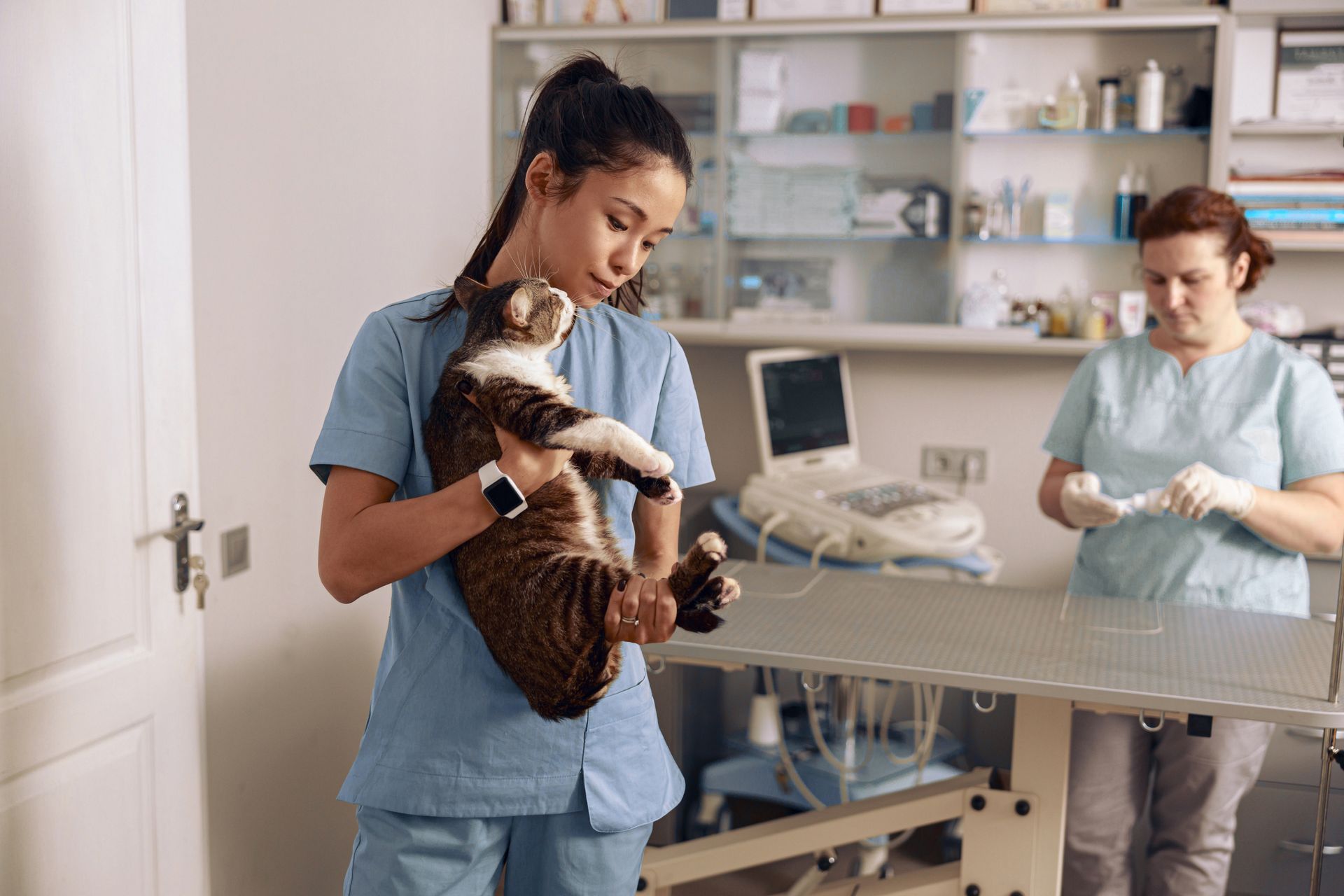
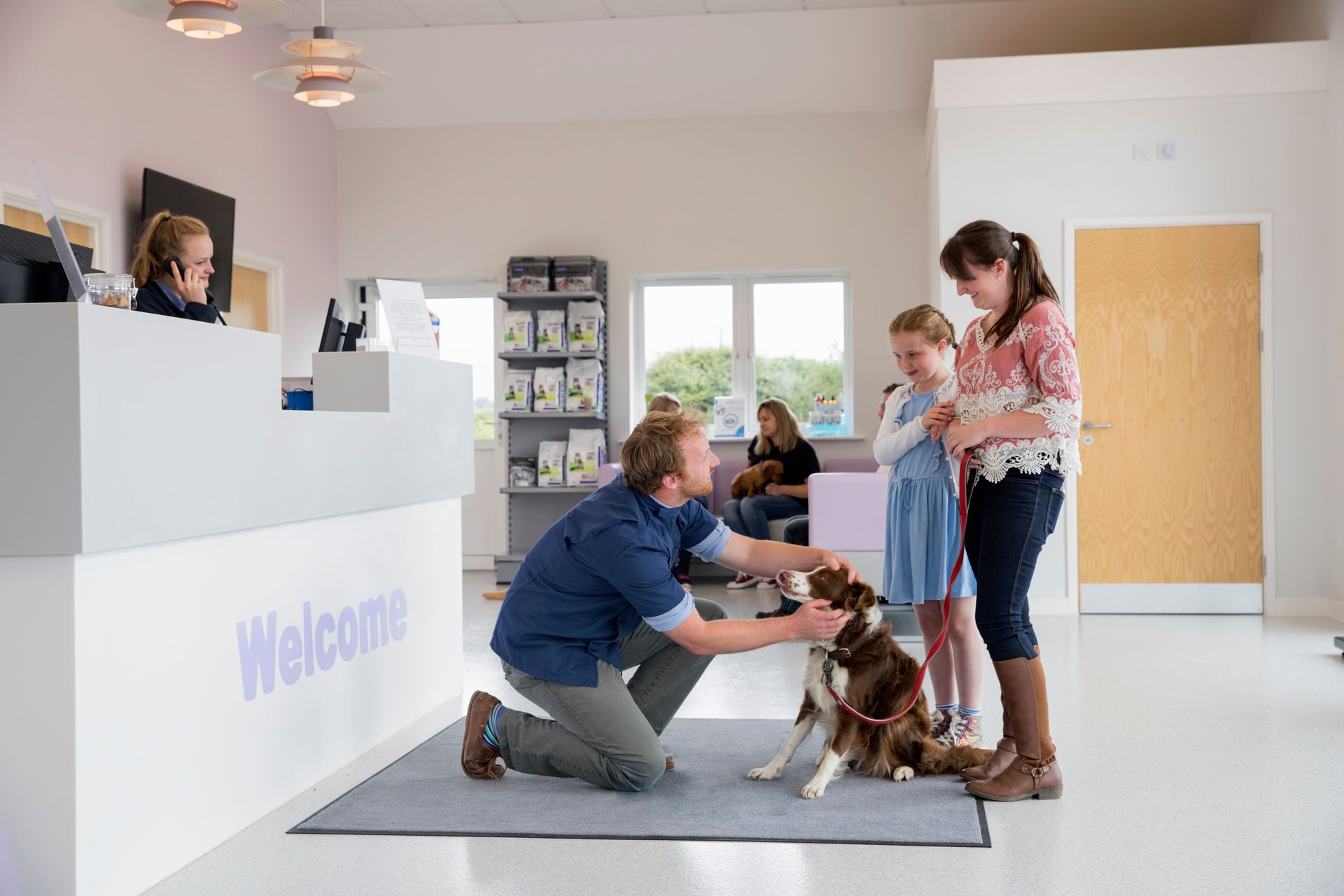
Commercial Property
Protects your building, build-out, equipment, and inventory against fire, theft, and covered losses — front desk to back room.
For your team
Workers’ Compensation
Covers medical costs and lost wages when a team member is hurt on the job — required in most states once you have employees.
Extra protection
Commercial Umbrella
Adds liability limits above your primary policies for catastrophic claims that exceed standard coverage.
Coverage availability and terms vary by carrier and state. We recommend the right mix for your operation once we talk.
Industries we serve
Built for the businesses that care for animals.
General liability is the baseline for every segment we specialize in. Find the page built for your business.
Clinical · high exposure
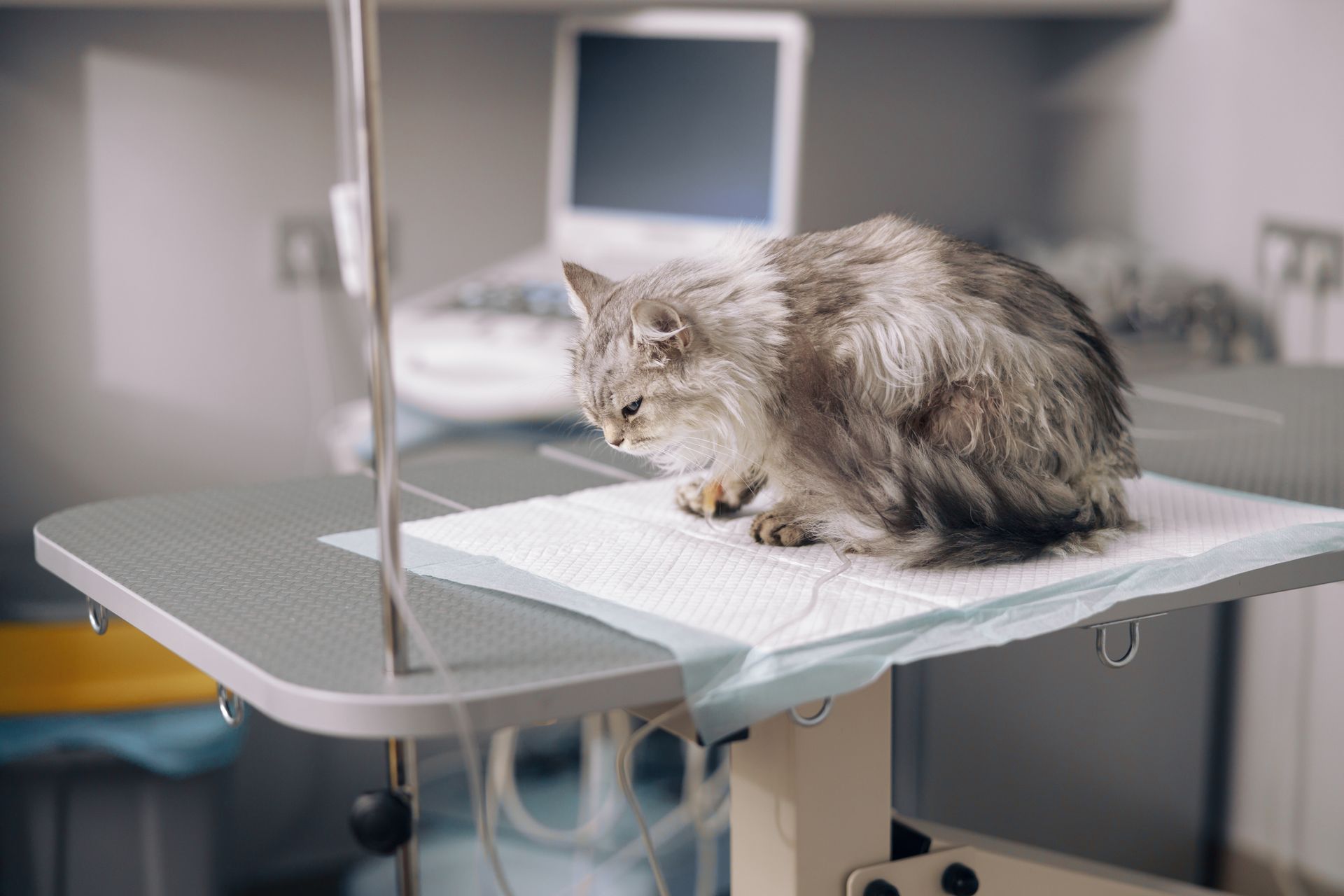
Veterinarians & Animal Hospitals
Professional and general liability, property, and workers’ comp for clinical operators with high exposure.
Hands-on · small business
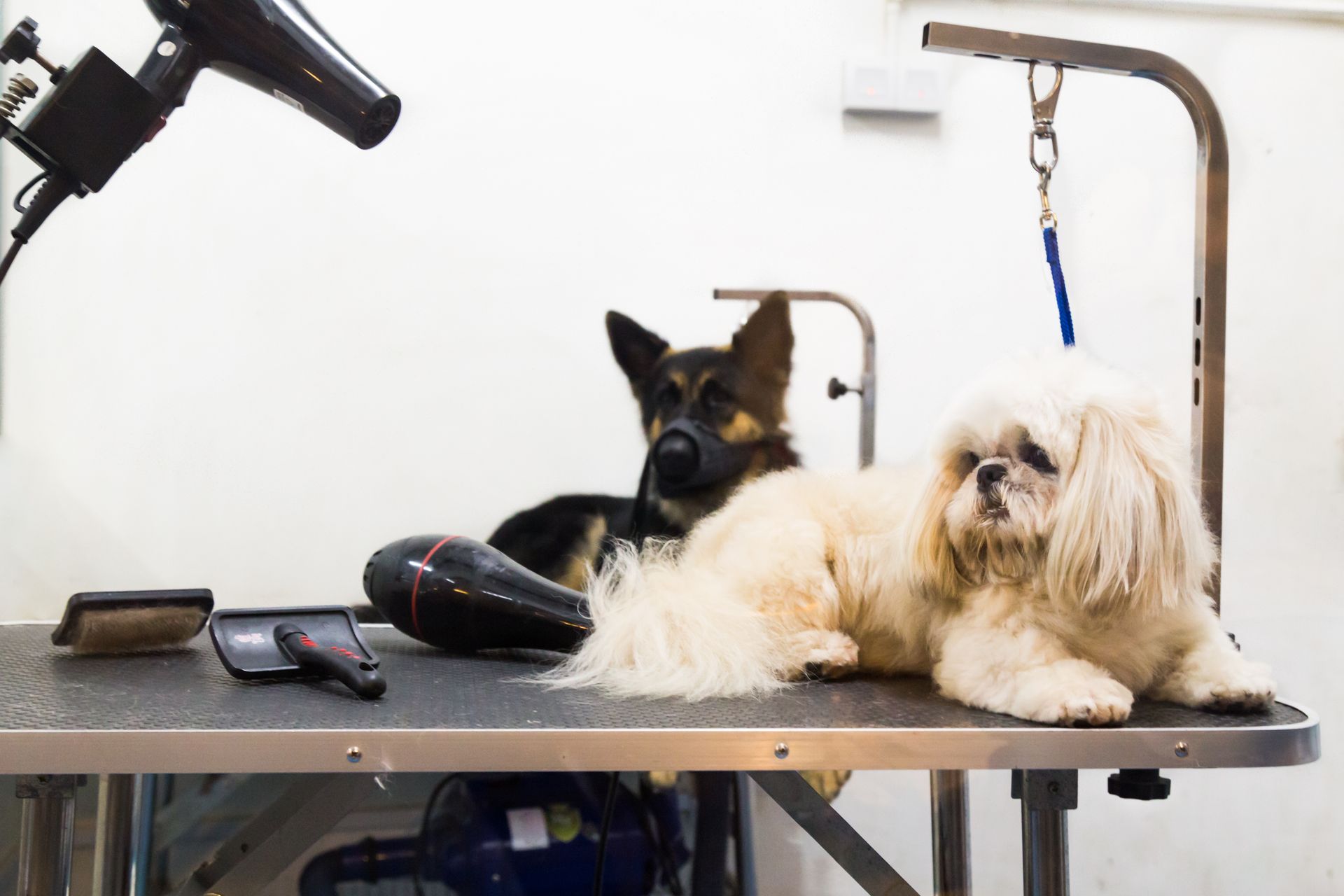
Pet Groomers
Practical protection for animal handling, equipment, and the day-to-day of the grooming table, shop or mobile.

Safety-forward · overnight
Doggy Daycare & Boarding
Coverage matched to facilities responsible for animals overnight and all day long.
Our reviews
Trusted by pet professionals.
See what owners say about working with a specialist who already understands their business.
Frequently asked
Questions pet pros ask us.
What kinds of pet businesses do you insure?
We insure businesses across the animal-care industry — veterinarians and animal hospitals, groomers, doggy daycares and boarding facilities, kennels and trainers, pet sitters and dog walkers, and pet stores. We also cover breeders, equine operations, pet transporters, shelters and rescues, pet photographers, and aquariums or wildlife facilities.
If your work involves caring for, handling, or selling animals, there is a strong chance we cover it. Tell us what you do and we will confirm.
What is care, custody, and control coverage, and why does it matter?
Care, custody, and control coverage protects you when an animal in your charge is injured, becomes ill, or is lost while in your care. Standard general liability policies often exclude this exact exposure, which leaves a serious gap for pet businesses.
For groomers, boarders, sitters, and clinics, this is one of the most important coverages you can carry. We make sure it is in place and sized to your operation.
How is an independent agency different from buying direct from a carrier?
A direct carrier sells you its own single policy. As an independent agency, we shop multiple specialty insurers and compare programs to find the coverage that fits your business and budget.
That means you get options instead of one quote, and an advocate who works for you, not the carrier. We also handle the renewals and claims support over the life of your policy.
How fast can I get a quote?
Most clients get quoted within one business day. Our industry-specific intake forms collect the right details up front, so we can take your information straight to the carriers without a long back-and-forth.
Need it sooner? Call a specialist directly at (346) 738-7297 and we will move quickly.
Which states do you serve?
We are licensed and actively writing coverage in 12 states: Connecticut, Delaware, Georgia, Kentucky, Massachusetts, New Jersey, New York, North Carolina, Pennsylvania, South Carolina, Tennessee, and Virginia.
We continue to add states as we grow. If you operate outside this list, reach out and we will let you know our latest footprint.
From the blog
Coverage notes for pet professionals.
Plain-language risk tips and coverage explainers, written for owners — not insurance pros.
Speak with a specialist
Let's find the right coverage for your business.
No quote bots, no funnel. Talk to a real pet-insurance specialist who already understands your operation — and shops multiple markets on your behalf.
Call us
(346) 738-7297
Toll-free 845-250-5366
Email
service@petindustryins.com
Visit Us
8 Joyce Plaza
Stony Point, NY 10980