Coverage for veterinary practices
Start by listing every piece of equipment you own, along with the brand, model, purchase date, and what you paid for it. Take photos or video of each item. Keep receipts, invoices, and warranty documents in a digital folder. This inventory serves two purposes: it helps your agent calculate the right coverage limits, and it becomes your proof of ownership if you ever file a claim. Pet Professional Insurance Agency uses intake forms designed specifically for pet businesses, which means you won't waste time explaining what a forced-air dryer is or why a single pair of shears costs $500. Update this inventory at least once a year, or whenever you make a significant purchase.
A single off-leash session can go from fun to catastrophic in under three seconds. One dog redirects onto another, a bystander gets knocked down, or a scuffle escalates into a full bite incident with veterinary bills, medical costs, and angry phone calls. If you run group classes, pack walks, or any kind of off-leash training, these scenarios aren't hypothetical: they're Tuesday. Dog-related injury
claims have been climbing steadily, hitting $1.86 billion in 2025 alone, a 25% jump from the prior year. That trend hasn't slowed in 2026. For pet professionals offering group training or off-leash activities, understanding how injury claims work and what coverage actually protects you is no longer optional. It's the difference between staying in business and closing your doors after a single bad incident. This guide breaks down the liability risks, the insurance gaps most trainers don't know about, and the practical steps that keep your business protected.
Understanding Liability Risks in Group Training and Off-Leash Play
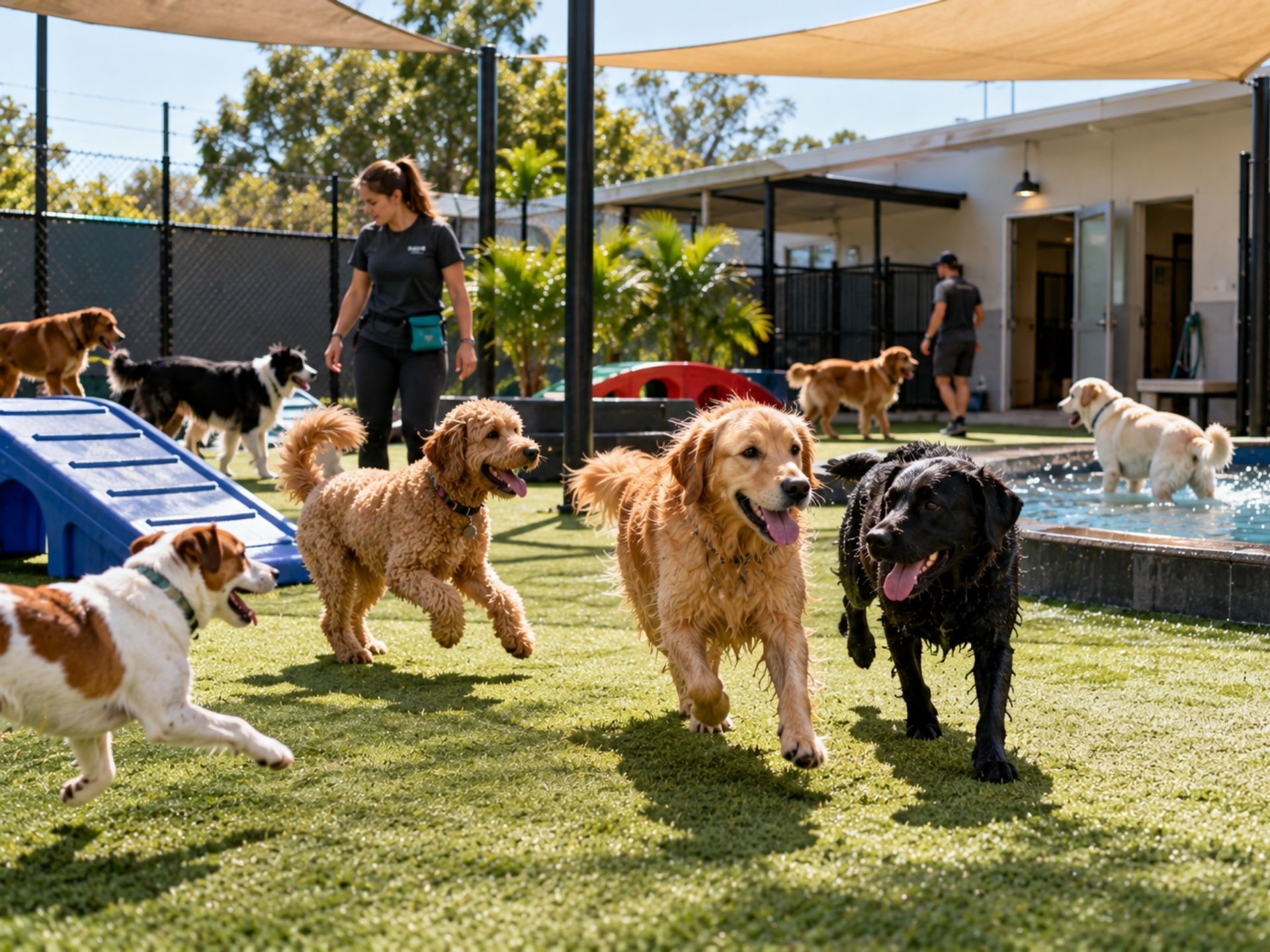
Group classes and off-leash environments create a fundamentally different risk profile than one-on-one training. You're managing multiple dogs with different temperaments, energy levels, and triggers, all in the same space. The liability exposure multiplies with every additional animal and every additional person present.
Most pet professionals underestimate this. They assume their general liability policy handles everything, or they rely on waivers as a complete shield. Neither assumption holds up well when a claim actually hits.
The Unpredictability of Multi-Dog Environments
Even well-socialized dogs behave differently in group settings. Resource guarding, overstimulation, and redirected aggression can surface without warning. A dog that's perfectly calm in private sessions may become reactive around three or four unfamiliar dogs.
The human element adds another layer. Owners in group classes often don't follow instructions, pull leashes at the wrong moment, or step between dogs during a conflict. Bystanders in public parks or outdoor training areas introduce variables you can't control at all. The legal landscape around dog parks and public spaces is increasingly complex when playtime goes wrong, and trainers working in these settings face heightened exposure.
Common Causes of Injuries in Off-Leash Settings
The injuries that generate claims fall into predictable categories:
- Dog bites to humans (other handlers, bystanders, or the trainer)
- Dog-on-dog attacks resulting in puncture wounds, lacerations, or worse
- Trip-and-fall injuries when a dog knocks someone over
- Leash burns or shoulder injuries from sudden lunges
- Emotional distress claims from owners who witness their dog being injured
Each of these creates a distinct claim type with different coverage implications. A trip-and-fall is a straightforward bodily injury claim. A dog bite may trigger both bodily injury and professional liability questions, especially if the injured party argues you should have screened the aggressive dog out of class.
Types of Injury Claims Faced by Pet Professionals
Not all claims look the same, and the type of claim determines which part of your insurance responds, if any part responds at all.
Third-Party Bodily Injury to Owners and Bystanders
This is the most common and often the most expensive category. The average dog bite claim now costs around $58,000 to $65,000 per incident, and settlement amounts vary widely based on severity and jurisdiction. A serious bite requiring surgery or causing nerve damage can push well into six figures.
When a client's dog bites another person during your group class, the injured party may come after both the dog's owner and you as the supervising professional. Your general liability policy typically covers third-party bodily injury, but the specifics matter: were you negligent in allowing an aggressive dog into the group? Did you fail to maintain adequate control? These questions shape whether your insurer defends or denies.
Animal-to-Animal Injuries and Veterinary Medical Expenses
Dog-on-dog injuries during off-leash play generate claims that fall under care, custody, and control coverage, a provision that standard general liability policies often exclude or severely limit. If a client's dog is injured while under your supervision, you may be responsible for veterinary bills that can easily reach $5,000 to $15,000 for emergency surgery.
This is one of the biggest coverage gaps we see at Pet Professional Insurance Agency. Trainers assume their policy covers animals in their care, but many standard commercial policies specifically exclude damage to property (and legally, pets are classified as property) that's been entrusted to you.
Property Damage Claims During Off-Site Classes
Training in rented facilities, community centers, or public parks introduces property damage exposure. A dog that scratches hardwood floors, chews equipment, or damages a park structure creates a claim against your business. These tend to be smaller dollar amounts, but they add up and can jeopardize your ability to rent spaces if you can't show adequate coverage.
Essential Insurance Coverages for Off-Leash Risks
Comparing General Liability vs. Professional Liability Coverage
These two policies protect against different things, and confusing them is a common and costly mistake.
General liability covers bodily injury and property damage caused by your business operations. If someone trips over a leash in your training area, that's a GL claim. Professional liability (sometimes called errors and omissions) covers claims arising from your professional advice or services. If you recommend a training technique that leads to injury, or if you fail to identify aggression during an intake assessment, that's a professional liability issue.
Most off-leash and group-class injury claims involve elements of both. A bite incident during a group session might trigger a bodily injury claim under GL and a negligence claim under professional liability simultaneously. Having only one type of coverage leaves a gap. Working with an agency that understands pet-industry risk, like Pet Professional Insurance Agency, means your coverage is structured to address both sides without leaving holes. Our agents specialize in bite liability, care/custody/control provisions, and the specific exposures trainers face.
Coverage Comparison Table: Standard vs. Specialized Protection
| Coverage Feature | Standard Commercial GL | Specialized Pet-Professional Policy |
|---|---|---|
| Third-party bodily injury | Included | Included |
| Care, custody, and control | Often excluded | Typically included |
| Professional liability / E&O | Not included | Available as add-on or bundled |
| Off-leash activity coverage | May be excluded | Specifically addressed |
| Dog-on-dog injury | Usually excluded | Covered under animal bailee |
| Public park / off-site training | Limited or excluded | Can be endorsed |
| Defense costs | Included (erodes limits) | Included (may be outside limits) |
The differences are significant. A standard policy might cover you if a client slips on a wet floor, but deny a claim when a dog in your care bites another dog during off-leash play. Specialized coverage is built for exactly these situations.
Best Practices for Mitigating Group-Class Risks
Insurance protects you financially, but smart operational practices reduce the likelihood you'll need to file a claim in the first place. Recent legislative updates in 2026 reflect growing regulatory attention to animal-related liability, making proactive risk management more important than ever.
The Importance of Temperament Assessments
Every dog entering a group class or off-leash session should go through a structured temperament evaluation. This isn't just good training practice: it's your first line of legal defense if something goes wrong.
Document the assessment thoroughly. Note the dog's reaction to other dogs, handling by strangers, resource guarding tendencies, and arousal levels. If you later need to demonstrate that you exercised reasonable care in screening participants, this documentation becomes critical evidence. Dogs that show red flags should be redirected to private training, and that recommendation should be documented too.
Using Liability Waivers and Informed Consent Forms
Waivers don't make you bulletproof, but they serve two important functions. First, they establish that the client understood the inherent risks of off-leash and group activities. Second, they can limit your liability in some jurisdictions, though enforcement varies significantly by state.
Your waiver should specifically mention the risks of off-leash interaction, the possibility of dog bites or injuries, and the client's responsibility to disclose behavioral issues. Have an attorney licensed in your state review the language: a generic template downloaded from the internet may not hold up in court. Keep signed copies for at least three years, ideally longer.
Note that laws governing liability waivers, dog bite statutes, and professional responsibility vary widely by jurisdiction. Always consult a qualified attorney familiar with your state's specific requirements.
Frequently Asked Questions About Injury Claims
Does my standard business insurance cover dog fights?
Most standard commercial general liability policies exclude or limit coverage for animals in your care, custody, or control. If a dog fight happens during your session and one dog is injured, you'll likely need specific care/custody/control or animal bailee coverage to be protected. Check your policy language carefully.
What should I do immediately after an injury occurs in class?
Secure the scene, separate the animals, and get medical or veterinary attention for anyone injured. Document everything: photos, witness statements, timestamps. Report the incident to your insurance carrier within 24 hours. Delayed reporting is one of the most common reasons claims get complicated.
Are off-leash activities excluded from most policies?
Some policies do exclude off-leash activities or impose sub-limits. This is why specialized pet-professional coverage matters. Always confirm with your agent that your specific activities, including off-leash play, pack walks, and outdoor group classes, are explicitly covered.
Who is responsible if a dog bites a person during a group session?
Liability often falls on multiple parties. The dog's owner may be strictly liable under state dog bite statutes, while you as the trainer may face negligence claims for failing to prevent the incident. In states with strict liability rules, the owner is typically held responsible regardless of prior knowledge, but that doesn't shield you from a separate negligence suit.
Do I need extra coverage if I train in public parks?
Yes, in most cases. Public park training introduces premises liability issues, and many municipalities require proof of insurance to issue permits. Your policy should cover off-premises activities, and you may need to add the park authority as an additional insured on your policy.
The Bottom Line for Your Business Safety
Off-leash activities and group classes are among the highest-value services trainers offer, but they carry real financial risk. With dog-related injury claims continuing to rise year over year, the gap between what standard policies cover and what you actually need is widening.
The trainers who stay in business long-term are the ones who pair solid operational practices, including temperament screenings, documented waivers, and incident protocols, with insurance that's actually designed for what they do. Generic commercial coverage wasn't built for the realities of managing multiple dogs in off-leash environments.
About the author
Barnaby Joyce
Founder, Pet Professional Insurance Agency · Licensed Insurance Producer
I started Pet Professional Insurance Agency because I watched pet businesses get handed generic policies that never fit. After years of placing coverage for veterinary practices, grooming salons, doggy daycares, and kennels through a generalist agency, I saw the same gaps over and over — and the same blank stares when an owner tried to explain care, custody, and control to an agent who had never insured an animal in their life.
So I built an agency that does one thing. I work directly with specialty carriers who actually want pet-industry risk, and I sit down with every client personally. You will not get a call center or a chatbot. You will get someone who already speaks your language and shops the market on your behalf. That is the whole idea.
Recent Posts