Coverage for veterinary practices
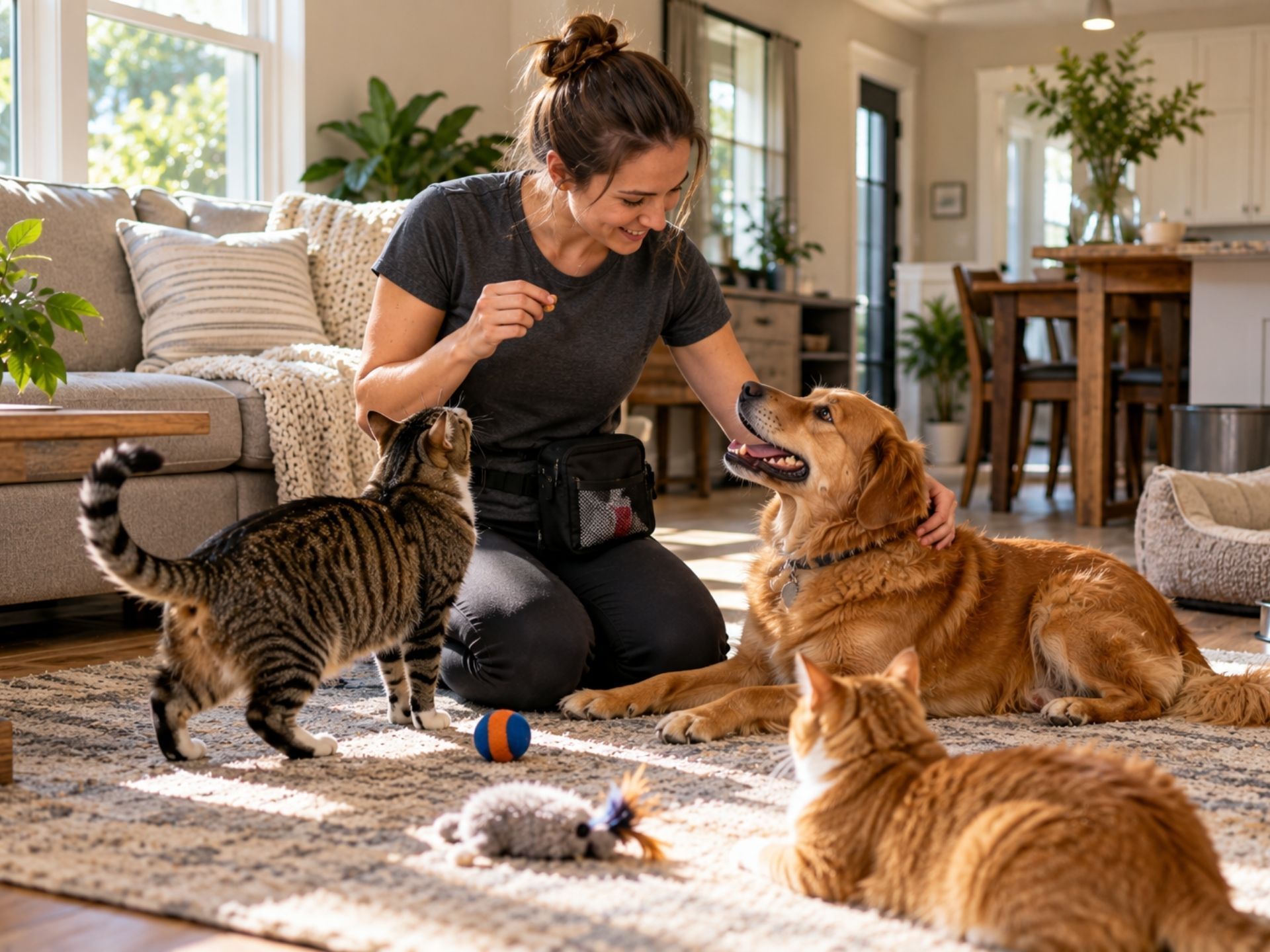
Pet sitting is one of the few service industries where the provider routinely has unsupervised access to a client's home for extended periods. Dog walkers might be in and out in 30 minutes, but overnight pet sitters can spend days or weeks in someone's house.
That level of access makes clients nervous, and rightfully so. A bond doesn't eliminate the risk, but it provides a financial safety net that makes the arrangement feel less like a leap of faith. For clients with valuable collections, home offices full of equipment, or simply a strong sense of privacy, knowing their pet sitter is bonded can be the deciding factor. Agencies like Pet Professional Insurance Agency, which specialize in coverage for pet care businesses, often help sitters understand exactly what level of bonding makes sense for their client base and service model.
Start by listing every piece of equipment you own, along with the brand, model, purchase date, and what you paid for it. Take photos or video of each item. Keep receipts, invoices, and warranty documents in a digital folder. This inventory serves two purposes: it helps your agent calculate the right coverage limits, and it becomes your proof of ownership if you ever file a claim. Pet Professional Insurance Agency uses intake forms designed specifically for pet businesses, which means you won't waste time explaining what a forced-air dryer is or why a single pair of shears costs $500. Update this inventory at least once a year, or whenever you make a significant purchase.
Your general liability policy should cover third-party bodily injury claims, including dog bites. The claim would be filed against your business, and your insurer would handle defense and settlement up to your policy limits. Larger packs with higher bite risk may need higher limits or a separate bite liability endorsement.
If you receive weekly shipments of fish, reptiles, or birds from wholesalers, those animals are at risk during transit. Delayed flights, temperature extremes during shipping, and rough handling kill animals before they ever reach your tanks. Some livestock coverage extends to animals in transit, but many policies only kick in once the animals arrive at your location. Clarify this with your agent before assuming you're covered for a dead-on-arrival shipment worth $3,000.
December hits pet-care business owners differently than most entrepreneurs. You're juggling holiday boarding rushes, seasonal grooming spikes, and end-of-year bookkeeping all at once. But somewhere between the packed kennels and the tax prep, there's a task that can save you thousands of dollars and hours of headaches in the coming year: reviewing your insurance.
A year-end insurance review for pet businesses isn't just a box to check. It's a chance to catch gaps that have quietly opened up as your business grew, your services changed, or your staff expanded over the past twelve months. The pet-care industry has been growing fast, with the pet insurance sector alone
reaching $5.36 billion in premiums in 2025, and the commercial side of the industry is evolving just as quickly. What covered you adequately in January might leave you exposed in December. A single uncovered claim from a dog bite, a grooming injury, or a kennel escape can wipe out a year's worth of profit. The good news: most of the fixes are straightforward if you know where to look. Here's a practical walkthrough of what to evaluate before the calendar flips.
Why Your Pet Business Needs a Year-End Insurance Audit
Most pet-care business owners buy a policy when they first open, then barely glance at it again unless something goes wrong. That's a problem. Your business in December 2026 probably looks nothing like it did when you first signed your policy, and even small changes can create real coverage gaps.
Think about it this way: if you started as a solo dog walker and now run a team of five handling 30 dogs a day, your exposure to liability has multiplied. If your revenue jumped by 40% this year, your general liability premium may need to adjust upward to keep your coverage limits adequate. An annual insurance audit forces you to match your current reality to your current policy, not the version of your business that existed when you first got covered.
The end of the year is also when most carriers and specialty insurance markets set renewal terms. Reviewing before renewal gives you negotiating room. You can shop coverage through agencies like Pet Professional Insurance Agency, which works with multiple specialty markets, and compare options before your current policy auto-renews at rates that might not reflect your actual risk profile.
Accounting for Revenue Growth and Scale
Revenue growth is exciting until it means your policy limits are too low. Most general liability policies are rated partly on annual revenue. If you projected $150,000 when you bound your policy but actually brought in $220,000, you could face an audit adjustment or, worse, a coverage shortfall if a claim hits.
Pull your actual revenue numbers for the year and compare them against the estimates on your current policy. If there's a significant gap, contact your agent now rather than waiting for the carrier's audit. Proactive adjustments typically cost less than retroactive corrections. This also applies to the number of animals in your care at any given time: a daycare that went from 15 dogs per day to 35 has a meaningfully different risk profile.
Updating Your Inventory and Equipment List
Equipment and property coverage is one of the most commonly overlooked areas. If you bought a new hydraulic grooming table, upgraded your HVAC system for your boarding facility, or invested in a commercial washer/dryer setup, those assets need to be reflected on your policy.
Make a list of every significant purchase or improvement you made this year. Include items like security cameras, fencing upgrades, and specialized veterinary or grooming tools. If your business property coverage hasn't been updated, you could be underinsured. A fire or theft claim that doesn't account for $15,000 in new equipment is a painful way to learn this lesson.
Evaluating Changes in Your Service Offerings
Pet businesses tend to evolve organically. You start grooming, then add daycare. You offer basic obedience classes, then bring in a behaviorist for reactive dogs. Each new service introduces a different type of liability, and your policy needs to reflect that.
Take a hard look at every service you've added, expanded, or changed this year. Even something that seems minor, like offering nail trims as a walk-in service or starting a puppy socialization group, can shift your risk exposure. The key question: does your current policy explicitly cover every service you're now providing? If you're not sure, that's exactly why a year-end review matters.
Adding High-Risk Services Like Boarding or Training
Boarding and training are among the highest-risk services in the pet-care industry. Overnight boarding means animals are in your care for extended periods with less supervision, increasing the chance of fights, escapes, or health emergencies. Training, especially with aggressive or reactive dogs, carries bite risk for staff and other clients' pets.
If you added either of these services this year, your general liability policy alone probably isn't enough. You likely need care, custody, and control coverage, which protects you when an animal is injured or dies while in your care. Standard GL policies often exclude this. The liability risks for pet-care businesses are growing, and carriers are paying closer attention to what services are listed on your policy versus what you're actually doing.
Hiring Employees vs. Independent Contractors
Staffing changes are one of the biggest triggers for insurance adjustments. If you hired your first W-2 employee this year, you almost certainly need workers' compensation insurance, which is legally required in most states. If you're using independent contractors, the classification matters enormously: misclassifying an employee as a contractor can expose you to fines and leave you without coverage if they're injured on the job.
Pet sitters and dog walkers frequently operate as independent contractors, but the legal tests for contractor status vary by state. If you've brought people onto your team in any capacity, review both your workers' comp requirements and your general liability policy to ensure it extends to their activities. An agency with deep pet-industry expertise, like Pet Professional Insurance Agency, can help you sort out which coverage structures make sense for your specific staffing model.
Comparing Essential vs. Extended Coverage Options
Not every pet business needs the same coverage stack. A solo pet sitter working out of clients' homes has very different needs than a 5,000-square-foot boarding and grooming facility. But there are baseline coverages every pet business should carry, and extended options that become important as you grow.
General liability is the foundation: it covers third-party bodily injury and property damage claims. Professional liability (sometimes called errors and omissions) covers claims arising from the professional services you provide, like a grooming injury or a training recommendation that leads to harm. Understanding the
difference between what liability insurance covers and what it doesn't is essential before you decide what to add or drop.
Coverage Comparison Table: General Liability vs. Professional Liability
| Feature | General Liability | Professional Liability |
|---|---|---|
| What it covers | Third-party bodily injury, property damage, advertising injury | Claims from professional services or advice |
| Example claim | Client slips on wet floor in your grooming salon | Dog injured during a grooming procedure due to alleged negligence |
| Who needs it | Every pet business | Groomers, trainers, veterinarians, behaviorists |
| Typical limits | $1M per occurrence / $2M aggregate | $1M per occurrence / $1M aggregate |
| Care, custody, control | Usually excluded | Often included or available as endorsement |
| Cost range (annual) | $400 - $1,500+ | $300 - $1,200+ |
This table is a general guide. Your actual premiums depend on location, revenue, claims history, and the specific services you offer. The point is that these two coverages address different risks, and most pet businesses need both.
Reviewing Your Policy Limits and Deductibles
Policy limits and deductibles are the two numbers that determine how much protection you actually have and how much you'll pay out of pocket before coverage kicks in. Both deserve a fresh look every year.
If your per-occurrence limit is $500,000 but you're now caring for dogs valued at $5,000 or more (think French Bulldogs, Cavalier King Charles Spaniels, or trained service dogs), a single serious incident could push close to that limit when you factor in veterinary bills, replacement value, and potential legal fees. Raising your limits from $500K to $1M per occurrence might cost surprisingly little: often just a few hundred dollars more per year.
Adjusting for Inflation and Higher Costs of Care
Veterinary costs have risen significantly over the past few years. A dog that needs emergency surgery after an incident at your facility could easily rack up $8,000 to $15,000 in vet bills. In 2026, effective use of pet insurance reflects just how expensive animal healthcare has become, and that cost inflation directly affects your liability exposure.
Your deductible matters here too. A $2,500 deductible might have seemed reasonable when you started, but if you're now dealing with two or three smaller claims per year, a lower deductible could save you money overall. Run the numbers with your agent. Sometimes paying a slightly higher premium for a $1,000 deductible makes more financial sense than absorbing $2,500 every time something goes sideways.
Common Questions About Pet Business Insurance
FAQ: What Pet Professionals Ask Most
Do I need insurance if I'm just a solo pet sitter working from clients' homes? Yes. You're responsible for animals in your care and you're entering other people's property. General liability and care, custody, and control coverage protect you from claims that could otherwise devastate your personal finances. Many pet sitters carry policies specifically designed for their work.
How quickly can I get coverage if I realize I have gaps? Through a specialty agency like Pet Professional Insurance Agency, most clients hear back within 24 to 48 hours. Coverage can often be bound the same week, depending on the type of policy.
Does my homeowner's insurance cover my home-based pet business? Almost never. Homeowner's policies typically exclude business activities. You need a separate commercial policy.
What's care, custody, and control coverage? It covers injury, illness, or death of animals while they're in your professional care. Standard general liability usually excludes this, which is why it's critical for boarding facilities, daycares, groomers, and pet sitters.
Should I review my insurance if nothing changed this year? Yes. Even if your business stayed the same, insurance markets shift, new coverage options become available, and regulatory changes can affect your requirements. An annual review takes an hour and can prevent major surprises.
Are dog bites covered under general liability? Typically yes, if the bite happens on your business premises or during a covered activity. But policies vary, and some exclude certain breeds. Check your specific policy language.
Your Next Steps for a Secure New Year
A thorough year-end review of your pet business insurance doesn't have to be complicated, but it does have to happen. The businesses that get burned are the ones that assume last year's policy still fits this year's reality.
Start by gathering your current policy documents, your 2026 revenue figures, an updated equipment list, and a summary of any new services or staff changes. Then sit down with an agent who actually understands the pet industry: someone who knows the difference between a cage dryer incident and a slip-and-fall, and who can place your coverage through specialty markets that cater specifically to pet-care businesses.
If you don't have that kind of relationship with your current agent, reach out to Pet Professional Insurance Agency. Their intake forms are tailored to each type of pet business, which means fewer back-and-forth emails and faster, more accurate coverage. Don't wait until January when renewal deadlines are already pressing. Block an hour this week, pull your numbers, and make the call. Your future self, and your business, will thank you.
About the author
Barnaby Joyce
Founder, Pet Professional Insurance Agency · Licensed Insurance Producer
I started Pet Professional Insurance Agency because I watched pet businesses get handed generic policies that never fit. After years of placing coverage for veterinary practices, grooming salons, doggy daycares, and kennels through a generalist agency, I saw the same gaps over and over — and the same blank stares when an owner tried to explain care, custody, and control to an agent who had never insured an animal in their life.
So I built an agency that does one thing. I work directly with specialty carriers who actually want pet-industry risk, and I sit down with every client personally. You will not get a call center or a chatbot. You will get someone who already speaks your language and shops the market on your behalf. That is the whole idea.
Recent Posts