Coverage for veterinary practices
Start by listing every piece of equipment you own, along with the brand, model, purchase date, and what you paid for it. Take photos or video of each item. Keep receipts, invoices, and warranty documents in a digital folder. This inventory serves two purposes: it helps your agent calculate the right coverage limits, and it becomes your proof of ownership if you ever file a claim. Pet Professional Insurance Agency uses intake forms designed specifically for pet businesses, which means you won't waste time explaining what a forced-air dryer is or why a single pair of shears costs $500. Update this inventory at least once a year, or whenever you make a significant purchase.
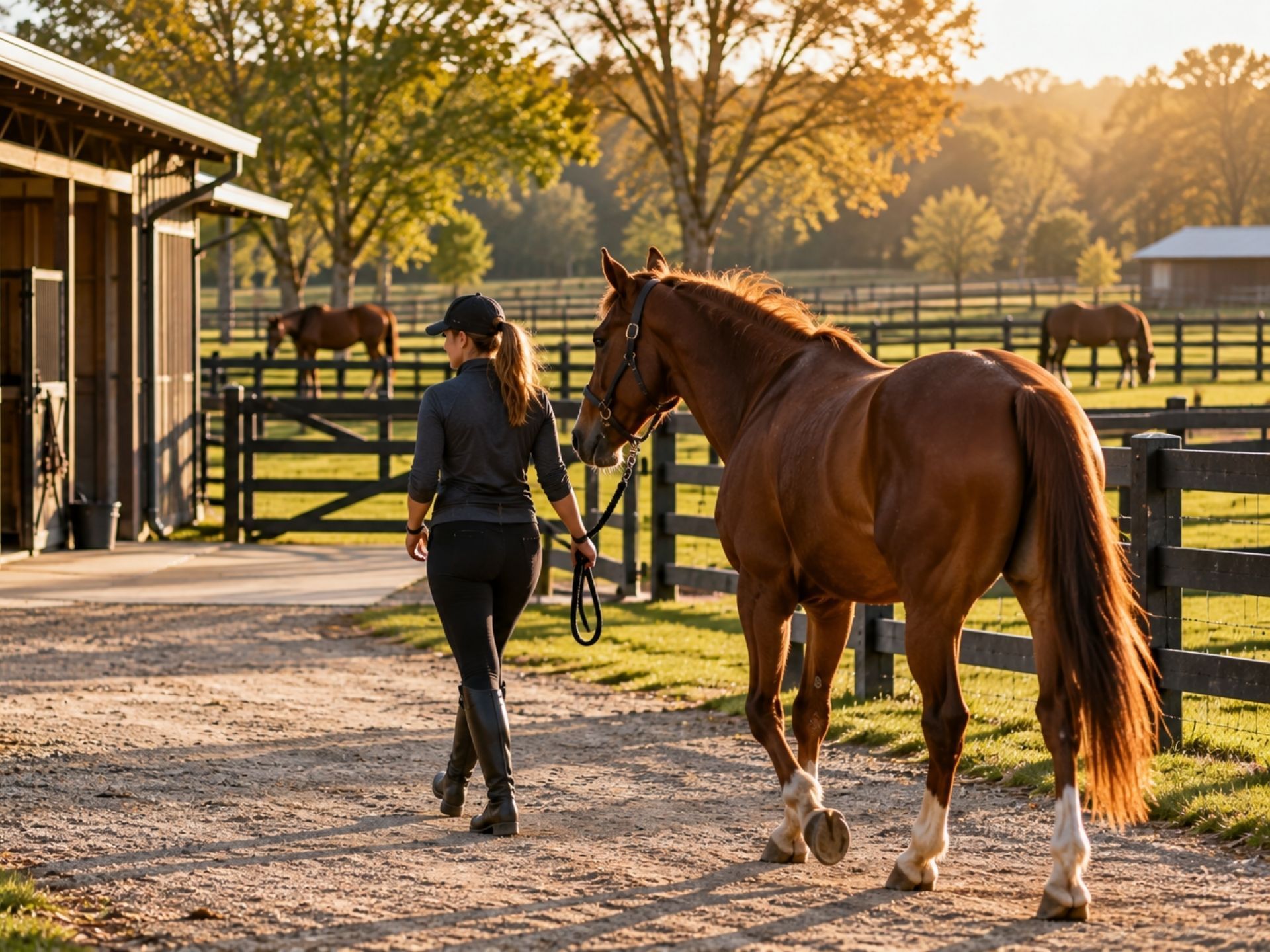
A single loose board in a paddock fence. A horse that colics overnight. A freelance trainer who gets kicked during a lesson. These are the kinds of scenarios that keep boarding stable owners up at night, and for good reason. Equine boarding operations carry a unique blend of risks that most general business insurance policies simply don't cover well. The animals are valuable, the clients are emotionally invested, and the legal exposure can be enormous.
If you run a boarding stable, understanding your liability exposure isn't optional: it's the foundation of staying in business. The equine insurance market has been growing steadily and is projected to expand significantly through 2032, which tells you something about how seriously the industry takes risk management. This guide breaks down the core liability concepts every boarding stable owner needs to understand, from the legal duty of care you owe to boarded horses, to the specific insurance coverages that actually protect your operation, to the documentation that can save you in court. Whether you board five horses or fifty, the fundamentals of equine boarding stable liability apply to you.
Understanding Your Duty of Care as a Boarding Stable
The moment a horse owner drops off their animal at your facility, you take on a legal responsibility that goes beyond just throwing hay over the fence. Your duty of care means you're expected to provide a standard of care that a reasonably prudent boarding stable operator would provide under similar circumstances. That standard isn't fixed: it shifts based on what services you've agreed to provide, what you charge, and what's customary in your region.
Full-care boarding, where monthly costs can range from $400 to over $2,500 depending on location and services, carries a higher duty than pasture-only arrangements. If you're feeding, blanketing, administering supplements, and scheduling farrier visits, courts will hold you to a higher standard than if the owner handles most daily care themselves. This is why your boarding agreement needs to spell out exactly what you will and won't do. Ambiguity is your enemy.
The Legal Definition of Bailment in Equine Care
When you accept a horse for boarding, you enter a legal relationship called bailment. You become the bailee (the party holding the property), and the horse owner is the bailor. Under bailment law, you're required to exercise reasonable care over the animal entrusted to you and return it in the same condition you received it, minus normal wear and tear.
This matters because bailment creates a presumption of liability. If a horse is injured while in your care, the burden often shifts to you to prove you weren't negligent. That's the opposite of most personal injury cases, where the injured party has to prove fault. Equine attorneys regularly advise stable owners to document the condition of every horse upon arrival precisely because of this legal dynamic. Photos, vet records, and a written intake checklist aren't just good practice: they're your first line of defense.
Negligence vs. Inherit Risk
Not every injury at a boarding stable means the stable owner is liable. Courts recognize that horses are large, unpredictable animals, and some risk is inherent to being around them. The legal question usually comes down to whether the injury resulted from your negligence or from the inherent risks of equine activities.
Negligence means you failed to do something a reasonable operator would have done, or you did something a reasonable operator wouldn't have. A broken fence rail you knew about but didn't fix? Negligence. A horse that spooks at a deer and injures itself in a well-maintained paddock? Likely inherent risk. The distinction matters enormously in court, and real-world settlements reflect this. One horse riding incident in Westchester County resulted in a $107,500 settlement for an injured client, illustrating how quickly costs escalate when negligence is established.
Core Insurance Coverages for Boarding Operations
Having the right insurance isn't just about checking a box. It's about making sure the specific risks your operation faces are actually covered. Many stable owners carry a general liability policy and assume they're protected, only to discover a massive gap when a boarded horse is injured or dies.
Commercial General Liability (CGL) vs. Care, Custody, or Control (CCC)
This is where most boarding stable owners get tripped up. A standard Commercial General Liability policy covers third-party bodily injury and property damage: a visitor gets kicked, a client trips on your property, that sort of thing. But here's the catch: CGL policies almost always exclude animals in your care, custody, or control.
That means if a boarded horse colics and dies because your staff didn't notice the symptoms, or if two horses get into a fight in turnout and one is seriously injured, your CGL policy likely won't pay the claim. You need a separate Care, Custody, or Control endorsement or standalone policy. CCC coverage is specifically designed for businesses that hold other people's property, including animals. An agency like Pet Professional Insurance Agency, which works with multiple specialty insurance markets focused on animal-care businesses, can help you identify the right CCC limits for your herd size and property values.
Comparison of Standard Coverage Types
| Coverage Type | What It Covers | What It Doesn't Cover |
|---|---|---|
| Commercial General Liability (CGL) | Third-party bodily injury, property damage on premises, advertising injury | Animals in your care, custody, or control; professional advice errors |
| Care, Custody, or Control (CCC) | Injury, death, or loss of boarded animals while in your possession | Your own horses; animals not listed in boarding agreements |
| Professional Liability | Claims arising from professional advice or services (e.g., training recommendations) | Physical property damage; general slip-and-fall injuries |
| Property/Inland Marine | Your buildings, equipment, tack, and owned horses | Boarded horses (those need CCC); flood and earthquake (usually separate) |
| Workers' Compensation | Employee injuries on the job | Independent contractor injuries; owner injuries (varies by state) |
Essential Risk Management Documentation
Insurance is your financial safety net, but documentation is what keeps you from needing it in the first place. The right paperwork, posted in the right places and signed by the right people, can prevent lawsuits from ever gaining traction.
Boarding Contracts and Liability Waivers
Every single horse on your property should have a signed boarding contract. No exceptions, not even for your best friend's horse. A solid boarding contract should cover the scope of services, payment terms, emergency veterinary authorization, liability limitations, and dispute resolution procedures. Equine law experts recommend reviewing and updating contracts annually to reflect changes in your operation and state law.
Liability waivers are separate from boarding contracts, and you should use both. A waiver asks the horse owner (and anyone who visits or rides at your facility) to acknowledge the inherent risks of equine activities and agree not to hold you responsible for injuries arising from those risks. Waivers aren't bulletproof: courts in some states won't enforce them if they're too broad or if gross negligence is involved. But a well-drafted waiver, reviewed by an equine attorney in your state, dramatically improves your legal position.
State Equine Activity Liability Act (EALA) Signs
All but a handful of states have passed Equine Activity Liability Acts, which provide some legal protection to equine professionals when injuries result from the inherent risks of equine activities. But here's what many stable owners miss: most of these statutes require you to post specific warning signs on your property and include specific language in your contracts to receive protection.
The
legal requirements for EALA compliance vary significantly by state, and failing to meet them can void your protection entirely. Some states require signs at every entrance. Others specify exact wording. A few require the language in every written contract. Check your state's specific statute, and have an equine attorney confirm you're in compliance. This is one area where a $500 legal review can save you a six-figure judgment.
Common Liability Pitfalls and How to Avoid Them
Even well-insured, well-documented stables can get caught by preventable mistakes. Two areas cause a disproportionate share of claims: facility conditions and third-party service providers.
Facility Maintenance and Safety Standards
Deferred maintenance is the single biggest liability trap for boarding stables. That sagging gate you've been meaning to fix, the exposed nail in the wash stall, the arena footing that hasn't been dragged in weeks: these are the things that turn into claims. Courts look at whether you knew or should have known about a hazard and whether you took reasonable steps to fix it.
Create a written maintenance schedule and stick to it. Walk your fences weekly. Inspect stalls daily. Document everything, including repairs, inspections, and any incidents. If a horse gets injured and you can show a judge your maintenance logs, inspection records, and repair receipts, you're in a far stronger position than the operator who says "we check things regularly" but has nothing in writing.
Managing Freelance Trainers and Outside Instructors
Many boarding stables allow independent trainers or instructors to work with clients on the property. This creates a serious liability question: if that trainer's student gets hurt, who's responsible? The answer often depends on whether the trainer is truly an independent contractor or whether a court considers them your employee.
Require every outside trainer to carry their own liability insurance and provide you with a certificate of insurance naming your stable as an additional insured. Get this in writing before they set foot on your property. Pet Professional Insurance Agency regularly helps trainers and instructors secure their own coverage, which protects both them and the facilities where they work. Also require trainers to use your facility's liability waiver with their students. Without these steps, you could be held vicariously liable for someone else's negligence.
Frequently Asked Questions About Boarding Liability
Does my homeowner's insurance cover my boarding operation? Almost certainly not. Homeowner's policies exclude commercial activities. If you board even one horse for pay, you need a commercial policy designed for equine operations.
Can I be sued if a horse injures itself in a well-maintained pasture? You can always be sued, but your chances of prevailing are much higher if you can document that the pasture was properly maintained and free of known hazards. EALA protections may also apply.
How much CCC coverage do I need? It depends on the value of the horses you board. If you're boarding horses worth $10,000 to $50,000 each, your per-occurrence and aggregate limits need to reflect that. Talk to an agent who understands equine operations.
Are liability waivers enforceable in every state? No. Enforceability varies widely. Some states uphold them consistently, while others limit or reject them. An equine attorney in your state can draft a waiver that maximizes your protection under local law.
What happens if a boarded horse injures a visitor? Your CGL policy should cover third-party bodily injury claims. But if the horse escaped due to a maintenance failure, the claim could involve both your CGL and questions about negligence.
Do I need separate coverage for events or clinics I host? Yes. Standard boarding policies may not cover special events, clinics, or competitions held on your property. You'll likely need an event-specific endorsement or separate policy.
Protecting Your Assets for the Long Term
Running a boarding stable means accepting a level of risk that most small business owners never face. You're responsible for living, breathing animals worth thousands of dollars, and you're inviting the public onto a property full of inherent hazards. The stable owners who survive long-term are the ones who treat liability management as an ongoing practice, not a one-time checklist.
Review your insurance annually. Update your contracts when your services change. Walk your property with fresh eyes and fix problems before they become claims. Work with professionals who actually understand equine operations: an equine attorney for your contracts and an insurance agency with deep experience in animal-care businesses for your coverage.
If you're unsure whether your current coverage matches your actual exposure, reach out to Pet Professional Insurance Agency. Their team works specifically with equine and pet-care businesses, and most clients hear back within 24 to 48 hours. A quick coverage review now is worth far more than a denied claim later.
About the author
Barnaby Joyce
Founder, Pet Professional Insurance Agency · Licensed Insurance Producer
I started Pet Professional Insurance Agency because I watched pet businesses get handed generic policies that never fit. After years of placing coverage for veterinary practices, grooming salons, doggy daycares, and kennels through a generalist agency, I saw the same gaps over and over — and the same blank stares when an owner tried to explain care, custody, and control to an agent who had never insured an animal in their life.
So I built an agency that does one thing. I work directly with specialty carriers who actually want pet-industry risk, and I sit down with every client personally. You will not get a call center or a chatbot. You will get someone who already speaks your language and shops the market on your behalf. That is the whole idea.
Recent Posts