Coverage for veterinary practices
Pet sitting is one of the few service industries where the provider routinely has unsupervised access to a client's home for extended periods. Dog walkers might be in and out in 30 minutes, but overnight pet sitters can spend days or weeks in someone's house.
That level of access makes clients nervous, and rightfully so. A bond doesn't eliminate the risk, but it provides a financial safety net that makes the arrangement feel less like a leap of faith. For clients with valuable collections, home offices full of equipment, or simply a strong sense of privacy, knowing their pet sitter is bonded can be the deciding factor. Agencies like Pet Professional Insurance Agency, which specialize in coverage for pet care businesses, often help sitters understand exactly what level of bonding makes sense for their client base and service model.
Start by listing every piece of equipment you own, along with the brand, model, purchase date, and what you paid for it. Take photos or video of each item. Keep receipts, invoices, and warranty documents in a digital folder. This inventory serves two purposes: it helps your agent calculate the right coverage limits, and it becomes your proof of ownership if you ever file a claim. Pet Professional Insurance Agency uses intake forms designed specifically for pet businesses, which means you won't waste time explaining what a forced-air dryer is or why a single pair of shears costs $500. Update this inventory at least once a year, or whenever you make a significant purchase.
Your general liability policy should cover third-party bodily injury claims, including dog bites. The claim would be filed against your business, and your insurer would handle defense and settlement up to your policy limits. Larger packs with higher bite risk may need higher limits or a separate bite liability endorsement.
If you receive weekly shipments of fish, reptiles, or birds from wholesalers, those animals are at risk during transit. Delayed flights, temperature extremes during shipping, and rough handling kill animals before they ever reach your tanks. Some livestock coverage extends to animals in transit, but many policies only kick in once the animals arrive at your location. Clarify this with your agent before assuming you're covered for a dead-on-arrival shipment worth $3,000.
A dog slips its leash during a training session and knocks over a passerby. A client trips on a wet floor in your grooming salon. Both incidents could land you in court, but your insurance would handle them very differently. The distinction between premises liability and operations liability is one of the most misunderstood parts of commercial insurance for pet businesses, and confusing the two can leave you dangerously exposed.
Most pet professionals carry some form of general liability coverage, but few take the time to understand how their policy actually responds to a claim. Your policy doesn't treat every accident the same way. Where the incident happens, what you were doing at the time, and whether the injury involves a person or property all determine which part of your coverage kicks in. If you run a grooming shop, boarding facility, training business, or pet-sitting service, understanding how premises-related risks differ from operations-related risks isn't just an academic exercise. It's the difference between a claim that gets paid and one that gets denied.
This guide breaks down both types of liability, shows you where coverage gaps tend to hide, and gives you a practical framework for making sure your business is actually protected.
Understanding Liability Insurance for Pet Professionals
General liability insurance is the foundation of most pet business insurance programs. It covers third-party bodily injury, property damage, and sometimes personal or advertising injury claims. But that single policy actually contains two distinct coverage triggers, and they respond to very different situations.
Think of your general liability policy as having two lanes. One lane handles risks tied to your physical location: your building, parking lot, waiting area, or play yard. The other lane covers risks that arise from your actual work: the grooming, walking, training, or boarding you do as a business. These two lanes are premises liability and operations liability, respectively.
The reason this matters is practical. When an insurer investigates a claim, one of the first things they determine is whether the loss arose from a condition at your premises or from your business operations. That classification shapes everything from coverage limits to whether certain exclusions apply. Pet businesses face an unusual blend of both risk types because animals are unpredictable, facilities have unique hazards, and many services happen off-site.
The Role of General Liability in Pet Care
General liability is the policy that responds when someone who isn't your employee gets hurt or their property gets damaged because of your business. For pet professionals, this could mean a client's dog escaping through a faulty gate, a delivery driver slipping on a freshly mopped kennel floor, or a neighbor's fence getting destroyed by a dog you're boarding.
The pet care industry has grown significantly in recent years, and with that growth comes increased exposure. More clients, more animals, and more services mean more opportunities for something to go wrong. A solid general liability policy is non-negotiable, but knowing how it splits between premises and operations coverage helps you identify where you might need additional protection, such as care, custody, and control coverage for animals in your possession.
Premises Liability: Risks Within Your Physical Space
Premises liability covers injuries and property damage that result from conditions at your business location. This is about the space itself: the floors, the equipment, the parking lot, the fencing, the signage, and any hazard that exists on your property regardless of whether you're actively performing services.
If someone gets hurt because of a dangerous condition at your facility, that's a premises claim. It doesn't matter whether the injured person is a client, a vendor, a mail carrier, or someone who wandered in off the street. Your responsibility as a property occupier (or owner) is to maintain reasonably safe conditions.
For pet businesses, premises risks are everywhere. Wet floors from bathing areas, exposed electrical cords, uneven walkways in outdoor play yards, and inadequate ventilation in enclosed spaces all create potential claims. Pet grooming and veterinary facilities also need to be aware that updated OSHA Hazard Communication standards take effect by November 20, 2026, which means chemical labeling and safety data sheets in your facility could become a compliance issue that intersects with your premises liability exposure.
Slip and Fall Incidents in Grooming Shops or Kennels
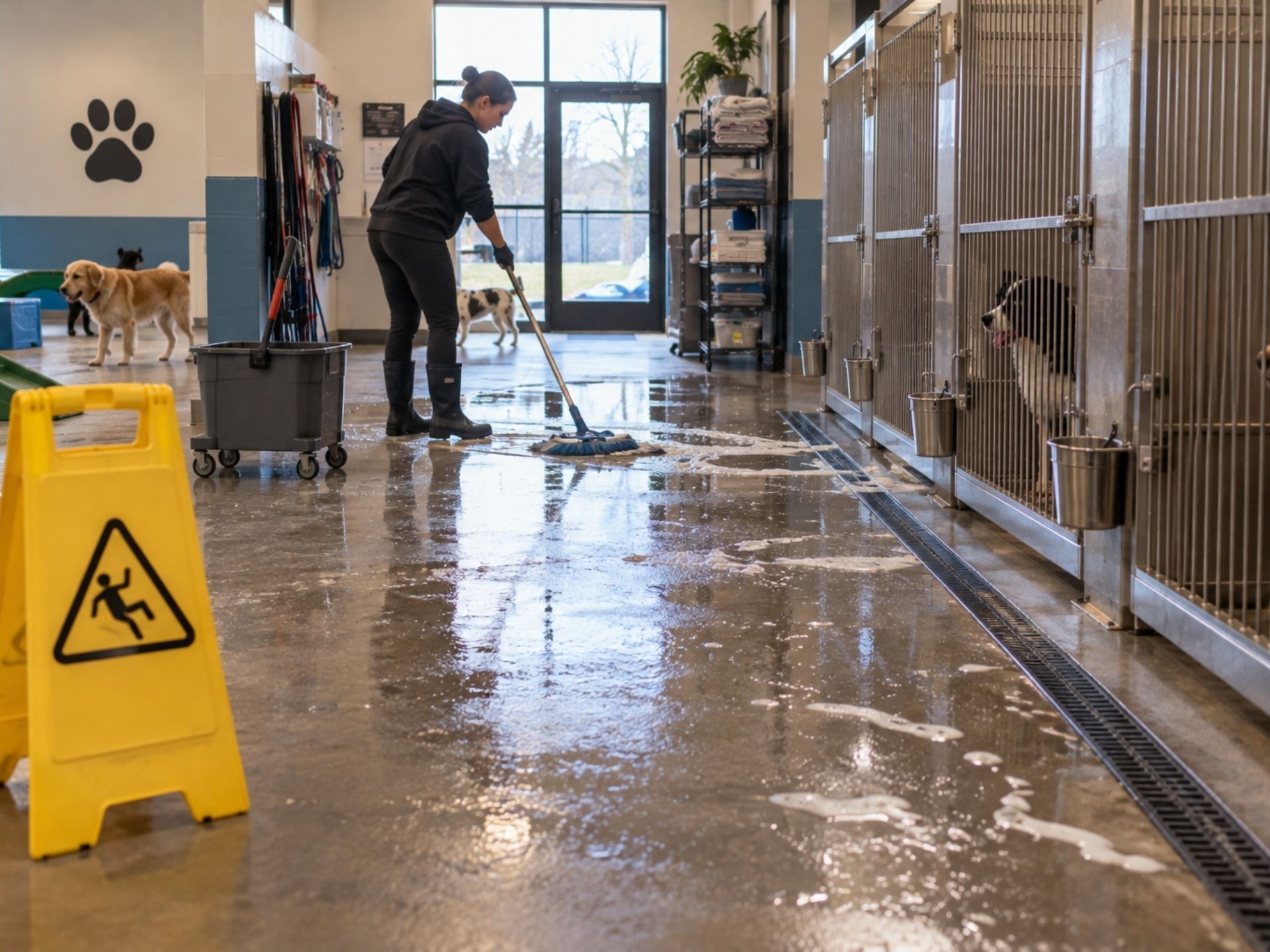
Slip-and-fall claims are the single most common premises liability scenario for pet businesses. Water, shampoo, loose fur, and cleaning solutions create slippery surfaces constantly. A client walks in to pick up their dog, steps on a wet tile, and breaks a wrist. That's a textbook premises claim.
The key here is documentation. If you have a regular cleaning schedule, warning signs for wet floors, and non-slip mats in high-traffic areas, your insurer has a much stronger defense. If you don't, you're looking at a claim that could settle quickly against you. One thing to keep in mind: grooming shops with OSHA-compliant chemical storage and hazard communication protocols tend to have fewer premises claims overall because those safety systems reduce hazards across the board.
Property Damage Occurring on Your Business Grounds
Premises liability also covers damage to other people's property while it's on your grounds. A client's car gets hit by a falling sign in your parking lot. A vendor's equipment gets damaged by a dog that escaped from a kennel. A visitor's personal belongings get destroyed by water from a burst pipe in your lobby.
These claims are less common than bodily injury, but they can be expensive. Property damage to vehicles alone can run into thousands of dollars. The critical factor is whether the damage resulted from a condition you knew about (or should have known about) and failed to fix.
Operations Liability: Risks During Active Pet Services
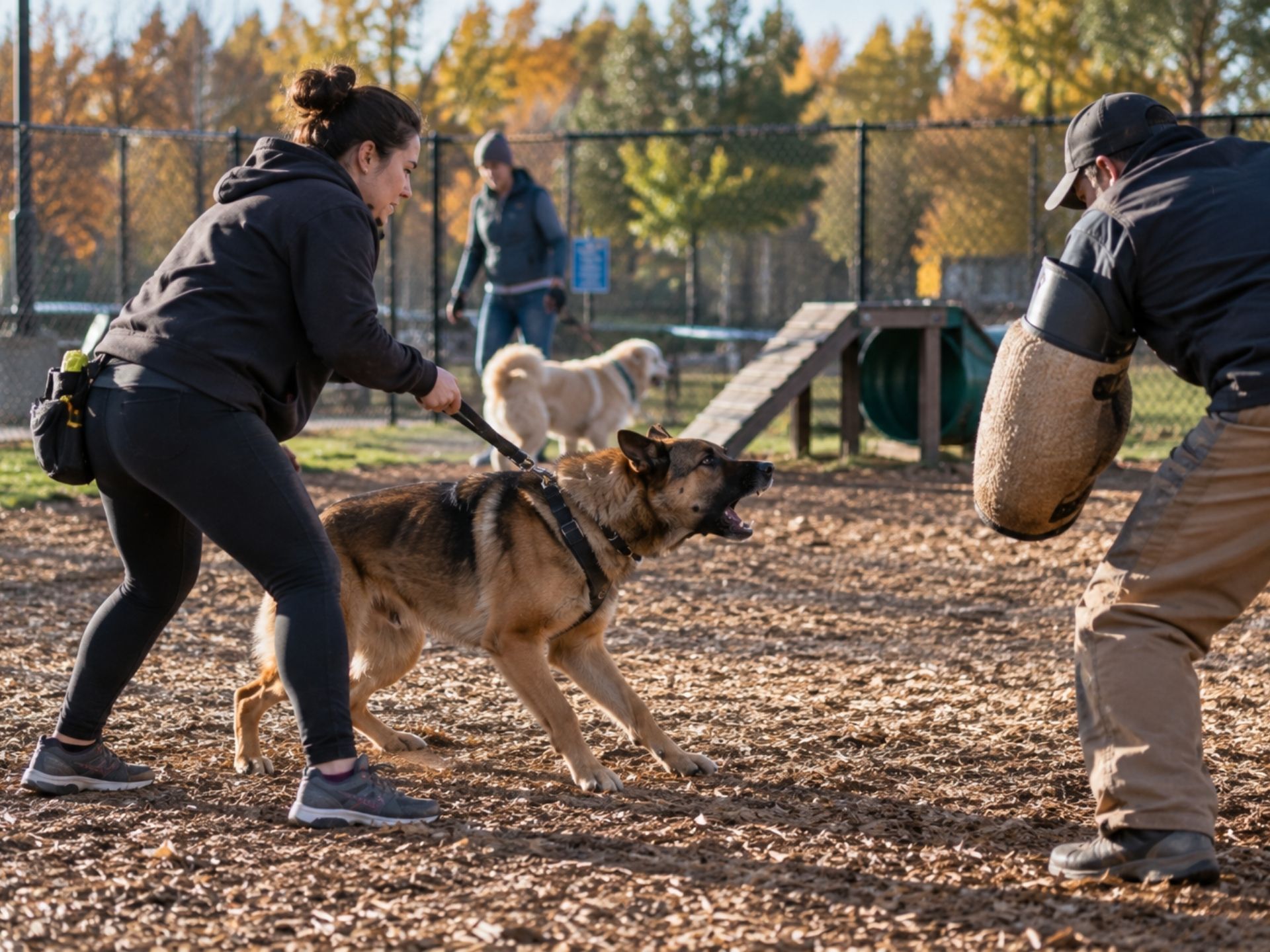
Operations liability covers injuries and property damage that arise from the work you actually do. This is about your services, not your space. If a dog you're grooming bites someone, that's an operations claim. If a dog you're walking pulls you into a cyclist, that's operations. If a training session goes sideways and a dog injures another animal's owner, operations.
The distinction is subtle but important. Premises liability is passive: it's about conditions that exist. Operations liability is active: it's about things that happen because of what you're doing. For pet professionals who provide mobile grooming, dog walking, pet sitting, or off-site training, operations liability is often the bigger risk because you're working in environments you don't control.
The
pet grooming industry in 2026 continues to expand, with mobile grooming and in-home services growing faster than brick-and-mortar shops. That shift means more pet pros are operating in spaces where they have zero control over the physical environment, making operations coverage increasingly critical.
Off-Site Incidents During Dog Walking or Training
Dog walkers and trainers face a unique risk profile because nearly all their work happens away from a fixed location. A dog walker whose client's dog lunges at a jogger in a public park can't rely on premises coverage because there are no premises involved.
These off-site incidents are pure operations claims. The coverage responds based on whether the injury happened as a direct result of your professional activities. If you're walking three dogs and one of them knocks over a child, your operations coverage should respond. That said, policies vary significantly in how they handle multi-animal incidents, leash requirements, and breed exclusions. Working with an agent who understands pet-industry risks, like the team at Pet Professional Insurance Agency, makes a real difference when these details matter.
Injuries Caused by Completed Work or Active Services
Operations liability also extends to what insurers call "completed operations." This covers injuries or damage that occur after you've finished your work. Say you groom a dog and accidentally leave a clipper burn that gets infected. The client doesn't notice until they get home. That's a completed operations claim.
For boarding facilities, completed operations might cover a situation where a dog develops kennel cough symptoms days after pickup. For trainers, it could involve a behavioral technique that leads to an injury weeks later. These claims are harder to prove but can be significant, and not every policy handles them the same way.
Side-by-Side Comparison: Premises vs. Operations
| Premises Liability | Operations Liability | |
|---|---|---|
| What it covers | Injuries/damage from conditions at your location | Injuries/damage from your active services |
| Where it applies | Your business property only | Anywhere you perform services |
| Common examples | Slip-and-fall, falling objects, unsafe conditions | Dog bites during walks, grooming injuries, training incidents |
| Who's typically injured | Clients, visitors, vendors on your property | Clients, bystanders, third parties anywhere |
| Key risk factor | Property maintenance and safety protocols | Quality of service delivery and animal handling |
| Completed work? | No: premises conditions are ongoing | Yes: covers injuries from work already finished |
Both types of coverage typically sit within the same general liability policy, but they trigger under different circumstances. A pet business with a physical location and off-site services needs both lanes working properly.
Common Questions About Pet Business Coverage
Do I need premises liability if I work from a home office?
Yes, though your exposure is lower. If any client or vendor ever visits your home for business purposes, you have premises liability exposure. Your homeowner's policy typically excludes business activities, so even a home-based pet-sitting coordinator should carry a commercial general liability policy. Pet Professional Insurance Agency works with home-based pet businesses regularly and can help you figure out whether your homeowner's policy leaves gaps.
What happens if a dog bites someone while I am walking it?
This falls under operations liability. Your general liability policy should respond because the bite occurred during the course of your professional services. However, some policies exclude certain breeds or require specific handler-to-dog ratios. Check your policy's animal-related exclusions carefully.
Does operations liability cover the pets in my care?
Generally, no. Operations liability covers third-party injuries and property damage. The animals in your care are typically covered under a separate "care, custody, and control" endorsement or a bailee's coverage provision. This is one of the most common coverage gaps in pet business insurance.
Is professional liability different from operations liability?
Yes. Professional liability (sometimes called errors and omissions) covers claims arising from your professional advice or judgment, like recommending a diet that harms a pet. Operations liability covers physical injuries and property damage from your services. Many pet businesses need both.
Can I buy one policy that covers both risks?
A standard commercial general liability policy includes both premises and operations coverage. They're two parts of the same policy, not separate products. That said, you may need endorsements or additional policies for specific risks like animal bailee coverage, professional liability, or commercial auto for mobile services.
The Bottom Line for Your Pet Business
Understanding how premises and operations liability work together is one of the most practical things you can do to protect your pet business. Premises risks are about your space. Operations risks are about your work. Both live inside your general liability policy, but they respond to very different claim scenarios.
The real danger isn't choosing one over the other: it's assuming your policy covers everything without checking. Coverage gaps around animal bites, completed operations, and care/custody/control are common in the pet industry, and they tend to surface at the worst possible time.
If you're unsure whether your current coverage handles both sides of this equation, reach out to Pet Professional Insurance Agency. With intake forms tailored to each type of pet business and access to multiple specialty insurance markets, they can identify gaps you didn't know existed, usually with a response within 24 to 48 hours.
Laws governing liability vary by state and municipality. This article provides general guidance, not legal advice. Consult a qualified attorney for questions specific to your jurisdiction and business structure.
This article is for general informational purposes only and is not an offer of insurance, a guarantee of coverage, or legal advice. Coverage varies and is subject to policy terms, underwriting, and state availability. Contact Pet Professional Insurance Agency to discuss your specific situation.
About the author
Barnaby Joyce
Founder, Pet Professional Insurance Agency · Licensed Insurance Producer
I started Pet Professional Insurance Agency because I watched pet businesses get handed generic policies that never fit. After years of placing coverage for veterinary practices, grooming salons, doggy daycares, and kennels through a generalist agency, I saw the same gaps over and over — and the same blank stares when an owner tried to explain care, custody, and control to an agent who had never insured an animal in their life.
So I built an agency that does one thing. I work directly with specialty carriers who actually want pet-industry risk, and I sit down with every client personally. You will not get a call center or a chatbot. You will get someone who already speaks your language and shops the market on your behalf. That is the whole idea.
Recent Posts