Coverage for veterinary practices
Pet sitting is one of the few service industries where the provider routinely has unsupervised access to a client's home for extended periods. Dog walkers might be in and out in 30 minutes, but overnight pet sitters can spend days or weeks in someone's house.
That level of access makes clients nervous, and rightfully so. A bond doesn't eliminate the risk, but it provides a financial safety net that makes the arrangement feel less like a leap of faith. For clients with valuable collections, home offices full of equipment, or simply a strong sense of privacy, knowing their pet sitter is bonded can be the deciding factor. Agencies like Pet Professional Insurance Agency, which specialize in coverage for pet care businesses, often help sitters understand exactly what level of bonding makes sense for their client base and service model.
Start by listing every piece of equipment you own, along with the brand, model, purchase date, and what you paid for it. Take photos or video of each item. Keep receipts, invoices, and warranty documents in a digital folder. This inventory serves two purposes: it helps your agent calculate the right coverage limits, and it becomes your proof of ownership if you ever file a claim. Pet Professional Insurance Agency uses intake forms designed specifically for pet businesses, which means you won't waste time explaining what a forced-air dryer is or why a single pair of shears costs $500. Update this inventory at least once a year, or whenever you make a significant purchase.
Your general liability policy should cover third-party bodily injury claims, including dog bites. The claim would be filed against your business, and your insurer would handle defense and settlement up to your policy limits. Larger packs with higher bite risk may need higher limits or a separate bite liability endorsement.
If you receive weekly shipments of fish, reptiles, or birds from wholesalers, those animals are at risk during transit. Delayed flights, temperature extremes during shipping, and rough handling kill animals before they ever reach your tanks. Some livestock coverage extends to animals in transit, but many policies only kick in once the animals arrive at your location. Clarify this with your agent before assuming you're covered for a dead-on-arrival shipment worth $3,000.
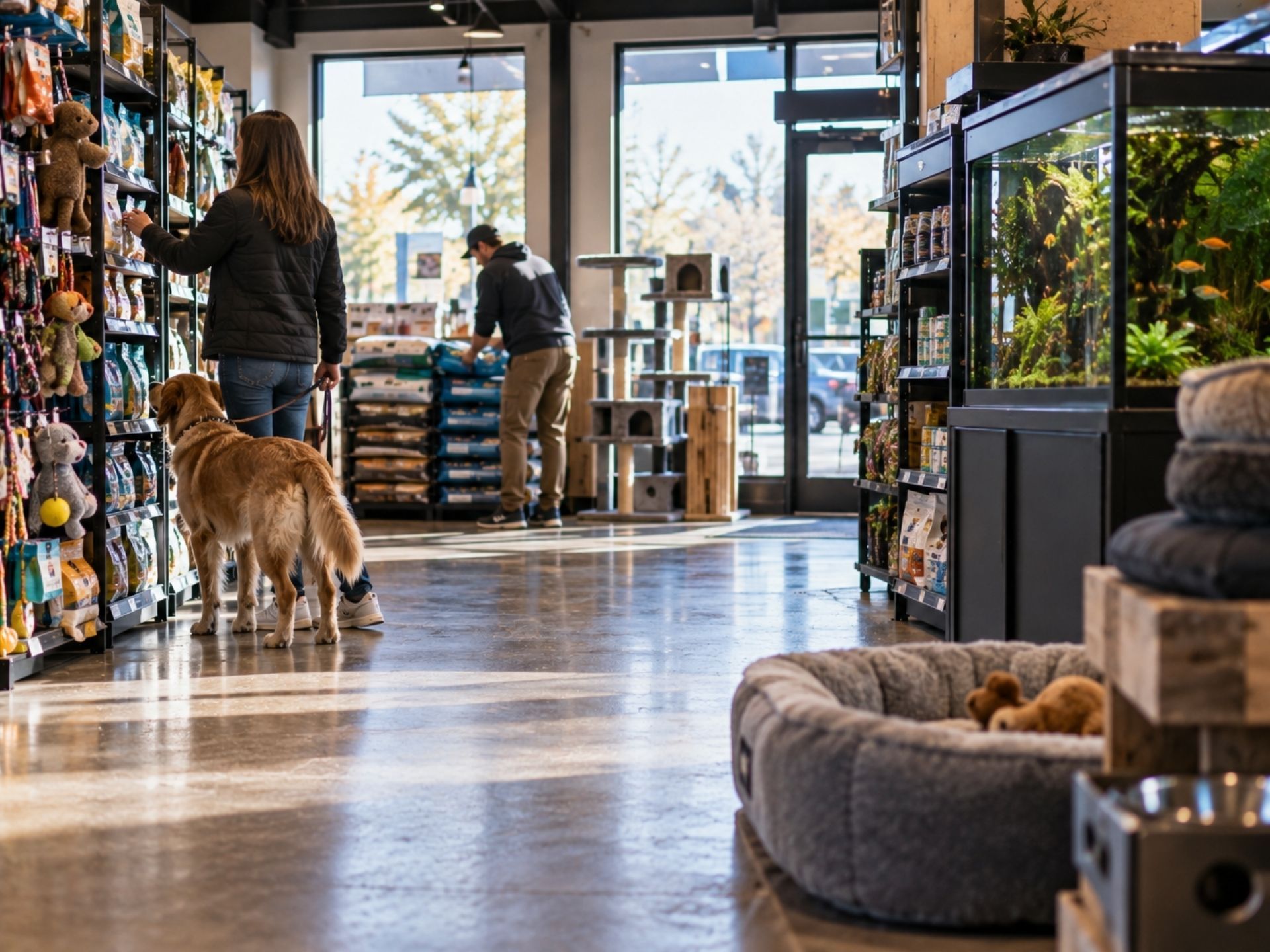
A single contaminated bag of jerky treats can kill a dog, destroy a pet store's reputation, and trigger a lawsuit that costs more than a year's revenue. That's not hypothetical: pet food recalls have been a recurring problem in 2026, with multiple brands pulling products from shelves over contamination concerns. If you own a pet store, you're sitting in the middle of a supply chain you don't fully control, selling products that go directly into an animal's body. The liability exposure is real, and it's growing. U.S. pet industry spending is
projected to hit $165 billion in 2026, fueled by pet owners who treat their animals like family members and expect the same quality standards they'd demand for their own food. That humanization trend means customers are spending more, but it also means they're far more likely to pursue legal action if something goes wrong. Whether you stock mass-market kibble or artisan freeze-dried treats, understanding how liability works for pet food retailers isn't optional: it's the cost of doing business.
Understanding Product Liability for Pet Food Retailers
Product liability law holds everyone in the distribution chain responsible when a defective product causes harm. That includes manufacturers, distributors, and yes, retailers. Even if you had nothing to do with making the food, the fact that you sold it can make you a defendant.
For pet stores, liability for selling treats and food typically falls into three categories: manufacturing defects (contamination, foreign objects), design defects (a formula that's inherently unsafe for certain animals), and marketing defects (misleading labels, missing allergen warnings). The key thing to understand is that you don't need to have been careless to be held liable. Depending on your state's laws, simply being the point of sale can be enough.
Strict Liability vs. Negligence in Pet Supply Sales
These are two distinct legal theories, and the difference matters for your exposure. Under strict liability, a plaintiff doesn't need to prove you did anything wrong. They just need to show the product was defective and it caused harm. You sold it, the dog got sick, the treat was contaminated: that's enough in many jurisdictions.
Negligence claims require proof that you failed to exercise reasonable care. Maybe you stored raw treats at the wrong temperature, or you kept selling a product after learning about safety complaints. Negligence is harder for plaintiffs to prove, but it can also result in larger damages because it implies fault on your part.
Most states allow claims under both theories, and plaintiffs' attorneys will typically pursue whichever gives them the stronger case. The practical takeaway: you can be held responsible even when you did everything right, which is exactly why insurance matters.
Common Claims: Contamination, Spoilage, and Labeling Errors
The most frequent product liability claims against pet retailers involve bacterial contamination (Salmonella and Listeria are the usual suspects), mold from improper storage, and labeling that fails to disclose ingredients or allergens. A growing area of concern is pet product regulation at the federal level, with regulators paying closer attention to how pet food is marketed and what claims appear on packaging.
Spoilage claims tend to hit smaller stores hardest, especially those carrying fresh, refrigerated, or raw diet products. If a freezer fails overnight and you sell product the next morning without realizing the cold chain was broken, you're exposed. Labeling errors are trickier because you're typically relying on the manufacturer's packaging, but courts have found retailers liable when they knew or should have known that labels were inaccurate.
Comparing Coverage: General Liability vs. Product Liability
Here's where most pet store owners get confused. Your general liability policy covers slip-and-fall accidents, property damage, and similar third-party claims. It does not adequately cover claims arising from products you sell. Product liability coverage is a separate animal (pun intended), and skipping it because you already have a GL policy is one of the most common mistakes we see.
Some general liability policies include limited product coverage, but the limits are often too low and the exclusions too broad to protect a pet retailer selling ingestible products. You need to read the fine print or, better yet, work with an agent who understands pet-industry risks specifically.
Table: General Liability vs. Product Liability Coverage Scenarios
| Scenario | General Liability | Product Liability |
|---|---|---|
| Customer slips on wet floor | Covered | Not applicable |
| Dog gets sick from contaminated treats you sold | Typically excluded or sublimited | Covered |
| Customer claims pet food label was misleading | Not covered | Covered |
| Shelf display falls and injures a customer | Covered | Not applicable |
| Recalled product causes illness before you pull it | Likely excluded | Covered |
| Customer's pet dies from allergic reaction to a treat | May be excluded | Covered |
The pattern is clear: anything involving a product you sold that causes harm to a pet or person falls under product liability territory. A general liability policy alone leaves a dangerous gap.
Protecting Your Store from Supply Chain Risks
You can't test every bag of food that comes through your door, but you can build protections into your business relationships. The supply chain is your biggest vulnerability because you're accepting risk from manufacturers, distributors, and sometimes small-batch producers whose quality control you can't verify.
Smart retailers treat vendor selection as a risk management exercise, not just a merchandising decision. Before adding a new brand to your shelves, ask about their manufacturing certifications, recall history, and insurance coverage. If a vendor can't provide a certificate of insurance showing adequate product liability limits, that's a red flag worth paying attention to.
The Importance of Vendor Indemnity Agreements
A vendor indemnity agreement (sometimes called a hold-harmless agreement) is a contract provision where the manufacturer or distributor agrees to cover your losses if their product causes harm. This is standard practice in retail, and any reputable pet food manufacturer should be willing to sign one.
The agreement should specify that the vendor will indemnify you for legal defense costs, settlements, and judgments arising from defects in their product. It should also require them to maintain product liability insurance and name your store as an additional insured on their policy. Without this paperwork in place, you're absorbing 100% of the risk for someone else's product. Pet Professional Insurance Agency works with retailers to understand what these agreements should include, since the details vary based on your product mix and state laws.
Managing Product Recalls and Customer Communication
Recalls happen, and how you respond determines whether the situation stays manageable or spirals into lawsuits. The moment you learn about a recall, pull the product immediately. Don't wait for official instructions from the manufacturer if you have credible information that a product is unsafe.
Keep purchase records that let you identify which customers bought affected products. A point-of-sale system with customer tracking makes this straightforward. Contact affected buyers directly by phone or email: don't rely on a sign at the register. Document everything you do and every communication you send. Your insurance carrier will want to see that you acted promptly and responsibly. Quick, transparent communication with customers often prevents claims from escalating into litigation.
Best Practices for Safe Storage and Handling
Your storage practices are both a safety issue and a legal shield. If a claim arises and you can demonstrate rigorous handling procedures, you're in a much stronger position to defend against negligence allegations. Sloppy storage, on the other hand, can turn a manufacturer's defect into your liability problem.
Create written standard operating procedures for receiving, storing, and displaying all food and treat products. Train every employee on these procedures and document the training. This isn't bureaucratic busywork: it's evidence that you exercised reasonable care, and it can make the difference between winning and losing a lawsuit.
Temperature Control and Inventory Rotation
Raw food, fresh treats, and refrigerated products need continuous temperature monitoring. Install thermometers with alarms in all coolers and freezers, and log temperatures at least twice daily. If you experience a power outage or equipment failure, have a written protocol for evaluating whether products are still safe to sell.
FIFO (first in, first out) inventory rotation prevents expired products from reaching customers. Check expiration dates during every restocking cycle, not just when something looks off. Pull anything within 30 days of expiration for products with long shelf lives, and within 48 hours for fresh items. These practices reduce your risk exposure and, frankly, they're just good retail management.
Frequently Asked Questions About Pet Store Insurance
Do I need insurance if I only sell sealed bags of food?
Yes. Sealed packaging doesn't eliminate your liability. If the contents are contaminated, improperly labeled, or cause an allergic reaction, you can still be named in a lawsuit as the retailer. The seal protects freshness, not your legal exposure.
How much does product liability insurance usually cost?
Costs vary based on your revenue, product mix, and claims history. For small to mid-sized pet retailers, annual premiums typically range from a few hundred to several thousand dollars. Stores selling raw food or homemade treats generally pay more due to higher risk.
Am I covered if a customer's pet has an allergic reaction?
Most product liability policies cover allergic reaction claims, but coverage depends on the specific policy language. If the allergen was properly disclosed on the label and the customer ignored it, your defense is stronger. If the label was missing allergen information, you could be liable regardless.
Does my insurance help if a manufacturer issues a recall?
Typically yes. Product liability policies generally cover defense costs and damages from recalled products you sold before the recall was announced. Some policies also cover the cost of notifying customers and disposing of recalled inventory, though this varies. An agent with deep knowledge of pet product risks can help you identify any gaps.
What happens if I sell treats made by a local baker?
This is one of the highest-risk scenarios for pet retailers. Local and small-batch producers often lack adequate insurance, manufacturing certifications, and formal quality control. If their product causes harm, you may be the only defendant with assets worth pursuing. Always require a vendor indemnity agreement and proof of insurance before stocking locally made treats.
Making the Right Choice for Your Business
Product liability for pet stores selling food and treats isn't a theoretical concern: it's a practical reality that the growing pet industry makes more pressing every year. The combination of rising consumer spending, increasing regulatory scrutiny, and pet owners who will fight hard for their animals means your exposure is significant.
The good news is that the risk is manageable. Strong vendor agreements, careful storage practices, clear recall protocols, and the right insurance coverage can protect your business from a single incident turning into a financial catastrophe. Pet Professional Insurance Agency specializes in exactly these situations, working with pet retailers through specialty insurance markets to build coverage that matches your actual risk profile. Most clients hear back within 24 to 48 hours, and you'll work directly with an agent who understands the pet industry, not a generic call center.
About the author
Barnaby Joyce
Founder, Pet Professional Insurance Agency · Licensed Insurance Producer
I started Pet Professional Insurance Agency because I watched pet businesses get handed generic policies that never fit. After years of placing coverage for veterinary practices, grooming salons, doggy daycares, and kennels through a generalist agency, I saw the same gaps over and over — and the same blank stares when an owner tried to explain care, custody, and control to an agent who had never insured an animal in their life.
So I built an agency that does one thing. I work directly with specialty carriers who actually want pet-industry risk, and I sit down with every client personally. You will not get a call center or a chatbot. You will get someone who already speaks your language and shops the market on your behalf. That is the whole idea.
Recent Posts