Coverage for veterinary practices
Vet Clinic and Pet Store Commercial Crime Insurance
Core Protections Against Bodily Injury and Property Damage
Picture a practice manager who has worked at your clinic for six years. She knows every client's dog by name, covers shifts when someone calls out, and handles the books so you can focus on surgery. Then your accountant flags a vendor you've never heard of. That exact pattern played out at a West Virginia veterinary clinic, where a manager pleaded guilty to embezzling $624,599.86 between 2022 and 2024 through fake vendor invoices and unearned payroll deposits.
Most animal care business owners assume their property or liability policy would cover a loss like that. It wouldn't. This guide walks through how commercial crime insurance for vet clinics and pet stores actually works, what it pays for, where the gaps hide, and how to cut your exposure before you ever need to file a claim.
Why Vet Clinics and Pet Stores Face Unique Crime Risks
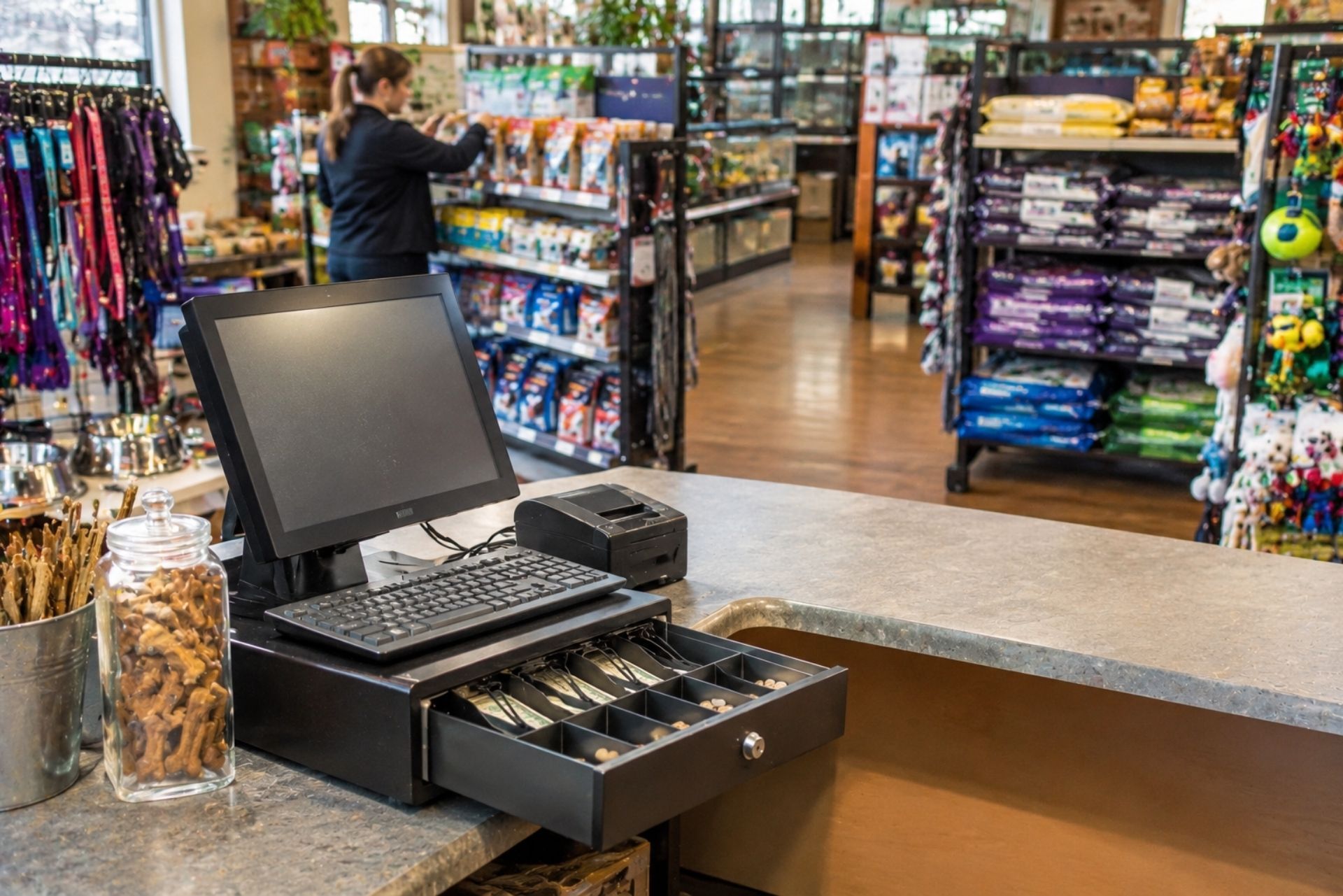
Animal care businesses combine a set of risk factors that rarely show up together in other industries. A veterinary clinic stores controlled substances, takes card and cash payments at a busy front desk, and often runs payroll and vendor accounts through one trusted office manager. A pet retailer handles a steady flow of small cash transactions, carries resellable inventory like premium food and supplements, and sells gift cards that criminals love.
Small team size makes this worse. When you have eight or twelve employees, the same person often orders supplies, receives shipments, reconciles invoices, and processes refunds. Separation of duties sounds great in a textbook, but it's hard to pull off when your receptionist is also your inventory clerk and backup tech.
The financial stakes are real. Small businesses with fewer than 100 employees face a median loss of roughly $141,000 per fraud instance. For an independent pet store running on thin margins, or a two-doctor practice still paying off equipment loans, a loss that size can wipe out a year of profit.
Trust culture plays a role too. Pet businesses tend to be warm, family-style workplaces, and owners often hire friends, former clients, or long-time volunteers. That's a strength in daily operations, but it also means fewer people question unusual behavior. In claims, we regularly see theft that ran for two or three years simply because nobody wanted to suspect a well-liked coworker.
Then there's the outside threat. The tactics criminals use against retailers have shifted, which matters for any shop with a register and a phone line.
Understanding Employee Theft and Internal Fraud
Employee theft coverage, sometimes called employee dishonesty coverage, is the heart of most crime policies. It reimburses you for money, securities, and other property stolen by your own staff. That includes outright theft as well as schemes like payroll padding, fake vendors, skimming, and unauthorized refunds.
A few policy details trip people up. Most crime forms require that the loss be "discovered" within the policy period or a set window afterward, so switching carriers carelessly can leave a gap for schemes that started years ago. Policies also generally exclude losses caused by an employee you already knew had committed a dishonest act, so if you caught someone pocketing cash once and kept them on, coverage for that person may be gone.
Another common mistake: undervaluing the limit. Owners often pick $25,000 because it feels like a lot of cash. Internal fraud doesn't usually happen in one big grab, though. It accumulates quietly over months or years, which is why the West Virginia case reached six figures.
Theft of Controlled Substances and High-Value Inventory
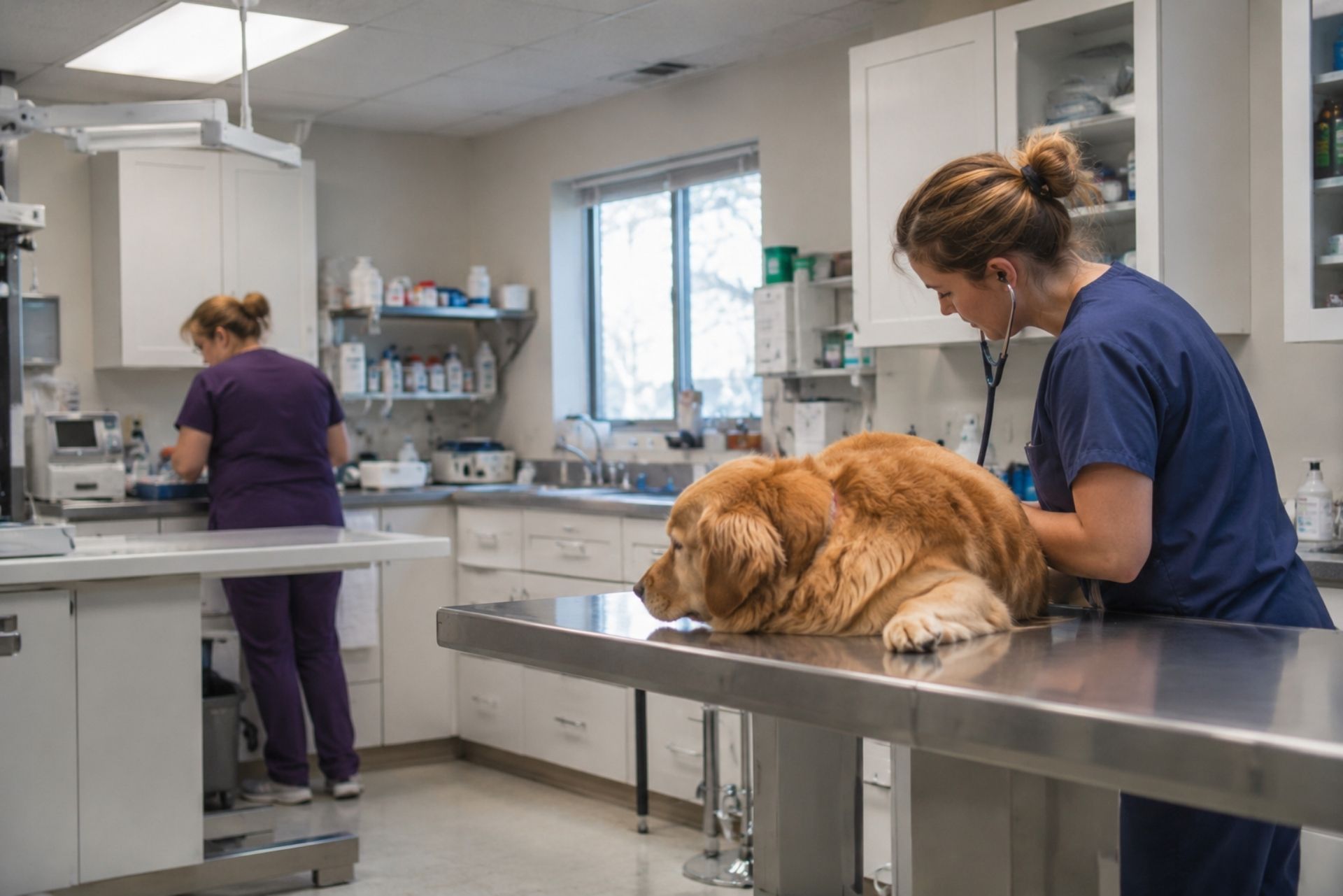
Vet clinics carry inventory that's valuable for two reasons: street resale and personal use. Ketamine, butorphanol, tramadol, gabapentin, and similar drugs require DEA logs and careful handling, and diversion by staff is a persistent industry problem. Beyond controlled drugs, preventives like flea, tick, and heartworm products are easy to resell online in their original packaging.
Crime policies can cover the dollar value of stolen inventory, though you'll need documentation to prove what disappeared and that an employee took it. Clinics with sloppy drug logs or no regular counts often struggle at claim time because they can't show when the shortage started. Keep in mind that the insurance pays for the property loss; regulatory fines or legal defense tied to DEA issues are a separate matter.
Point-of-Sale Manipulation and Voided Transactions
At the register, theft looks quieter. An employee rings up a $90 bag of grain-free dog food, the customer pays cash, and the sale gets voided after they leave. Or a "refund" goes onto a staff member's own card for merchandise that never came back. In clinics, a front desk worker might apply unauthorized discounts to friends' invoices or delete cash payments from the practice management system.
These schemes show up in reports if you look. Watch for:
- High void or refund rates tied to one login or one shift
- No-sale drawer openings with no matching transaction
- Frequent manual price overrides on popular items
- Cash payments trending down while card payments stay steady
Crime coverage applies here, but only if you can tie the shortage to a specific dishonest act. Pure "inventory shrinkage" with no explanation is typically excluded.
Protecting Your Cash: On-Premises and In-Transit Losses
Separate from employee theft, crime policies include insuring agreements for money and securities lost to outsiders. These are usually split into "inside the premises" and "outside the premises" coverage, and each has its own limit. Many owners don't realize this structure exists until they file a claim and discover they only bought one of them.
Inside-premises coverage handles theft, disappearance, or destruction of money in your building, plus robbery or safe burglary of other property. Outside-premises coverage protects money while it's in the care of a "messenger," which is just policy language for you or an employee carrying it. Damage to the premises itself, like a broken door or smashed safe, is often included as well.
Robbery and Burglary of Pet Store Registers
The broader retail theft picture is mixed. Shoplifting incidents declined by 12.4% in 2025, which sounds encouraging until you look at what replaced it. Even so, smash-and-grab burglaries at strip-mall storefronts still happen, and pet stores with cash drawers left in registers overnight make easy targets.
Here's a practical point that affects claims: your commercial property policy may cover the stolen register, the broken glass, and some inventory, but it typically caps or excludes cash. That's where crime coverage fills in. Leaving the drawer empty and open overnight, with cash in a bolted safe, reduces both the temptation and the size of any loss.
Losses During Bank Deposits and Transports
The walk or drive to the bank is one of the most exposed moments in a small business's week. A pet store owner who makes deposits at the same time every Friday, carrying a bank-branded bag, is advertising a predictable target. Clinics that collect cash for boarding, grooming add-ons, or end-of-day payments face the same issue.
Outside-premises coverage pays for money stolen from your messenger, and some forms also cover property in an armored car service's custody beyond what that service reimburses. Check the limit against your largest typical deposit, not your average one. The week before a holiday, or a weekend with heavy boarding checkouts, can push deposits well past normal levels. Varying deposit times, using night drops, and switching to remote check deposit all shrink this exposure.
Forgery, Alteration, and Electronic Crime Coverage
The biggest crime threat facing pet businesses in 2026 may not walk through the door at all. Organized retail crime groups are increasingly pivoting toward social engineering and digital fraud instead of traditional theft. The same research showing the shoplifting decline found a 43% increase in gift card fraud and a 67% increase in phone scams. As the industry put it, "significant challenges remain as organized criminals continue to exploit vulnerabilities."
Crime policies address these threats through several distinct insuring agreements, and the differences matter:
- Forgery or alteration: Covers losses when someone forges or alters checks or drafts drawn on your account. Think a stolen checkbook or a vendor check that gets "washed" and rewritten.
- Computer fraud: Covers theft when someone uses a computer to fraudulently move money or property out of your business without your authorization.
- Funds transfer fraud: Covers fraudulent instructions sent to your bank, pretending to be you, that move money from your account.
- Counterfeit money: Covers acceptance of fake currency or money orders in good faith.
- Social engineering (often an endorsement): Covers losses when an employee is tricked into voluntarily sending money, such as paying a fake invoice from an "updated" vendor account.
That last one deserves attention. Many standard computer fraud agreements exclude losses where your own employee authorized the transfer, even if they were deceived. So if your office manager receives an email that looks exactly like your lab supplier asking for payment to a new bank account, and she pays it, a base crime form may deny the claim. Social engineering coverage usually carries a lower sublimit, often a fraction of the main limit, and requires callback verification procedures. Ask your agent specifically whether it's included, and what verification steps the policy demands.
Comparing Crime Insurance to Standard Business Policies
One of the most common surprises we see in pet-business claims is the owner who assumed their business owner's policy handled theft. A BOP bundles general liability and property coverage, and some include a tiny employee dishonesty endorsement, often capped at $5,000 or $10,000. That might cover a missing cash drawer. It won't come close to a multi-year embezzlement scheme.
General liability protects you against third-party claims: a client tripping over a leash in your lobby, or a dog bite at a training class. Professional liability handles claims about the quality of your care. Neither one pays when someone inside your business steals from you, or when a fraudster tricks your team into wiring money. Cyber insurance overlaps with crime coverage in places, especially around social engineering, so it's smart to review both together to avoid paying twice or leaving a hole.
Comparison Table: General Liability vs. Commercial Crime
| Scenario | General Liability | Commercial Crime |
|---|---|---|
| Client's dog injured in your lobby | Covered | Not covered |
| Employee skims cash for 18 months | Not covered | Covered (up to limit) |
| Fake vendor invoices paid by manager | Not covered | Covered (employee theft) |
| Register robbed at gunpoint | Not covered | Covered (inside premises) |
| Deposit bag stolen on way to bank | Not covered | Covered (outside premises) |
| Staff tricked into wiring funds | Not covered | Endorsement often needed |
| Customer slips on wet floor | Covered | Not covered |
| Forged business check cashed | Not covered | Covered (forgery) |
The takeaway is simple: these policies protect against entirely different events. Crime coverage is usually priced modestly compared to liability lines, which is why so many owners regret skipping it after the fact.
Risk Management Strategies for Animal Care Businesses
Insurance works best as a backstop, not your only defense. Insurers also look favorably on businesses with real controls, and some crime forms condition coverage on specific procedures. A few habits make a measurable difference.
Start with hiring. Background checks help, but rules vary by state. Washington, for example, now requires employers to delay criminal background checks until after a conditional job offer, which complicates vetting for roles with access to controlled drugs or cash. Laws on what you can ask and when differ widely, so talk with an employment attorney in your state before changing your hiring process.
Next, look at your accounting setup. Have bank and credit card statements mailed or emailed directly to you, the owner, and actually read them every month. Require a second set of eyes on any new vendor before the first payment goes out. Mandatory vacation policies sound old-fashioned, but many embezzlement schemes collapse the moment the person running them takes a week off and someone else handles the books.
Finally, schedule a surprise review once or twice a year, either with your CPA or an outside bookkeeper. Even a half-day look at voids, refunds, vendor lists, and payroll changes can catch problems early, when the loss is still small.
Implementing Dual Control for Cash and Inventory
Dual control means no single person completes a sensitive task alone. It's the most effective internal control for small teams, and it doesn't require more staff, just better routines.
- Cash counts: Two people count the drawer at close and both sign the reconciliation sheet.
- Deposits: One person prepares the deposit, a different person verifies it against the daily report.
- Controlled substances: Require two credentialed staff to witness wastage and sign the log, and run weekly counts rather than monthly.
- Vendor payments: Whoever enters invoices shouldn't be the one who approves and sends payment.
- Refunds and voids: Require a manager override code that belongs to someone other than the cashier.
- Payment change requests: Verify any change to vendor banking details by calling a number you already have on file, never one from the email.
Rotate these duties when you can. A clinic of ten people can usually build these checks into existing shifts with very little friction.
Common Questions About Pet Business Crime Insurance
Does my business owner's policy cover employee theft? Usually only a small amount, if any. Most BOPs either exclude employee dishonesty or offer a low sublimit that won't cover a serious scheme.
How much crime coverage does a small vet clinic or pet store need? Base it on your annual revenue, cash handled, inventory value, and how many people touch money. Since the median small-business fraud loss runs around $141,000, many owners find low limits leave them badly exposed.
Will crime insurance cover drugs stolen from my clinic? It can cover the value of stolen inventory, including controlled substances, when an employee or covered outsider took them. You'll need solid logs and counts to prove the loss.
What if an employee is tricked into sending money to a scammer? That's a social engineering loss, and many base policies exclude it. Ask for a social engineering endorsement and follow its verification requirements.
Can I deduct theft losses on my taxes? Sometimes. Federal rules on casualty and theft deductions have changed recently, so work with your tax professional on your specific situation.
What if my agent told me something was covered and it wasn't? Your options depend on your state. In New Jersey, a July 2026 state supreme court ruling held that insurance brokers are now subject to the Consumer Fraud Act, opening the door to treble damages, but laws elsewhere differ, so consult a qualified attorney.
The Bottom Line for Your Practice or Shop
Crime losses in animal care businesses rarely look dramatic at first. They start as a few voided sales, a missing vial, or one invoice from a vendor nobody remembers approving. By the time anyone notices, the damage often runs into five or six figures, and your liability and property policies won't pay a cent of it.
The right setup pairs solid internal controls with a crime policy built around how you actually operate: employee theft limits that reflect years of potential exposure, inside and outside premises coverage for your real deposit sizes, and social engineering protection for the email scams now hitting pet businesses hard. Commercial crime insurance for vet clinics and pet stores is one of the more affordable lines you can add, and it's the one owners most often wish they had bought sooner.
Index
Pet Professional Insurance Agency is fully licensed and permitted to provide commercial insurance solutions for pet businesses across 12 states.
We proudly serve pet professionals throughout the Northeast, Mid-Atlantic, and Southeast. Powered by Joyce Insurance Agency, our team works with leading specialty carriers — including The Hartford, USLI, Nautilus, and Northland — to make sure veterinarians, groomers, boarding facilities, and pet-care businesses receive coverage that fits their real risks in Connecticut, Delaware, Georgia, Kentucky, Massachusetts, New Jersey, New York, North Carolina, Pennsylvania, South Carolina, Tennessee, and Virginia.
About the author
Barnaby Joyce
Founder, Pet Professional Insurance Agency · Licensed Insurance Producer
I started Pet Professional Insurance Agency because I watched pet businesses get handed generic policies that never fit. After years of placing coverage for veterinary practices, grooming salons, doggy daycares, and kennels through a generalist agency, I saw the same gaps over and over — and the same blank stares when an owner tried to explain care, custody, and control to an agent who had never insured an animal in their life.
So I built an agency that does one thing. I work directly with specialty carriers who actually want pet-industry risk, and I sit down with every client personally. You will not get a call center or a chatbot. You will get someone who already speaks your language and shops the market on your behalf. That is the whole idea.
Related coverages
Coverages that pair with general liability.
Most pet businesses build on general liability with the lines below. Explore each — every page cross-links to the
industries we serve.
Services & advice
Professional Liability / E&O
Covers claims tied to your professional services and advice — clinical care, training guidance, and the judgment calls you make daily.
The pet-industry gap
Care, Custody & Control
Covers the animals in your charge against injury, illness, or loss — the critical exposure standard liability policies leave out.

Bundled & cost-effective
Business Owners Policy (BOP)
Bundles property and general liability into one package built for small to mid-sized pet businesses — often the simplest base.
Your building & contents
Commercial Property
Protects your building, build-out, equipment, and inventory against fire, theft, and covered losses — front desk to back room.

For your team
Workers’ Compensation
Covers medical costs and lost wages when a team member is hurt on the job — required in most states once you have employees.
Extra protection
Commercial Umbrella
Adds liability limits above your primary policies for catastrophic claims that exceed standard coverage.
Coverage availability and terms vary by carrier and state. We recommend the right mix for your operation once we talk.
Industries we serve
Built for the businesses that care for animals.
General liability is the baseline for every segment we specialize in. Find the page built for your business.
Clinical · high exposure
Veterinarians & Animal Hospitals
Professional and general liability, property, and workers’ comp for clinical operators with high exposure.
Hands-on · small business
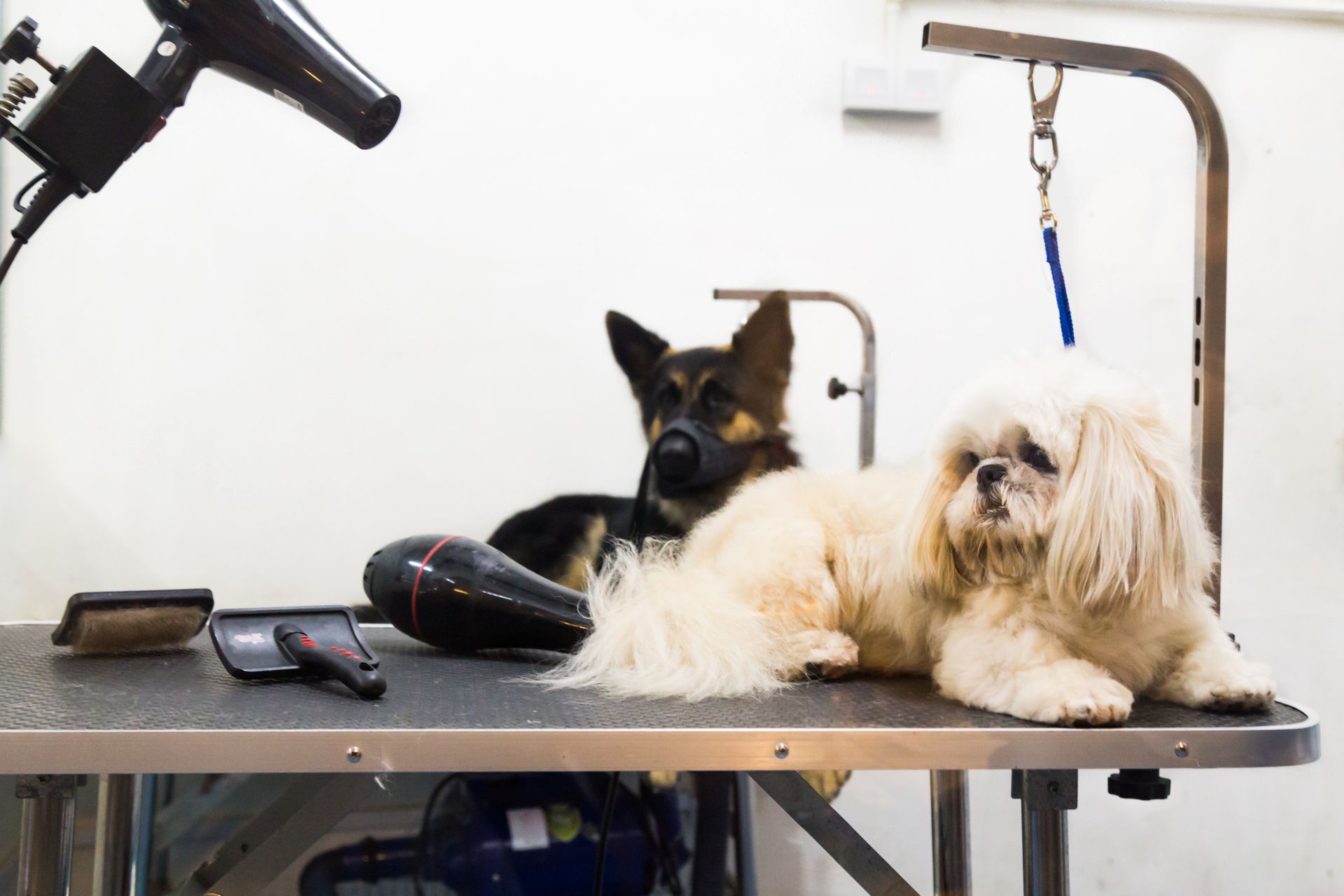
Pet Groomers
Practical protection for animal handling, equipment, and the day-to-day of the grooming table, shop or mobile.

Safety-forward · overnight
Doggy Daycare & Boarding
Coverage matched to facilities responsible for animals overnight and all day long.
Our reviews
Trusted by pet professionals.
See what owners say about working with a specialist who already understands their business.
Frequently asked
Questions pet pros ask us.
What kinds of pet businesses do you insure?
We insure businesses across the animal-care industry — veterinarians and animal hospitals, groomers, doggy daycares and boarding facilities, kennels and trainers, pet sitters and dog walkers, and pet stores. We also cover breeders, equine operations, pet transporters, shelters and rescues, pet photographers, and aquariums or wildlife facilities.
If your work involves caring for, handling, or selling animals, there is a strong chance we cover it. Tell us what you do and we will confirm.
What is care, custody, and control coverage, and why does it matter?
Care, custody, and control coverage protects you when an animal in your charge is injured, becomes ill, or is lost while in your care. Standard general liability policies often exclude this exact exposure, which leaves a serious gap for pet businesses.
For groomers, boarders, sitters, and clinics, this is one of the most important coverages you can carry. We make sure it is in place and sized to your operation.
How is an independent agency different from buying direct from a carrier?
A direct carrier sells you its own single policy. As an independent agency, we shop multiple specialty insurers and compare programs to find the coverage that fits your business and budget.
That means you get options instead of one quote, and an advocate who works for you, not the carrier. We also handle the renewals and claims support over the life of your policy.
How fast can I get a quote?
Most clients get quoted within one business day. Our industry-specific intake forms collect the right details up front, so we can take your information straight to the carriers without a long back-and-forth.
Need it sooner? Call a specialist directly at (346) 738-7297 and we will move quickly.
Which states do you serve?
We are licensed and actively writing coverage in 12 states: Connecticut, Delaware, Georgia, Kentucky, Massachusetts, New Jersey, New York, North Carolina, Pennsylvania, South Carolina, Tennessee, and Virginia.
We continue to add states as we grow. If you operate outside this list, reach out and we will let you know our latest footprint.
From the blog
Coverage notes for pet professionals.
Plain-language risk tips and coverage explainers, written for owners — not insurance pros.

Speak with a specialist
Let's find the right coverage for your business.
No quote bots, no funnel. Talk to a real pet-insurance specialist who already understands your operation — and shops multiple markets on your behalf.
Call us
(346) 738-7297
Toll-free 845-250-5366
Email
service@petindustryins.com
Visit Us
8 Joyce Plaza
Stony Point, NY 10980